Lenovo’s MWC 2026 Showcase: From Foldable Gaming Handhelds to Modular AI PCs
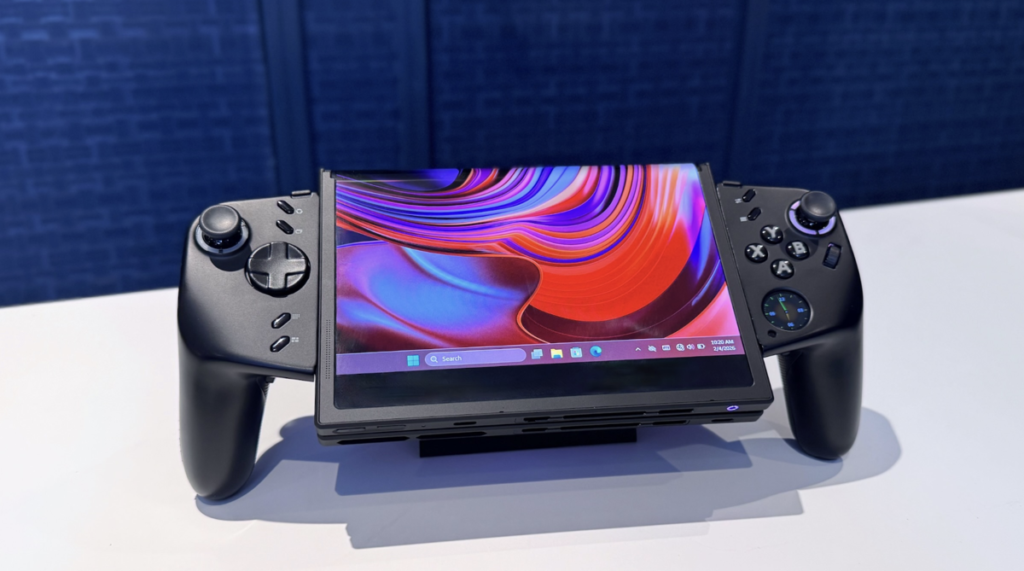
Table of Contents
The Hardware Pivot: Lenovo’s Aggressive 2026 Strategy
Lenovo has arrived at Mobile World Congress (MWC) 2026 not just to refresh its existing catalogs, but to signal a fundamental shift in how it views the “PC.” After a dominant CES showing earlier this year—where the company secured three Best of CES awards and debuted the Qira AI agent—the Barcelona showcase is more about experimentation. The company is betting on three distinct pillars: extreme form-factor flexibility, a return to hardware modularity, and the integration of ambient AI into the physical workspace.
- Legion Go Fold: A hybrid gaming powerhouse that blends a handheld, a tablet, and a laptop into one folding chassis.
- ThinkBook Modular AI PC: A direct challenge to the industry’s trend of soldered components, prioritizing user-swappable ports and displays.
- Yoga 9i Aura Edition: The new gold standard for 2-in-1 consumers, featuring Intel’s latest silicon and a revamped stylus ecosystem.
- Ambient AI: The introduction of the AI Work Companion and AI Workmate, moving AI assistants off the screen and into dedicated desk hardware.
The Legion Go Fold: Redefining the Gaming Handheld
The most discussed device at the Lenovo booth is undoubtedly the Legion Go Fold Concept. While the original Legion Go carved out a niche for high-performance Windows handhelds, the Fold version attempts to solve the “handheld vs. productivity” dilemma. The device features a 7.7-inch POLED display that unfolds into a massive 11.6-inch canvas, allowing for both horizontal gaming and vertical productivity workflows.
Technically, the Fold is a beast. It leverages an Intel Lunar Lake chipset paired with 32GB of RAM, targeting the efficiency gaps that previously plagued Windows-based handhelds. The most innovative aspect isn’t just the screen, but the accessories: a detachable wireless keyboard transforms the device into a clamshell laptop, while one of the controllers doubles as a vertical mouse. This solves a primary pain point for handheld gamers: the difficulty of performing non-gaming tasks like emailing or document editing on a small screen.
Technical Specifications: Legion Go Fold Concept
| Feature | Specification |
|---|---|
| Display | 7.7″ folded / 11.6″ unfolded POLED |
| Processor | Intel Lunar Lake |
| Memory | 32GB LPDDR5x |
| Form Factor | Foldable Handheld / Laptop Hybrid |
The Modular Movement: ThinkBook Modular AI PC Concept
Perhaps the most socially significant announcement is the ThinkBook Modular AI PC Concept. For years, the industry has moved toward thinner, more integrated designs that make repairs nearly impossible. Lenovo is pivoting, drawing a clear line of inspiration from the Framework laptop philosophy. The Modular AI PC allows users to swap ports in and out, ensuring the device can evolve as connectivity standards change.
The system utilizes integrated pogo-pin connectors to ensure that power and data transfer between modules remain stable and efficient. Furthermore, the device features a detachable secondary display and keyboard. This isn’t just about aesthetic flexibility; it’s about extending the device’s lifecycle. By allowing users to replace a damaged screen or an outdated port module without replacing the entire motherboard, Lenovo is addressing the growing demand for sustainable tech.
This commitment to repairability extends to the commercial line. The ThinkPad X1 Carbon Gen 14 Aura Edition, which saw success at CES, continues to influence the rest of the MWC lineup. The T-Series models for 2026 now feature more repairable chassis designs and improved audio hardware, signaling a shift away from the “disposable” nature of enterprise hardware.
Visual Innovation: Yoga Book Pro 3D and the End of Glasses
Lenovo is pushing the boundaries of spatial computing with the Yoga Book Pro 3D Concept. Unlike VR or AR headsets, this laptop uses eye-tracking technology to render 3D objects directly on a dual-OLED display system. This is specifically targeted at 3D architects, medical imaging specialists, and digital artists who require depth perception without the fatigue of wearing a headset.
Under the hood, the 3D Concept is powered by an Intel Core Ultra 7 processor and an Nvidia GeForce RTX 5070. The inclusion of a 50-series GPU is a critical detail; rendering real-time, glasses-free 3D requires significant compute power to handle the parallax calculations necessary to trick the human eye. A unique addition is the set of snap-on pads for the lower touchscreen, which provide tactile, context-aware menus for 3D manipulation.
Consumer Flagships: The Yoga 9i 2-in-1 Aura Edition
While the concepts grab the headlines, the Yoga 9i 2-in-1 Aura Edition is the product users can actually buy. Available in May for $1,949, it represents a refined approach to the premium 2-in-1. The update brings the Intel Core Ultra Series 3 chip and a lighter chassis. Crucially, Lenovo listened to user feedback by re-introducing the headphone jack, a feature that had vanished from many flagship models.
The productivity experience is enhanced by the Yoga Pen Gen 2. The stylus case now attaches magnetically to the chassis, enabling a specialized “Canvas mode.” This mode transforms the interface into a digital sketchbook, optimizing the OS for pen-first input rather than treating the stylus as a mere mouse replacement.
Ambient AI: Moving Beyond the Chatbot
Lenovo’s most experimental territory is its “Desktop AI” hardware. Rather than keeping AI tucked away in a browser tab or a side-bar, the company is introducing two dedicated devices: the AI Work Companion and the AI Workmate.
The AI Work Companion is a subtle, clock-like device designed for consumers. Its primary function is “Thought Bubble” scheduling, which syncs tasks across all user devices to create a balanced daily plan. It also acts as a wellness monitor, alerting users when screen time has peaked and they need a break to avoid burnout.
The AI Workmate is the enterprise version, featuring a more expressive design with a screen for “eyes” and a robotic arm. Unlike the cloud-based assistants we are used to, the Workmate emphasizes on-device AI processing. This means documents can be scanned and summarized locally, providing a layer of security and privacy essential for corporate environments. It can project content onto nearby surfaces, effectively turning a desk into an interactive whiteboard.
What This Means for the Industry
Lenovo’s MWC 2026 strategy reveals a company that is no longer content with just selling “boxes.” By embracing modularity, they are acknowledging the failure of the non-repairable laptop era. By pushing 3D displays, they are trying to find a middle ground between the traditional monitor and the immersive but isolating VR headset.
For the consumer, this means more choice in how hardware is owned. If the Modular ThinkBook reaches production, we may see a shift toward “forever laptops” where only the CPU module is upgraded every few years. For gamers, the Legion Go Fold suggests that the divide between a console and a PC is continuing to vanish, creating a new category of “ultra-portables” that don’t sacrifice screen real estate.
FAQ: Lenovo MWC 2026 Announcements
When will the Legion Go Fold be available for purchase?
The Legion Go Fold is currently a concept product. Lenovo has not announced an official release date or pricing, though the inclusion of specific Intel Lunar Lake specs suggests it is further along in development than typical prototypes.
What is the “Aura Edition” in the Yoga 9i?
The Aura Edition refers to a premium tier of devices optimized for a balance of performance and wellness, featuring curated AI experiences and hardware refinements like the magnetic Canvas mode for the Yoga Pen.
Does the ThinkBook Modular AI PC support user upgrades?
Yes, the concept is built around swappable port modules and detachable components, allowing users to customize their I/O and potentially replace hardware parts more easily than in traditional laptops.
Is the 3D display on the Yoga Book Pro 3D really glasses-free?
Yes, it uses advanced eye-tracking technology to render a depth-mapped image that the human eye perceives as 3D without the need for specialized eyewear.
How does the AI Workmate differ from a standard smart speaker?
The AI Workmate focuses on local on-device processing for privacy and offers spatial interactions, such as projecting content onto physical surfaces, rather than just responding via voice.