SpaceX IPO Analysis: The $75 Billion Debut and the Rise of the World’s First Trillionaire
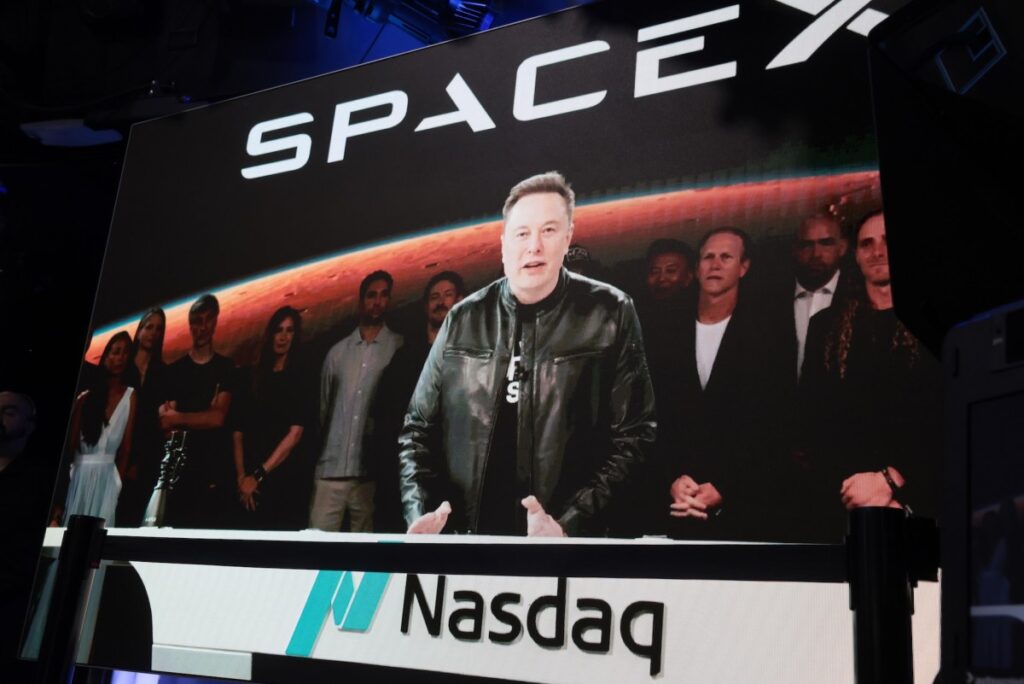
Table of Contents
The Most Anticipated Debut in Financial History
The financial world witnessed a seismic shift on June 12, as SpaceX transitioned from a privately held disruptor to a public entity on the Nasdaq. The scale of the offering was unprecedented: SpaceX priced 555.6 million shares at $135 each, successfully raising $75 billion. This marks the largest initial public offering (IPO) in global history, fundamentally altering the valuation landscape for aerospace and satellite communications.
For nearly two decades, SpaceX operated in the shadows of private equity and internal funding, providing only glimpses of its financial health through leaked documents and sporadic announcements. The move to the public market removes the veil, revealing a company that is simultaneously a high-growth tech giant and a capital-intensive industrial project. The immediate market reaction was electric; shares opened at $150—an 11% jump—and surged to $186.15 by mid-afternoon of the first trading day, reflecting an appetite for space-sector equity that exceeds all historical precedents.
- Record-Breaking Capital: $75 billion raised in a single offering.
- Market Cap Explosion: Shares climbed over 15% in the first hours of trading.
- The Trillion-Dollar Threshold: Elon Musk’s personal wealth has crossed the $1 trillion mark, making him the first individual in history to reach this milestone.
- Employee Windfall: An estimated 4,400 employees are positioned to become millionaires following the liquidity event.
Deconstructing the S-1: Profitability vs. Ambition
The S-1 registration statement, the primary document filed with the SEC, provides the first transparent look at the company’s internal economics. For institutional investors, the most striking figure is the gap between revenue and net income. In 2025, SpaceX reported revenues exceeding $18 billion, yet the company posted a net loss of $4.9 billion. This puts the company’s cumulative losses since inception at over $37 billion.
To the casual observer, a $4.9 billion loss might seem alarming. However, in the context of aerospace engineering, this is a calculated investment in infrastructure. The losses are primarily driven by the development of Starship and the aggressive deployment of the Starlink constellation. Unlike traditional satellite operators that launch a few expensive satellites every decade, SpaceX is building a dynamic, self-replacing mesh network in Low Earth Orbit (LEO).
The Starlink Engine
Starlink is no longer just a subsidiary project; it is the primary revenue driver that justifies the company’s public valuation. The S-1 reveals that Starlink’s growth is the critical hedge against the volatility of government launch contracts. By converting orbital capacity into a monthly subscription service, SpaceX has created a recurring revenue stream that is rare in the aerospace industry.
The Starship Variable
While Starlink provides the cash flow, Starship represents the long-term speculative value. The IPO filing suggests a path toward full and rapid reusability, though the technical hurdles remain significant. The market is currently pricing in the success of Starship’s ability to reduce the cost per kilogram to orbit by orders of magnitude, which would effectively monopolize the heavy-lift market.
The Power Dynamics of a Public Musk Company
The SpaceX IPO is unique not just for its size, but for its governance structure. Elon Musk retains approximately 85.1% of the company’s voting power. This creates a ‘monarchical’ corporate structure that is rare for a company of this scale on the Nasdaq. While public shareholders own the equity, the strategic direction remains firmly under Musk’s control.
This concentration of power has sparked discussions among analysts regarding corporate governance. Unlike most public CEOs who are beholden to a board of directors and quarterly earnings calls, Musk’s voting dominance allows him to prioritize long-term goals—such as the colonization of Mars—over short-term dividend payouts. This tension between ‘visionary’ leadership and ‘fiduciary’ responsibility will likely be the central theme of SpaceX’s tenure as a public company.
“A merger between SpaceX and Tesla might make Elon’s life a little easier,” remarked COO Gwynne Shotwell during a CNBC interview on launch day.
While Shotwell’s comment was framed as a casual observation, it highlights the symbiotic relationship between Musk’s ventures. The intersection of Tesla’s AI and robotics with SpaceX’s satellite connectivity and launch capabilities suggests a broader ecosystem of vertically integrated technology that could eventually lead to a consolidated entity.
What This Means for the Broader Market
The success of the SpaceX IPO serves as a signal for the ‘New Space’ economy. For years, venture capitalists have poured money into rocket startups, but the lack of an exit strategy—usually an IPO or acquisition—made the sector risky. SpaceX has now proven that a deep-tech hardware company can achieve a massive public valuation despite significant operational losses.
Impact on Retail Investors
The surge in trading volume was felt most acutely on retail platforms. Robinhood reported record-breaking traffic, indicating that the ‘Musk Effect’ continues to drive retail participation in high-volatility assets. For the average investor, the SpaceX stock represents a bet on the future of interplanetary travel and global internet coverage.
The Underwriter Windfall
The financial machinery behind the IPO was equally lucrative. Goldman Sachs and Morgan Stanley emerged as the primary beneficiaries of the underwriting process, collecting roughly $500 million in fees. The use of the ‘green shoe option’—a provision allowing underwriters to sell up to 15% more shares than originally planned—was triggered due to overwhelming demand, further boosting the capital raised.
Technical Analysis: The Logistics of the Listing
The listing on the Nasdaq exchange was not merely a symbolic gesture but a strategic move to ensure maximum liquidity. By choosing the Nasdaq over the NYSE, SpaceX aligned itself with the tech-heavy index that favors growth and innovation over traditional industrial metrics. The ‘ringing of the bell’ event was witnessed by a crew of SpaceX engineers, emphasizing that the company’s identity remains rooted in engineering rather than finance.
Comparison of Key Financial Metrics
| Metric | 2025 Reported Value | Historical Context |
|---|---|---|
| Annual Revenue | $18 Billion+ | Rapid growth via Starlink |
| Annual Net Loss | $4.9 Billion | Down from higher historical burns |
| Cumulative Losses | $37 Billion+ | Cost of R&D and Infrastructure |
| Voting Control | 85.1% (Musk) | Extreme founder concentration |
| IPO Price | $135 / share | Highest ever for a space firm |
Frequently Asked Questions
Is SpaceX actually profitable?
According to the S-1 filing, SpaceX is not yet net-profitable on a total company basis, posting a loss of $4.9 billion in 2025. However, the company is seeing massive revenue growth from Starlink, which is narrowing the losses compared to previous years of pure R&D.
Why did Elon Musk become a trillionaire from this?
Musk’s wealth is tied to his ownership percentage of SpaceX. With the company’s valuation skyrocketing post-IPO, the paper value of his shares—combined with his holdings in Tesla and X—has pushed his net worth past the $1 trillion mark.
What is the ‘green shoe option’ mentioned in the IPO?
The green shoe option is an over-allotment provision that allows underwriters to sell more shares than originally planned if the demand from investors is higher than expected, helping to stabilize the price after the debut.
How does this IPO affect Starlink users?
While it doesn’t change the monthly subscription cost immediately, the IPO provides SpaceX with the capital needed to launch more satellites, potentially increasing speeds and reducing latency for users globally.
Can I buy SpaceX stock now?
Yes, SpaceX is now traded on the Nasdaq. Investors can purchase shares through standard brokerage accounts, though volatility is expected to remain high given the company’s growth-oriented valuation.
The Long-Term Implications
The transition to a public company introduces a new set of pressures. SpaceX must now navigate the scrutiny of the SEC, quarterly reporting cycles, and the expectations of thousands of public shareholders. The challenge for Gwynne Shotwell and Elon Musk will be maintaining the company’s rapid-iteration ‘fail fast’ culture while satisfying the demand for financial predictability.
Ultimately, the SpaceX IPO is more than a financial event; it is the institutionalization of the space race. By successfully tapping the public markets for $75 billion, SpaceX has secured the war chest necessary to attempt the most ambitious engineering project in human history: the permanent establishment of a multi-planetary species.