Japan’s ‘Hostage Justice’ System Under Fire After Rare Posthumous Retrial Granted for Hiromu Sakahara
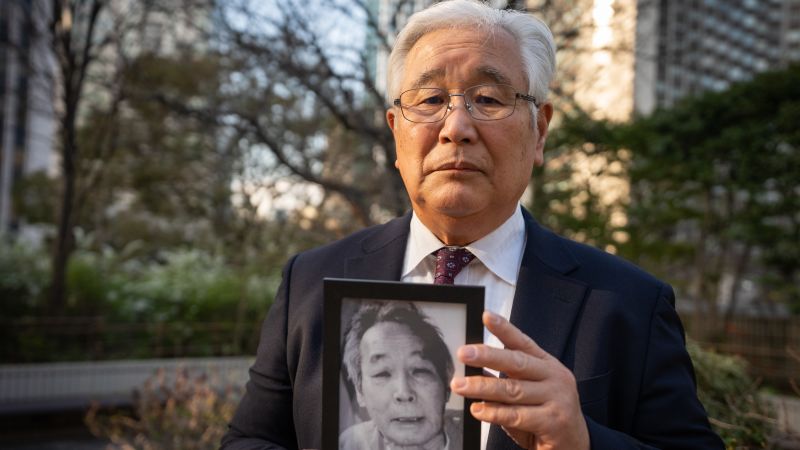
Table of Contents
A Verdict Beyond the Grave
In a rare and somber legal development, a Japanese court has granted a retrial for Hiromu Sakahara, a man who died in 2011 while serving a life sentence for a murder he maintained he did not commit. The decision, arriving fifteen years after his death, transforms a private family tragedy into a public indictment of Japan’s judicial process. For Koji Sakahara, now 64, the news is a bittersweet validation of a decades-long struggle to clear his father’s name.
- Posthumous Justice: Hiromu Sakahara is only the second person in post-war Japan to be granted a retrial after death.
- Systemic Failure: The case highlights the prevalence of “hostage justice”, where suspects are detained for long periods without counsel to coerce confessions.
- Legislative Pivot: Prime Minister Sanae Takaichi has backed a new bill to limit prosecutors’ ability to block retrials.
- The Evidence: The retrial was triggered by negative film evidence suggesting police guided the defendant to the crime scene, undermining the original “voluntary” confession.
Defining ‘Hostage Justice’ in the Japanese Context
Hostage justice (hitojichi shiho) refers to a systemic practice within the Japanese legal system where suspects are detained for extended periods—often weeks or months—without access to legal counsel during interrogations. The primary goal of this strategy is to secure a confession, which is often treated as the “king of evidence” in Japanese courts, regardless of the presence of corroborating forensic data.
Under this regime, suspects who deny the charges are frequently held longer and subjected to more intense pressure. This creates a coercive environment where the “choice” is often between a confession and indefinite detention, leading to a conviction rate that consistently exceeds 99%. While the government maintains this ensures high accuracy, human rights organizations and the United Nations Human Rights Committee have repeatedly characterized the system as a violation of basic due process.
The Sakahara Timeline: From Accusation to Exoneration
The tragedy began in December 1984 in Hino, a quiet town in Shiga Prefecture. When a local liquor store manager disappeared and was later found dead in a field, the police began searching for a suspect. Hiromu Sakahara, a frequent customer of the store, was initially questioned. Despite his wife providing an alibi—proving he was elsewhere on the night of the crime—the police released him, only to return three years later.
The shift occurred in 1987. Following a single day of intense interrogation, Sakahara confessed. According to his son, Koji, Hiromu later revealed he had been physically beaten and kicked, and that the police threatened his family. This confession became the cornerstone of the prosecution’s case. The court relied heavily on the claim that Sakahara had independently led police to the victim’s body and the location of a stolen safe.
Sakahara spent the next 24 years in prison. His family fought relentlessly for a retrial, starting as early as 2001. However, the Japanese legal system is designed to prioritize the “finality” of convictions. Prosecutors repeatedly challenged the requests for a new hearing across three levels of courts, effectively blocking the path to justice for over two decades. In 2011, weakened by the hardships of imprisonment, Sakahara died of pneumonia.
The Turning Point: The Power of Negative Film
The breakthrough that finally forced the court’s hand came not from a new witness, but from the archives. Defense lawyers discovered negative film stored within the evidence files. Upon analysis, the images suggested that the police had guided Sakahara to the body, rather than him leading them. This contradicted the primary evidence used to validate his forced confession, rendering the original verdict unreliable.
A Pattern of Judicial Error
The Sakahara case is not an isolated incident, but part of a broader pattern of catastrophic failures within the Japanese judiciary. To understand the scale of the problem, one must look at other landmark cases of wrongful conviction.
The Case of Iwao Hakamata
In a striking parallel, Iwao Hakamata was recently acquitted after spending more than 46 years on death row. Hakamata’s case, like Sakahara’s, relied on a confession coerced through sleep deprivation and threats. His eventual exoneration underscored the danger of relying on confessions over forensic evidence.
The Legacy of Shigeko Fuji
Sakahara is only the second person to receive a posthumous retrial since 1945. The first was Shigeko Fuji, who was acquitted six years after her death in 1985. Fuji had spent 27 years in prison for the murder of her husband—a crime later proven to have been committed by an intruder.
The Legislative Battle: Finality vs. Fairness
The Sakahara case has provided critical political momentum for a new bill currently under debate in the Japanese Diet. The proposed legislation aims to streamline the retrial process by making it significantly harder for prosecutors to appeal decisions that grant a new trial.
Historically, the Justice Ministry has argued that allowing too many retrials would undermine the stability and finality of the legal system. They contend that if every single case could be reopened, it would create chaos in the courts. However, Prime Minister Sanae Takaichi has shifted the government’s stance, stating that it is “unacceptable for innocent people to be punished.”
The tension here is between two legal philosophies: the state’s need for legal certainty (the idea that a case is closed once a verdict is reached) and the individual’s right to substantive justice (the idea that no one should remain convicted of a crime they did not commit).
What This Means for the Future of Japanese Law
The shift in the Sakahara case signals a potential transition in how Japan handles its criminal justice system. The practical implications include:
- Pressure on Interrogation Tactics: Increased scrutiny on the use of long-term detention without counsel may force police to rely more on DNA and digital forensics rather than confessions.
- Reduced Prosecutor Power: If the new bill passes, the “gatekeeper” role of prosecutors in blocking retrials will be diminished, potentially opening the door for other wrongfully convicted prisoners to seek redress.
- International Standing: As a G7 member, Japan faces increasing pressure from the UN to align its interrogation laws with international human rights standards, specifically regarding the absolute right to legal representation during questioning.
Technical Breakdown: How Retrials Work in Japan
In most Western legal systems, an appeal is a standard part of the trial process. In Japan, a retrial (saishin) is a distinct and much more difficult legal hurdle to clear. To be granted a retrial, the defense must typically prove that “new, clear evidence” has emerged that would likely lead to an acquittal.
| Feature | Standard Appeal | Request for Retrial (Saishin) |
|---|---|---|
| Timing | Occurs shortly after the original verdict. | Can be filed years or decades after the final verdict. |
| Requirement | Legal errors in the original trial. | Discovery of “new, clear evidence.” |
| Prosecutor Role | Part of the adversarial process. | Often acts as a gatekeeper, opposing the retrial. |
| Outcome | Can uphold, reverse, or modify sentence. | Can lead to total exoneration or a new sentence. |
Common Obstacles to Retrials
The primary obstacle is the “finality rule.” Courts are hesitant to overturn a final judgment unless the new evidence is so overwhelming that it makes the previous verdict an obvious error. This high bar is why it took 25 years for the Sakahara family to see progress, despite the evidence of police misconduct.
Addressing the Human Cost
Beyond the legal mechanics, the Sakahara case exposes the social collateral damage of “hostage justice.” For Koji Sakahara, the punishment extended beyond his father’s prison walls. The stigma of being the child of a “murderer” led to social isolation and harassment, including threatening phone calls to his mother.
This “guilt by association” is a powerful tool of social control in Japan, making the pursuit of a retrial not just a legal necessity, but a fight for the family’s survival and dignity in their community.
Frequently Asked Questions
Why is Japan’s conviction rate over 99%?
The high conviction rate is largely attributed to the system’s reliance on confessions. Prosecutors rarely bring a case to trial unless they have a confession or an overwhelming amount of evidence, meaning trials are often a formality for a conviction that has already been “secured” during the interrogation phase.
Can a person be tried after they die in Japan?
Yes, though it is extremely rare. A posthumous retrial is granted when new evidence suggests a profound miscarriage of justice. While the defendant cannot be freed, the retrial serves to legally clear their name and provide a basis for compensation to the surviving family.
What is the role of legal counsel during Japanese interrogations?
Unlike in the US or UK, suspects in Japan do not have an absolute right to have a lawyer present during the actual questioning. Lawyers can meet with clients, but they cannot enter the interrogation room, leaving the suspect alone with investigators for hours at a time.
How does the new proposed bill change the retrial process?
Currently, prosecutors can appeal a court’s decision to grant a retrial, often delaying the process for years. The proposed law would limit these appeals to cases with “sufficient grounds,” preventing prosecutors from using procedural delays to block the path to exoneration.
What are the most common causes of wrongful convictions in Japan?
The most common causes include forced confessions, the ignoring of exculpatory evidence (such as alibis), and the lack of rigorous forensic standards in older cases, all compounded by a judicial culture that heavily favors the prosecution’s narrative.
The Path Forward
The granting of Hiromu Sakahara’s retrial is a victory for a family that refused to give up, but it is a damning reflection of a system that allows a man to die in prison before acknowledging its error. The transition from “hostage justice” to a system based on transparent, counsel-led interrogations remains the most significant challenge for the Japanese judiciary in the 21st century.
Whether the backing of Prime Minister Takaichi translates into a functional change in the Diet remains to be seen, but the ghost of Hiromu Sakahara now stands as a permanent reminder that the cost of “finality” in law can be a human life.