Acer is Betting on the ‘Phone-as-a-PC’ Trend with New Portable Monitor and Keyboard Duo
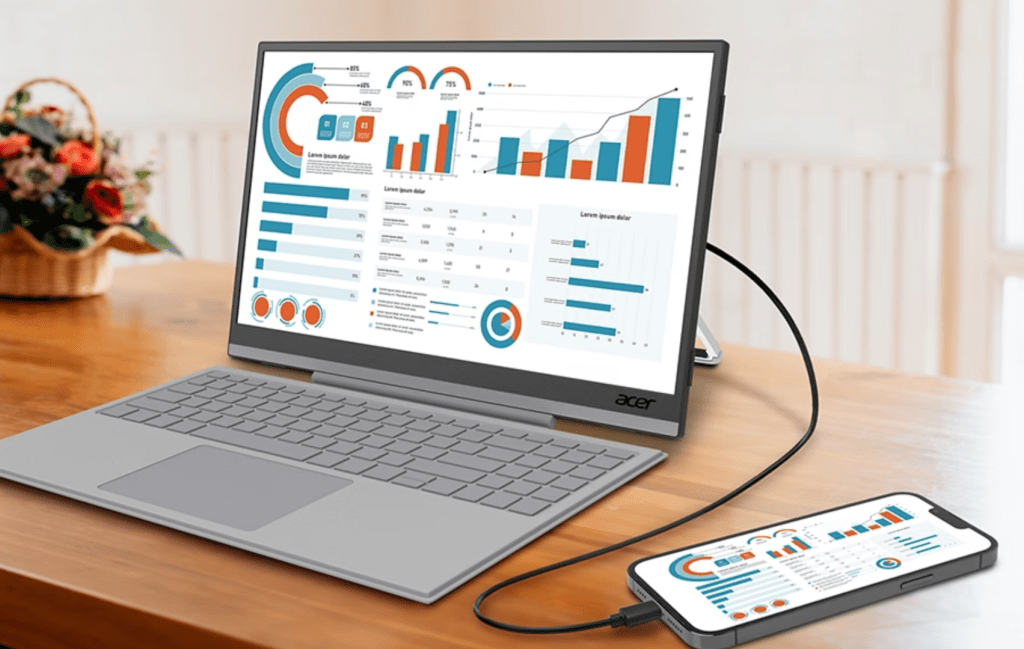
Table of Contents
The return of the smartphone dock
For years, the tech industry has chased the dream of a ‘convergent device’—a single piece of hardware that could serve as both a pocket-sized communicator and a full-fledged productivity workstation. From the early days of Motorola’s Atrix to the Asus Transformer line, these ambitions usually crashed against the reality of underpowered mobile chips and clumsy software interfaces. But as laptop prices climb and mobile silicon catches up to entry-level PCs, Acer is attempting a revival of the concept.
The Acer PM1 system isn’t a laptop in the traditional sense; it is a sophisticated peripheral kit designed to trick your brain into thinking you’re using a computer. At its center is the PM161JB, a 15.6-inch 1080p portable USB-C monitor. While the resolution isn’t groundbreaking, the utility is in the integration. The screen features a built-in kickstand, touchscreen capabilities, and VESA mounting holes, but the real draw is the Surface-style magnetic keyboard that connects via pogo pins.
By plugging a compatible smartphone into the monitor via USB-C, users can effectively extend their phone’s OS onto a large display with a physical trackpad and keyboard. This setup leverages the existing power of the device in your pocket, bypassing the need to purchase a separate, mid-range laptop that often feels sluggish due to limited RAM.
Software as the catalyst
The success of the PM1 relies less on Acer’s hardware and more on the evolution of mobile operating systems. For the setup to feel like a PC rather than just a mirrored phone screen, users need a desktop environment. Samsung has led the charge here with Samsung DeX, which transforms the Android interface into a windowed, taskbar-driven experience that closely mimics ChromeOS or Windows.
Google is following suit. Android 16 is expected to further refine ‘Desktop Mode,’ a feature already baked into the OS but often restricted by manufacturers. While iPhone users can mirror their screens via HDMI or USB-C, the experience remains far more rigid than the flexible windowing offered by Android’s current power-user modes. The emergence of the ‘MacBook Neo’—which reportedly utilizes iPhone-class silicon—further validates the idea that mobile chips are now more than capable of handling traditional desktop workloads.
The economics of a ‘laptop-less’ future
The timing of Acer’s push is likely a response to a shifting PC market. Entry-level laptops have seen a price floor shift toward the $700 mark, often leaving consumers with machines that struggle under the weight of modern, RAM-heavy browser tabs. When a high-end smartphone already costs $1,000, spending another $700 on a secondary device that does 80% of the same things is a hard sell for Gen Z and budget-conscious students.
Acer is also offering a more compact alternative with the PM131QT, a 12.3-inch ultrawide version that utilizes the same keyboard accessory. While the form factor of the ultrawide model may feel unconventional, it targets a level of portability that traditional laptops struggle to match.
Technical hurdles and unknowns
Despite the appeal, several critical questions remain regarding the PM1’s viability. Power delivery is the primary concern; driving a 15.6-inch panel from a phone battery can lead to rapid drain unless the monitor supports pass-through charging. Additionally, the utility of the onboard USB-A port—spotted in early renders—will be key for users who need to connect flash drives or legacy peripherals.
While Acer has not yet officially announced pricing or a hard release date, industry projections suggest a late 2026 or early 2027 rollout. If priced aggressively, the PM1 could transition from a niche gadget to a genuine alternative for those who find the current laptop market prohibitively expensive or unnecessarily redundant.