Inside the Trump Phone: Hardware Analysis Reveals Generic Taiwanese Roots and Chinese Components
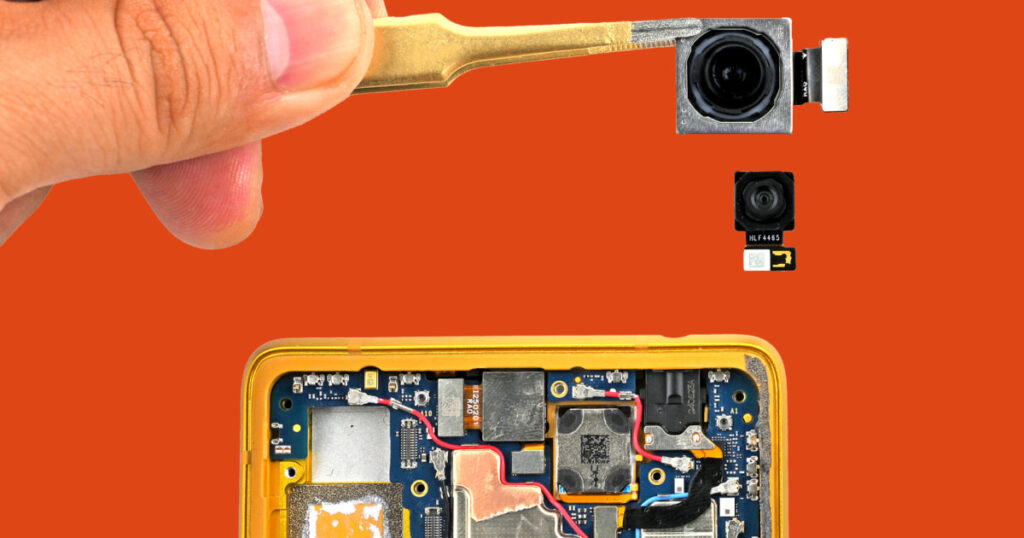
Table of Contents
A Study in White-Labeling
On the surface, the Trump-branded smartphone is marketed as a patriotic alternative to the dominant Silicon Valley hegemony. However, a physical teardown of the device reveals a reality far more common in the mobile industry: the ‘white-label’ strategy. Upon removing the chassis, it becomes immediately apparent that this is not a ground-up engineering feat, but rather a rebranded version of a generic device manufactured in Taiwan.
The internal architecture mirrors a specific array of low-to-mid-range handsets produced by Taiwanese Original Design Manufacturers (ODMs). These firms specialize in creating ‘reference designs’—standardized hardware blueprints that any company can purchase, slap a logo on, and market as their own. By utilizing this model, the branding entity avoids the massive R&D costs associated with PCB design and antenna tuning, effectively paying for a finished product rather than developing a technology platform.
The Component Trail
The internal layout reveals a heavy reliance on the existing Chinese electronics ecosystem. While the final assembly may be attributed to Taiwan, the critical silicon and passive components tell a different story. The motherboard is populated with capacitors, resistors, and voltage regulators sourced from mainland Chinese suppliers, echoing the supply chain of nearly every budget smartphone on the market today.
The chipset—the brain of the operation—does not deviate from standard mid-range specifications. It lacks the proprietary optimizations or specialized hardware one would expect from a device claiming to disrupt the status quo. Instead, the device utilizes a common SoC (System on a Chip) found in various budget-tier handsets across Asia and Europe. This suggests that the software layer—likely a modified version of Android—is doing the heavy lifting in terms of ‘branding,’ while the hardware remains entirely conventional.
Analysis of Build Quality and Integration
Looking at the soldering and board density, the craftsmanship is professional but generic. There are no unique thermal solutions or innovative battery integrations. The battery is a standard lithium-polymer cell, common to dozens of other handsets, fitting into a plastic cradle that allows for easy replacement—a rarity in modern flagship phones but a staple of budget ODM designs.
The most striking revelation is the lack of proprietary hardware. From the camera modules to the haptic engine, the components are off-the-shelf. For a device positioned as a challenge to the ‘globalist’ tech stack, the hardware is paradoxically a product of that very same interconnected, globalized supply chain. The device is not a departure from the industry standard; it is a textbook example of it.
The Branding Paradox
This discrepancy between marketing and metallurgy highlights a growing trend in ‘political’ or ‘nationalist’ hardware. By leveraging Taiwanese ODMs and Chinese parts, companies can bring a product to market in a fraction of the time it would take to build a domestic supply chain. The result is a device that functions reliably—because it uses proven, mass-produced parts—but offers no genuine technological sovereignty.
Ultimately, the teardown confirms that the Trump phone is an exercise in branding over engineering. While it provides a functioning mobile experience, the internal components suggest it is a mirror image of the very devices it seeks to replace, differing only in the logo etched into the glass and the skin of the user interface.