Lenovo’s MWC 2026 Showcase: Foldable Gaming Handhelds and a Modular PC Pivot
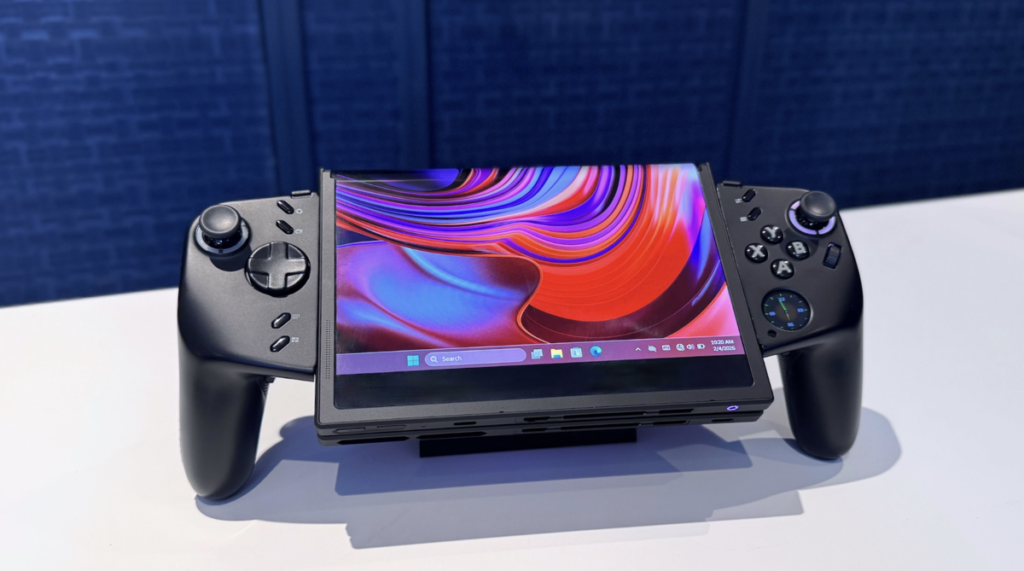
Table of Contents
The Convergence of Gaming and Productivity
Lenovo has arrived at Mobile World Congress (MWC) 2026 with a hardware offensive that signals a clear shift in the company’s strategy: blurring the line between dedicated gaming devices and professional productivity tools. While the volume of announcements is staggering, the centerpiece of the show is undoubtedly the Legion Go Fold Concept.
The prototype addresses the primary tension of the handheld market—the desire for a larger screen without sacrificing portability. The device features a 7.7-inch POLED display that unfolds into an 11.6-inch canvas, capable of horizontal or vertical orientation. In a move that moves it closer to a full laptop replacement, Lenovo has paired the handheld with a detachable wireless keyboard, transforming the device into a compact clamshell Windows machine. Under the hood, the concept runs on an Intel Lunar Lake chip backed by 32GB of RAM, suggesting that Lenovo is eyeing a high-performance tier for foldable handhelds rather than mere tablet alternatives.
A New Philosophy in Repairability
Beyond the flashy foldables, there is a quieter, more significant trend emerging in Lenovo’s 2026 portfolio: a pivot toward modularity and right-to-repair. The ThinkBook Modular AI PC Concept is a direct challenge to the industry’s trend toward soldered components and glued-in batteries. Drawing a similar philosophy to the Framework laptop, this concept allows users to swap ports and peripherals on the fly.
The system utilizes integrated pogo-pin connectors for power and data transfer between modules, creating a flexible architecture where the secondary display and keyboard can be replaced or upgraded based on the user’s workflow. This isn’t just a gimmick for enthusiasts; it represents a potential shift in the lifecycle of enterprise hardware, which has historically been discarded once a single proprietary component fails.
This commitment to longevity is also appearing in the production line. The T-Series models for 2026 have been redesigned for easier repair, and the ThinkPad X1 Carbon Gen 14 Aura Edition, which debuted earlier this year, continues to push the “Space Frame” design intended to make internal replacements straightforward for IT departments.
Creative Hardware and AI Integration
For the creative market, Lenovo is doubling down on specialized displays with the Yoga Book Pro 3D Concept. This dual-display model utilizes eye-tracking technology to render 3D objects without the need for glasses, powered by an Intel Core Ultra 7 and an Nvidia GeForce RTX 5070. The addition of snap-on touch pads for specific menu activation suggests Lenovo is attempting to solve the “input problem” associated with 3D workspace navigation.
On the consumer side, the flagship Yoga 9i 2-in-1 Aura Edition makes its debut. Priced at $1,949 and launching in May, the new 2-in-1 features an Intel Core Ultra Series 3 chip and a refined chassis that brings back the much-requested headphone jack. The device is paired with a Yoga Pen Gen 2, which now magnetically attaches to enable a dedicated “Canvas mode” for digital artists.
The Desk-Based AI Experiment
Lenovo is also attempting to move AI out of the browser and into physical, ambient hardware. Two new prototypes, the AI Work Companion and the AI Workmate, target different segments of the workforce. The Work Companion is a discreet, clock-like device designed for burnout prevention and schedule syncing via a “Thought Bubble” interface.
The AI Workmate, by contrast, is a more expressive, anthropomorphic device designed for business environments. It utilizes on-device AI to process inputs locally—a critical detail for corporate security—allowing it to summarize documents and project content onto physical surfaces using a swivel-head design. By keeping the processing local, Lenovo is attempting to bypass the privacy concerns that have slowed the adoption of cloud-based AI assistants in the enterprise sector.