Hasselblad’s $4,600 Medium-Format Zoom Defies Market Logic to Top Japan’s Sales Charts
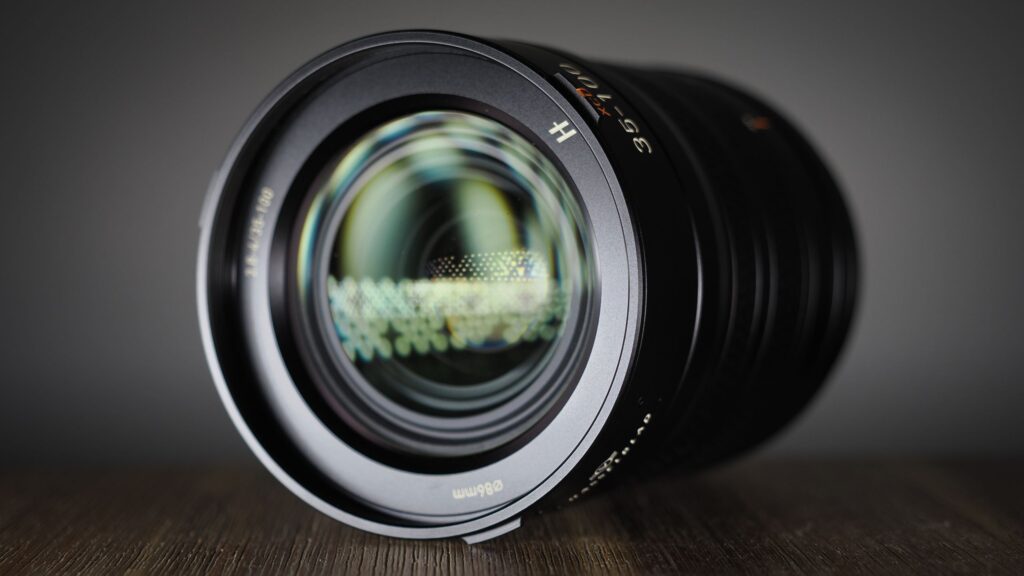
Table of Contents
A surprising shift in consumer demand
In the high-stakes world of professional optics, the market is usually dominated by the ‘Big Three’—Sony, Canon, and Nikon. Their full-frame ecosystems benefit from massive scale and a loyal base of wedding and sports photographers. However, recent data from Yodobashi, one of Japan’s most influential electronics retailers, reveals a strange anomaly in the second half of May: the best-selling lens isn’t a full-frame workhorse, but a medium-format luxury.
The Hasselblad XCD 35-100E, priced at approximately US$4,599, has claimed the No. 1 spot, outperforming lenses that are typically the backbone of the professional industry. To put this in perspective, the XCD 35-100E is beating out the Sony FE 70-200mm f/2.8 GM OSS II and the Nikon Z 70-200mm f/2.8 VR S II—two lenses widely considered the gold standards for versatility and speed in their respective mounts.
The ‘Trinity’ strategy and the medium-format pivot
The XCD 35-100E is the second piece of Hasselblad’s planned ‘trinity’ of zoom lenses for the X-System. For years, medium-format photography was synonymous with slow, deliberate movements and a heavy reliance on prime lenses. If you wanted a different focal length, you changed the glass. Hasselblad is attempting to break that paradigm by offering a zoom that mimics the flexibility of full-frame systems without sacrificing the depth and tonal range of a larger sensor.
The value proposition here is less about the sticker price and more about the utility. According to industry analysis, the 35-100E range is versatile enough to replace up to seven premium prime lenses. For a high-end studio or architectural photographer, investing $4,600 in a single high-quality zoom is a more attractive proposition than spending over $20,000 on a full set of primes.
Bridging the speed gap
One of the primary barriers to medium-format adoption has always been autofocus (AF) speed. While full-frame systems can track a bird in flight or a sprinting athlete, medium-format has traditionally lagged. The XCD 35-100E attempts to bridge this gap. While it doesn’t maintain a constant f/2.8 aperture across its entire range, it hits that mark at the wide end, making it the fastest AF medium-format zoom currently on the market.
When paired with the X2D 100C, the lens benefits from Hasselblad’s updated AF systems, bringing the shooting experience closer to the responsiveness of a Sony Alpha or Nikon Z series. This shift is likely what is attracting the Japanese market, where there is a deep cultural appreciation for both technical precision and the unique aesthetic of large-sensor imagery.
Decoding the Yodobashi rankings
The latest rankings show a fascinating intersection of professional needs and enthusiast cravings. The top 10 list for the late-May period highlights a strong preference for versatility:
- Hasselblad XCD 35-100E (Medium Format)
- Sony FE 70-200mm f/2.8 GM OSS II (Full Frame)
- Canon RF 100-400mm f/5.6-8 IS USM (Full Frame)
- Sony FE 24-70mm f/2.8 GM II (Full Frame)
- Tamron 25-200mm f/2.8-5.6 Di III VXD G2 (E-mount)
The absence of the Canon RF 70-200mm f/2.8 L IS USM Z from the top 10 suggests a temporary dip in demand for that specific focal length within the Canon ecosystem, while the presence of the Tamron 25-200mm indicates that ‘all-in-one’ travel zooms are still holding significant sway with consumers.
Market implications for the ‘Big Three’
While the success of the XCD 35-100E may be a niche victory for Hasselblad in terms of total units sold compared to the millions of Sony users, it signals a shift in consumer appetite. There is a growing segment of the market willing to pay a premium for the ‘medium-format look’ if the gear is no longer cumbersome.
As Sony prepares to launch the FE 100-400mm f/4.5 GM OSS, the market will likely see another shuffle. Historically, Japan’s charts react sharply to new releases—as seen with the Nikon Z 70-200mm f/2.8 VR S II, which skyrocketed to No. 1 immediately upon launch before stabilizing. Whether Hasselblad can maintain its lead or if this is a momentary spike in curiosity remains to be seen, but the XCD 35-100E has proven that medium-format is no longer just for the studio.


