NATO Jets Intercept Drone Over Latvia as Russian Electronic Warfare Blurs Border Lines
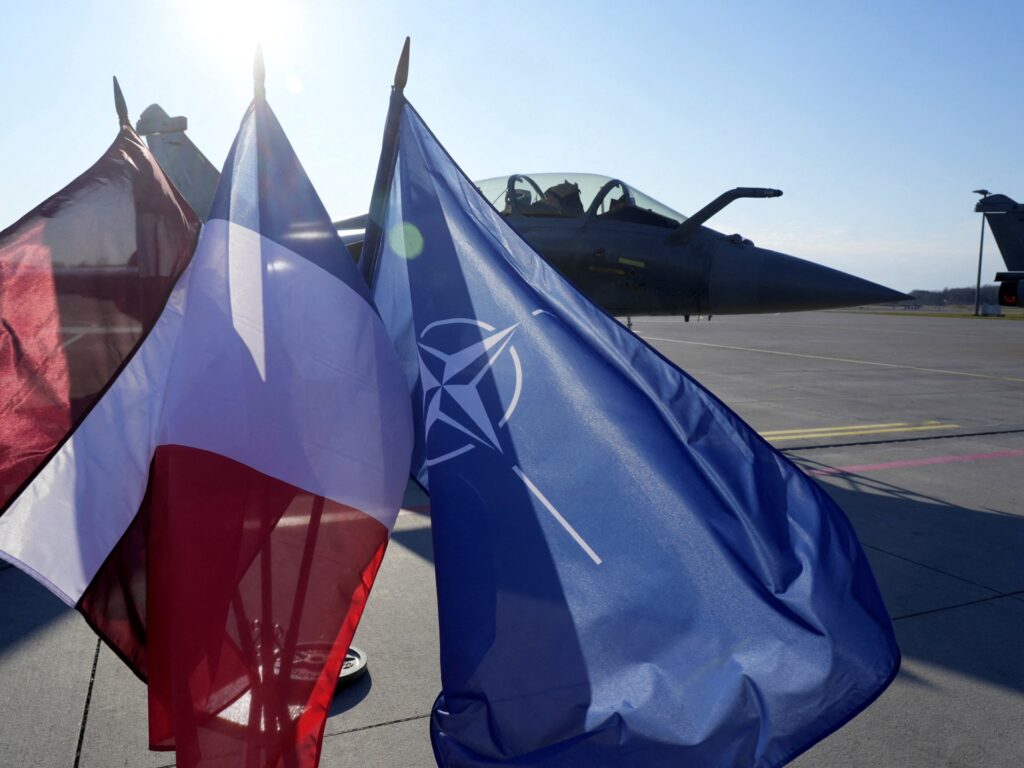
Table of Contents
A Precision Intercept in the Baltics
French fighter jets, operating as part of the NATO Baltic Air Policing mission, shot down an unmanned aerial vehicle (UAV) over Latvia on Monday morning. The aircraft, which scrambled from the Siauliai airbase in northern Lithuania, intercepted the drone near the village of Berzgale, roughly 30 kilometers from the Russian border. While the Latvian military confirmed the destruction of the craft, the incident highlights a volatile new reality in the region: the intersection of kinetic warfare and invisible electronic interference.
According to the Latvian military, the drone entered Latvian airspace as a direct result of “Russian electronic warfare.” While the origin of the drone was not explicitly named in the initial report, the phrasing points to a recurring pattern where Russian signal jamming and GPS spoofing push drones—often Ukrainian assets attempting to strike Russian targets—off course and into neighboring NATO territories.
Defence Minister Raivis Melnis confirmed that the shoot-down occurred shortly after 9:00 AM local time. Though no casualties or property damage were reported, the event triggered emergency warnings for residents in eastern Latvia to shelter in place, underscoring the high tension surrounding airspace violations in the Baltics.
The Technicality of ‘Drift’
The mention of electronic warfare is the most critical technical detail of the incident. Modern UAVs rely heavily on Global Navigation Satellite Systems (GNSS) for waypoint navigation. Russian forces have extensively deployed “spoofing” and “jamming” technologies across the border regions to neutralize Ukrainian drone strikes. By broadcasting false GPS signals, these systems can trick a drone’s autopilot into believing it is elsewhere, causing it to deviate from its flight path.
This isn’t an isolated case of navigation error. On the same day, fragments of a Ukrainian drone were recovered in Moldova, an incident officials also attributed to Russian interference. Just last week, a maritime drone exploded in Romania’s Constanta port; Kyiv later admitted the craft was a Ukrainian asset knocked off course by Russian electronic jamming.
This creates a precarious geopolitical loophole. Moscow can effectively “weaponize” the airspace of NATO allies by manipulating the guidance systems of their adversaries’ drones, forcing NATO forces to either ignore the incursions or risk the political optics of shooting down assets belonging to their own partner, Ukraine.
Political Fallout and Infrastructure Gaps
The frequency of these incursions is beginning to destabilize local governance. In Latvia, the persistent threat of airspace violations contributed to the political climate that led to the resignation of Prime Minister Evika Silina last month. The inability to fully secure the border against invisible electronic threats is becoming a focal point for domestic criticism.
The incident has also reignited calls for a rapid upgrade in regional defense tech. In late May, a Russian drone struck an apartment building in eastern Romania, injuring two people. That event prompted Bucharest to urge NATO to accelerate the transfer of dedicated anti-drone capabilities and electronic countermeasures (ECM) to the eastern flank.
European Commission President Ursula von der Leyen has since warned that the conflict is increasingly becoming a “direct threat” to countries on the eastern border. The French military’s swift action on Monday is a demonstration of the Baltic Air Policing mission’s operational readiness, but it also reveals a reactive posture. As electronic warfare evolves, the challenge for NATO will be moving from shooting down “stray” drones to preventing the electronic manipulation that sends them there in the first place.


