Leaf Space Aims to Turn Orbit Into a Mesh Network With New TreeNet Service
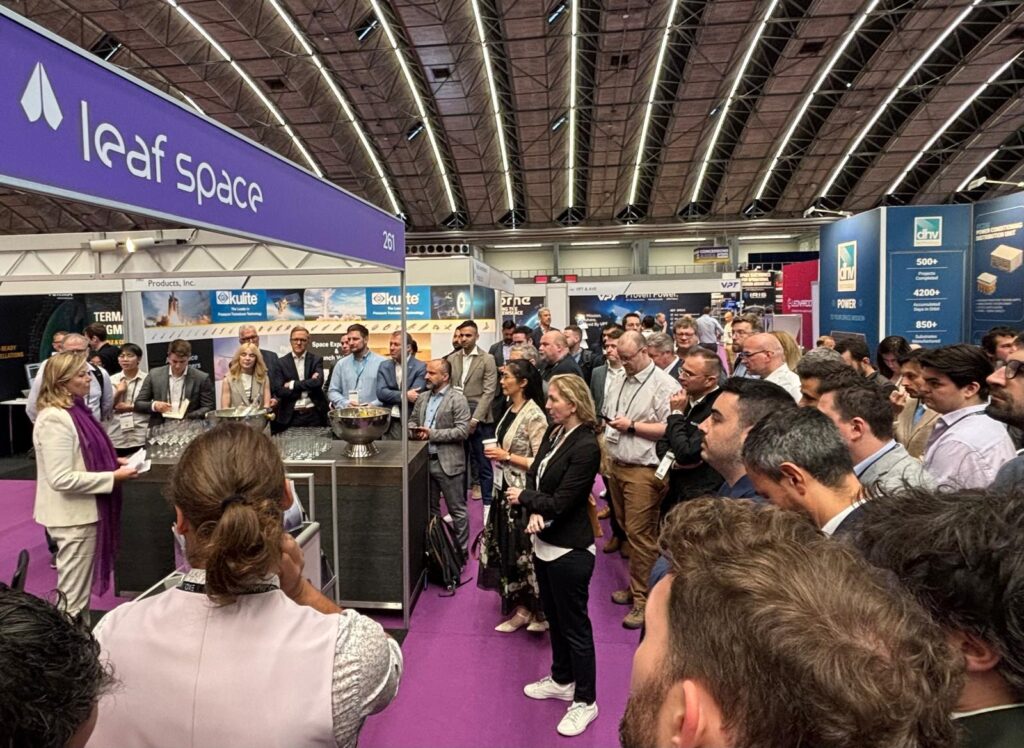
Table of Contents
Moving Beyond the Ground Station
For most satellite operators, the struggle is the ‘gap’—the silence that occurs when a spacecraft disappears over the horizon and loses contact with its ground station. Traditionally, this has required a massive, expensive footprint of global antennas to ensure consistent telemetry and data download. Leaf Space, an Italian ground segment operator, is attempting to solve this by moving the network logic from the earth up into the vacuum of space.
At the SmallSat Europe conference, Leaf Space unveiled TreeNet, a connectivity service designed to transform individual satellites into active nodes within an interconnected communications mesh. Rather than relying solely on a direct line to a ground antenna, TreeNet envisions an orbital layer where satellites can relay data to one another, effectively bridging the distance between orbital operations and Earth-based infrastructure.
The Alpha Phase: Partnerships and Deployment
The ambition is high, but the rollout is phased. Leaf Space has entered into strategic partnerships with Italy-based D-Orbit and Bulgaria-based EnduroSat to execute the initial ‘Alpha’ testing phase. The plan involves the launch of four satellites equipped with TreeNet nodes, scheduled for the first half of 2027.
The selection of these partners wasn’t arbitrary. According to Giovanni Pandolfi Bortoletto, Leaf Space’s chief product officer and co-founder, the decision was driven by launch cadence. In the fast-paced environment of NewSpace, the ability to get hardware into orbit quickly is the primary bottleneck for iterative testing. D-Orbit and EnduroSat provide the necessary frequency of launches to validate the mesh networking hardware in a real-world environment.
For D-Orbit, the partnership is an exploration of how in-orbit connectivity can strip away the complexities of mission operations. For EnduroSat, the integration of TreeNet is a play to enhance their ‘mission-as-a-service’ model. By offering an ‘always-on’ connectivity layer, EnduroSat can provide customers with a level of reliability that was previously reserved for high-budget institutional missions.
Scaling the Orbital Web
Leaf Space isn’t looking for a boutique pilot program; they are planning for industrial scale. Pandolfi Bortoletto has signaled a target production and deployment capability of at least 100 nodes per year once the commercial phase begins in late 2027. This suggests a move toward a standardized hardware module that can be easily integrated into third-party satellite buses.
This pivot represents a calculated evolution for the company. Founded in 2014 by Pandolfi Bortoletto and Jonata Puglia, Leaf Space originally chased launch capabilities before pivoting to Ground Segment-as-a-Service (GSaaS). With a current infrastructure of roughly 40 antennas across 20 global sites, the company has already mastered the ‘bottom half’ of the communication loop. TreeNet is the attempt to own the ‘top half.’
The financial backing for this expansion is already in place, following a 35 million euro ($41 million) Series B round completed in 2023. That capital is now being funneled into the transition from being a service provider that manages antennas to a technology provider that defines how satellites talk to each other.
The Implications for Satellite Architecture
If TreeNet succeeds, the ripple effect across the small-sat industry could be significant. The current dependency on specific ground-station windows creates ‘data bottlenecks,’ where satellites collect massive amounts of information but can only dump it in short bursts. An interconnected orbital network would allow for more dynamic routing of data, reducing latency and increasing the resilience of satellite constellations.
As Leaf Space extends its ground-based logic into orbit, the company is essentially betting that the future of space isn’t just about launching more hardware, but about the invisible software and connectivity layers that bind that hardware together into a functional, global utility.