NASA Weighs High-Stakes ‘Reboost’ Mission for Hubble as Commercial Space Tech Matures
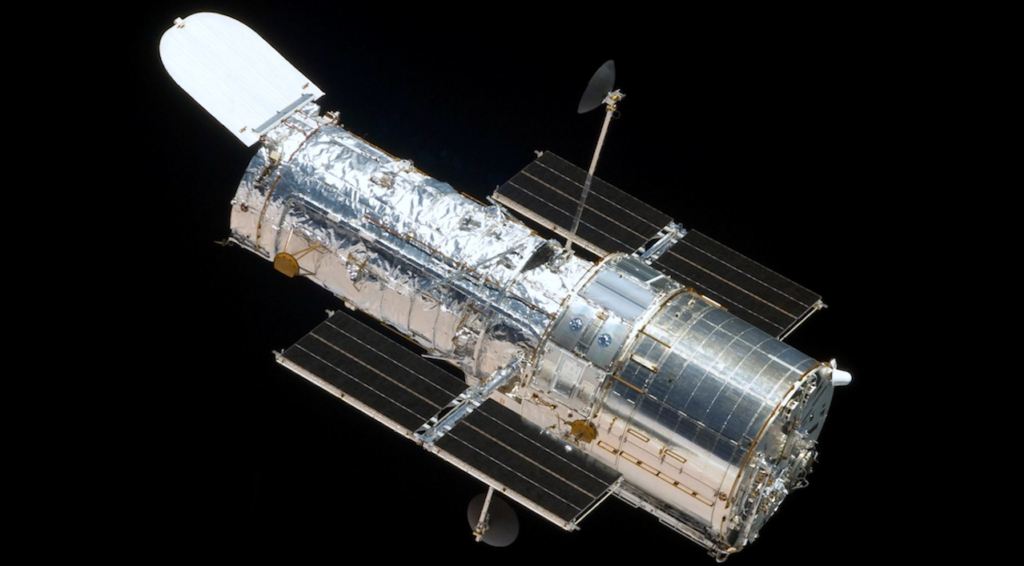
Table of Contents
The Swift Experiment
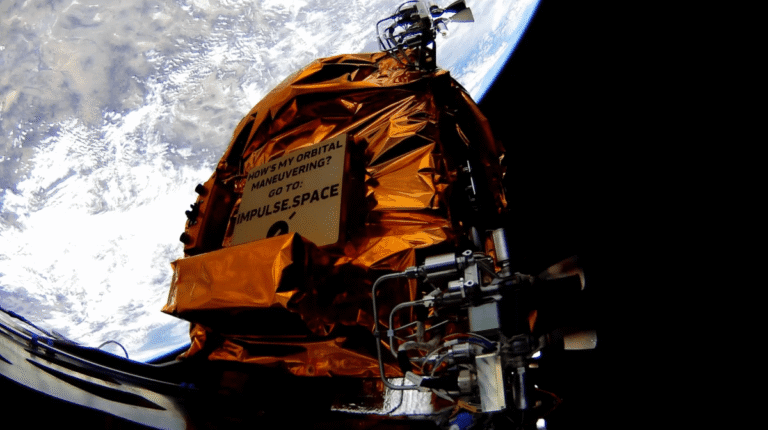
NASA is currently betting on a high-risk, high-reward gamble to save a decaying observatory, and if it works, the legendary Hubble Space Telescope could be next. The catalyst is the Link servicing spacecraft, developed by Katalyst Space, which recently arrived at the Wallops Flight Facility in Virginia for integration with a Northrop Grumman Pegasus XL rocket.
The immediate mission is focused on the Neil Gehrels Swift Observatory. A gamma-ray detector designed to catch the universe’s most violent explosions, Swift is currently fighting a losing battle against atmospheric drag in low Earth orbit. The Link spacecraft is designed to rendezvous with Swift and physically push it into a higher orbit, extending its operational lifespan without the need for a multi-billion dollar replacement.
The timeline is aggressive. NASA awarded Katalyst a $30 million contract last September, moving from boardroom concepts to a launchpad in roughly a year. During a June 1 meeting of the Astronomy and Astrophysics Advisory Committee, Shawn Domagal-Goldman, director of NASA’s astrophysics division, didn’t mince words about the danger: “This has always been a long-odds effort.”
Scaling the Model for Hubble
While Swift is the test case, Hubble is the ultimate prize. Like Swift, Hubble’s orbit is gradually decaying. According to data shared by Jennifer Lotz, director of the Space Telescope Science Institute, current orbital models suggest a median reentry date of 2033. Without intervention, the most famous telescope in history will eventually succumb to the atmosphere.
Domagal-Goldman suggests that the Katalyst project provides a proof-of-concept for Hubble. If a commercial entity can successfully dock with and reboost a telescope not originally designed for on-orbit servicing, the cost-benefit analysis for Hubble shifts. The agency is seeing a lower price point for these commercial services than previously anticipated, making the return on investment (ROI) for a Hubble extension more attractive.
The Budgetary Hurdle
However, a reboost is only half the battle. The real obstacle to keeping Hubble aloft is the cost of keeping it running. In fiscal year 2025, NASA spent $98.8 million on Hubble operations, a figure surpassed only by the James Webb Space Telescope. Because Hubble was designed in a different architectural era, it requires significant manual oversight and legacy maintenance to extract high-quality science.
NASA’s Science Mission Directorate is currently under pressure to optimize its budget to fund upcoming projects. Domagal-Goldman indicated that while the agency is “open to a reboost of Hubble,” it is contingent on finding a way to slash the telescope’s annual operating costs. The agency has not yet specified the exact target for these reductions, but the goal is clear: make Hubble sustainable enough to serve as a bridge.
A Bridge to the 2040s
The strategic importance of Hubble extends beyond its current observations. If NASA can stabilize its orbit and reduce its overhead, the telescope could remain functional for years, providing critical data until the launch of the Habitable Worlds Observatory. This next-generation optical and ultraviolet telescope is slated for the 2040s, leaving a significant gap in NASA’s observational capabilities if Hubble were to burn up in the atmosphere by the early 2030s.
By signaling a demand for on-orbit servicing to the commercial sector, NASA is attempting to shift the paradigm from “launch and leave” to a sustainable, serviceable infrastructure in space. The success of the Link mission later this month will determine whether the commercial sector is ready to tackle the complexity of Hubble.