UK Space Agency Partners with Vast to Send First Physically Disabled Astronaut to Orbit
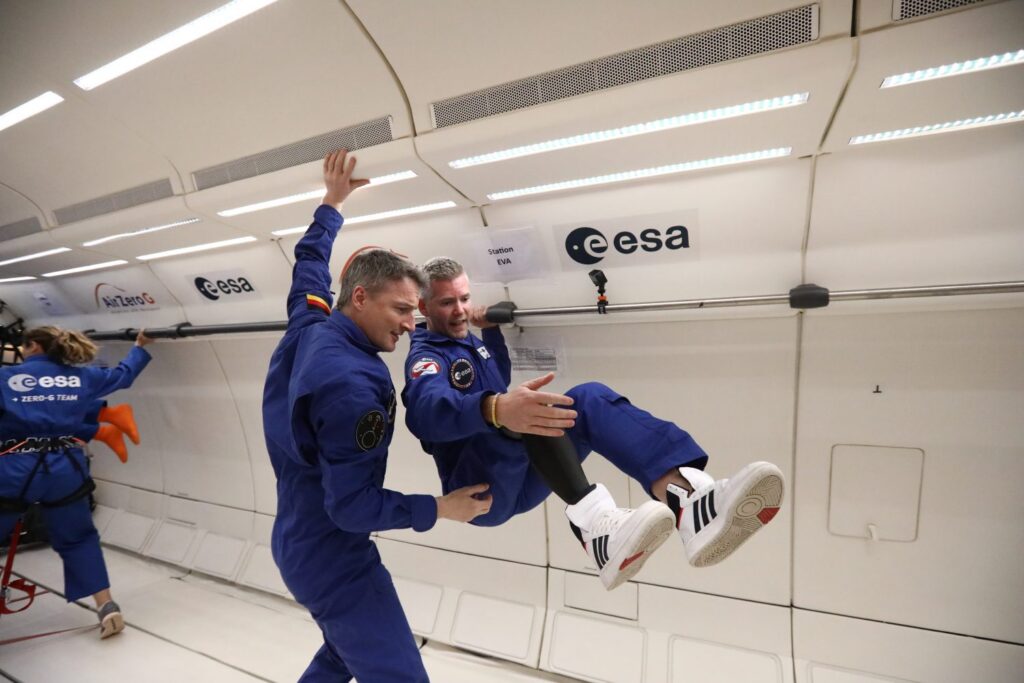
Table of Contents
The UK government is moving toward a historic milestone in human spaceflight, exploring a partnership with U.S.-based startup Vast to send British astronaut John McFall to the upcoming Haven-1 space station. If successful, the mission would make McFall the first person with a physical disability to live and work in orbit, challenging long-standing medical prerequisites for space travel.
A Shift in Orbital Accessibility
The UK Space Agency (UKSA) announced an agreement on June 2 to support Vast in securing the corporate sponsorships necessary to fund the 14-day mission. While the exact financial requirements remain undisclosed by Vast, a British government spokesperson clarified that the intent is for sponsorship to cover the mission’s total cost, with the UKSA providing legal, regulatory, and networking support to connect the mission with potential backers.
John McFall, a surgeon and European Space Agency (ESA) reserve astronaut, represents a significant shift in how space agencies view physical capability. Having lost his right leg in a motorcycle accident, McFall became the first person with a physical disability to be medically cleared for a long-duration mission last year. His selection in 2022 as part of ESA’s “Fly! Project” was specifically designed to pioneer the inclusion of astronauts with physical disabilities, moving beyond the traditional “perfect specimen” requirement that has dominated the industry since the Cold War.
The Haven-1 Architecture
The mission is slated for the Haven-1 station, a single-module outpost planned for launch next year via a SpaceX Falcon 9 rocket. Unlike the sprawling International Space Station (ISS), Haven-1 is designed as a streamlined, commercial stepping stone. The module is expected to accommodate a crew of four, arriving via the SpaceX Crew Dragon spacecraft, a few weeks to months after the station is established in low Earth orbit (LEO).
Haven-1 is not intended to be a permanent fixture but rather a proof-of-concept. It is scheduled to remain in orbit for three years, serving as the precursor to Haven-2, a larger, multi-module station intended for continuous crewed operations. For McFall, this environment provides a unique laboratory to study how prosthetic limbs and musculoskeletal systems adapt to microgravity—data that could have profound implications for accessibility and rehabilitation on Earth.
Scientific Objectives and Inclusive Design
Beyond the symbolic victory of inclusivity, the mission carries a heavy scientific load. McFall is expected to conduct research focusing on:
- Prosthetic Performance: Analyzing how prosthetic interfaces behave in weightlessness and the potential for optimizing design for non-terrestrial environments.
- Human Physiology: Tracking musculoskeletal adaptation and the impact of orbital living on users of assistive technologies.
- Orbital Mobility: Testing how individuals with physical disabilities navigate and interact with spacecraft interiors.
This mission follows the precedent set by Michaela Benthaus, a German engineer and ESA astronaut who became the first wheelchair user to reach space during a 10-minute Blue Origin suborbital flight in December. However, McFall’s proposed mission to Haven-1 represents a massive leap in complexity, moving from a few minutes of weightlessness to a two-week orbital residency.
The Broader UK Space Strategy
The agreement with Vast also signals a wider diplomatic and technical alignment between the UK and the US. The framework extends beyond a single flight, covering collaborative research in LEO, technology development, and public engagement. For the UK, the stakes are also nationalistic; a successful mission would mark the first time a Briton has visited an orbital station since Tim Peake’s 2015 mission to the ISS.
This move comes as the UKSA seeks a more reliable path to orbit. In 2023, the agency entered a similar agreement with Axiom Space to pursue a commercially sponsored mission to the ISS, but that initiative has seen little public momentum. By pivoting toward Vast, the UK is betting on the new wave of commercial space stations that promise more flexibility and lower barriers to entry than the legacy government-run programs.
“The U.K. is committed to being at the forefront of inclusive human spaceflight,” said British Space Minister Liz Lloyd. “This builds on the ground-breaking work John has already done and opens the door to a genuine flight opportunity.”