Leica Partners with Ollin to Solve the ‘Fiddly’ Problem of Smartphone Digiscoping
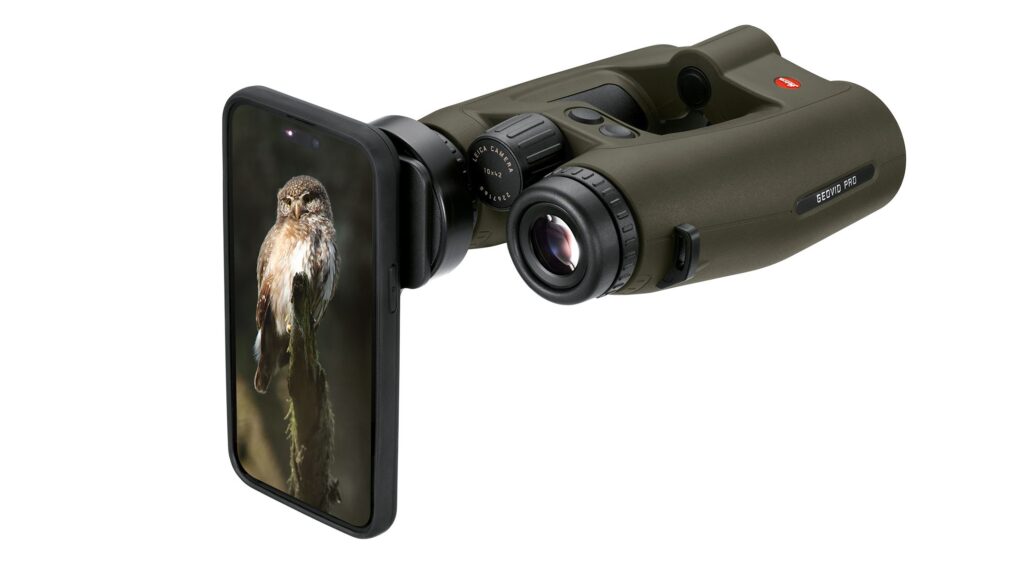
Table of Contents
Moving Beyond the Tripod Struggle
For years, ‘digiscoping’—the act of photographing through an optical device like a telescope or binoculars—has been a exercise in frustration. Most setups involve awkward plastic clamps, imprecise alignment, and the inevitable struggle of trying to balance a smartphone against an eyepiece while a rare bird or distant target disappears from view. Leica is attempting to kill that friction with a new partnership with US-based company Ollin.
The result is the Ollin snapshot adapter, specifically engineered for the Leica Geovid Pro line. Unlike traditional adapters that rely on screw-tightened clamps or generic rubber bands, the Ollin system utilizes magnetic brackets. The goal is repeatability; once the phone is aligned with the binocular’s exit pupil, the magnets ensure that the camera stays centered without the user having to micro-adjust the phone every time they switch devices or restart a session.
To make the system universal, Leica and Ollin are offering a snapcase and a magnetic tab as separate accessories. This allows users to integrate the magnetic mounting point into their existing phone cases, effectively turning the smartphone into a modular component of the Geovid Pro’s optical chain.
Optics Meet Fieldcraft
The adapter arrives alongside a strategic refresh of the Geovid Pro hardware. Leica is introducing the Geovid Pro 8×42 and 10×42 binoculars in a new olive green finish. While a color change may seem cosmetic, it serves as a visual shorthand for Leica’s diversifying rangefinder lineup. Olive green now denotes the Geovid Pro line, while the Geovid R range stays black, and the top-tier Geovid AB+ models are finished in Flat Dark Earth.
The Geovid Pro isn’t just a set of lenses; it is a sophisticated computer for the field. The system integrates Pro Applied Ballistics Ultralight, a ballistic solver that handles long-range calculations with G1/G7 support. With over 740 factory-loaded cartridges pre-installed, it caters to a high-end niche of hunters and precision shooters who need immediate data on bullet drop and windage without switching to a handheld device.
Adding to this utility is an integrated compass and the Leica Pro Track system. By combining the binoculars’ open-bridge design for better grip with digital terrain mapping, the device functions as a navigation tool, allowing users to mark and retrieve coordinates in the field—a capability that transforms the binoculars from a passive observation tool into an active piece of field gear.
The Cost of Precision
As with most Leica Sport Optics, the entry price is steep. The Geovid Pro 8×42 and 10×42 models are priced at $3,639 and $2,470 respectively, depending on the configuration. The Ollin snapshot adapter is sold separately for $229 / €129, though Leica has indicated that additional adapter models will be released for their broader range of spotting scopes and other binocular series.
By integrating a smartphone directly into the optical path, Leica is acknowledging a shift in how field observers document their findings. Rather than carrying a dedicated DSLR with a massive telephoto lens, the ‘digiscoping’ workflow allows the user to leverage the high-resolution sensors and instant connectivity of a modern iPhone or Android device, provided they are willing to pay the premium for Leica’s precision alignment.


