The Hidden Biohazard in Your Kitchen: Why Your Keurig Is a Breeding Ground for Mold
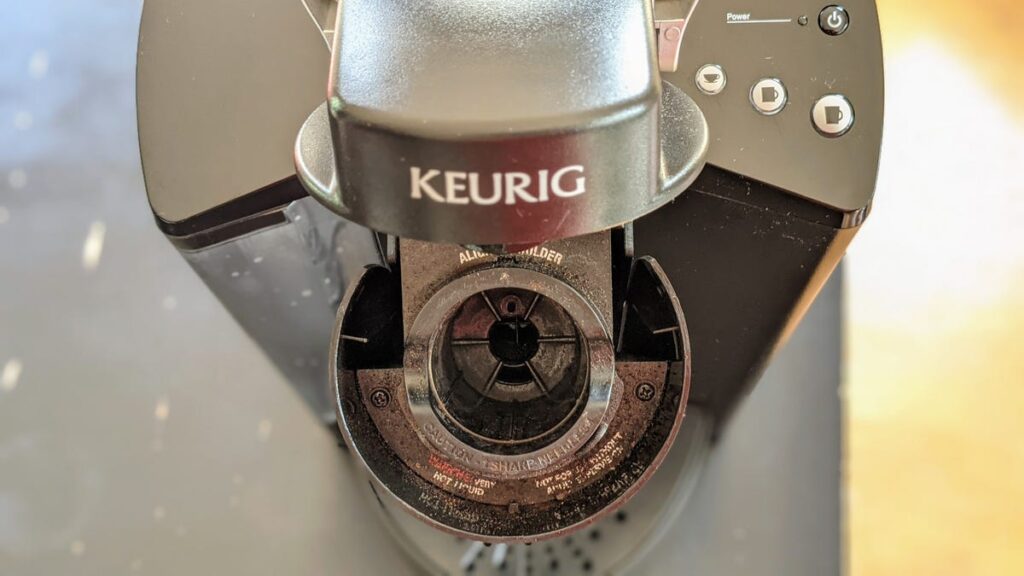
Table of Contents
The Convenience Trade-off
The appeal of the Keurig ecosystem is built entirely on the promise of frictionless speed. In less than sixty seconds, a user can go from sleep-deprived to caffeinated without the mess of traditional drip brewers. However, that engineering efficiency masks a biological reality: the internal architecture of a single-serve coffee maker is essentially a warm, dark, and humid incubation chamber.
For many users, the first sign of a problem is a subtle shift in taste—a metallic or musty note that persists regardless of the bean quality. By the time a user notices the flavor profile changing, the machine’s internal tubing and needle assembly have often become colonized by mold and biofilm. Online communities, particularly on Reddit, have become repositories for alarming imagery of ‘forgotten’ machines, where the water reservoir and pod holders have transformed into petri dishes of fungal growth.
The Anatomy of Accumulation
The risk isn’t just in the water tank. The most critical point of failure is the K-Cup holder and the piercing needle. Because these components are in direct contact with organic material (coffee grounds) and hot water, they are prone to accumulating a layer of coffee oils and residue. When a used pod is left in the machine for several days, it provides a nutrient-rich substrate for mold to grow, which can then be pushed directly into the next cup of coffee during the brewing process.
Beyond organic growth, there is the issue of mineral scale. Depending on the hardness of your local water supply, calcium and magnesium deposits build up inside the heating element. This doesn’t just affect the taste; it puts mechanical strain on the pump, eventually leading to premature hardware failure.
Systematic Decontamination
Restoring a compromised machine requires more than a quick rinse. A thorough decontamination starts with the removable components. The water reservoir and lid should be hand-washed with dish soap or run through a dishwasher, provided they are rated for it. Crucially, the water filter must be removed first to avoid contaminating the filtration media with soap residue.
The drip tray, often ignored until it overflows, is another primary site for bacterial growth. Spilled coffee and stagnant water create a sludge that requires regular scrubbing with warm, soapy water to prevent odors from permeating the surrounding kitchen area.
The Descaling Process
While surface cleaning handles the visible grime, descaling targets the internal ‘veins’ of the machine. This process involves flushing the system with a citric acid-based solution or a mixture of white vinegar and water.
The general procedure involves filling the reservoir with the solution and running multiple ‘brew’ cycles without a pod. Because different Keurig models have different activation sequences for their cleaning modes, users should reference the specific support documentation for their model to ensure the solution reaches the heating element. After the descaling agent has been flushed through, it is vital to run two to three cycles of plain, filtered water to remove any lingering vinegar scent or acidic taste.
Maintenance Cadence
To avoid the need for emergency deep-cleaning, a tiered maintenance schedule is recommended. The K-Cup holder and drip tray should be cleaned every two to three weeks. A full system descale is typically necessary every three months, though those in regions with ‘hard water’ may need to do this more frequently to prevent calcium buildup from choking the flow rate.
Ultimately, the longevity of these gadgets depends on the user’s willingness to step away from the ‘one-touch’ convenience and perform basic industrial hygiene. A clean machine doesn’t just taste better; it ensures that the morning ritual remains a health benefit rather than a biological risk.


