Colombia’s Presidential Runoff: A High-Stakes Clash Between Right-Wing Populism and Leftist Continuity
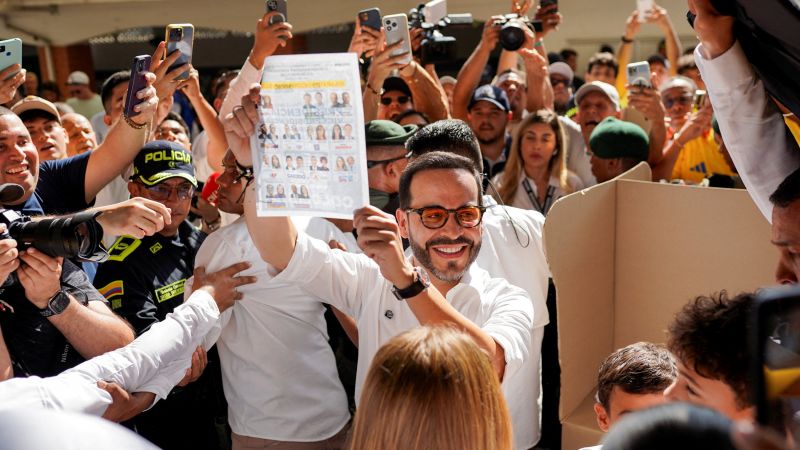
Table of Contents
A Nation Divided: The Road to June 21
Colombia is bracing for a high-voltage political showdown following a first-round presidential vote that has left the country split between two diametrically opposed visions of governance. With over 99% of ballots tallied, right-wing challenger Abelardo de la Espriella has emerged as the frontrunner with 43.74% of the vote, though he fell short of the absolute majority needed to secure an outright victory.
He will face Senator Iván Cepeda, the standard-bearer for the left-wing Historic Pact coalition, who secured 40.90% of the vote. The narrow margin between the two candidates sets the stage for a runoff election on June 21, transforming the contest into a referendum on the legacy of outgoing President Gustavo Petro.
The third-place candidate, Paloma Valencia of the Democratic Center, trailed significantly with 6.92%. In a move that could consolidate the conservative vote, Valencia—the first woman to lead the party founded by former President Álvaro Uribe—promptly endorsed de la Espriella. Her support is framed as a defensive wall against what she characterizes as a “new communism” attempting to take root in the Andean nation.
The Outsider and the Institutionalist
Abelardo de la Espriella, a 47-year-old lawyer and businessman, represents a sharp departure from Colombia’s traditional political class. His rise mirrors the global trend of right-wing populism, drawing frequent comparisons to El Salvador’s Nayib Bukele. De la Espriella has leveraged a “tough-on-crime” platform, promising a confrontational approach to dismantle criminal organizations and a return to strict law and order.
Beyond security, de la Espriella is pitching a neoliberal economic pivot. His platform includes expanding oil exploration—a direct reversal of Petro’s environmental agenda—lowering taxes to stimulate investment, and tightening security alliances with the United States and Israel. Following the first round, de la Espriella took to X (formerly Twitter) to claim his victory was an answer to a “roar” from 10 million Colombians, promising to defeat “tyranny and absolutism.”
On the other side of the spectrum, 63-year-old Senator Iván Cepeda enters the runoff as the defender of the current administration. A seasoned human rights advocate and the son of the assassinated politician Manuel Cepeda Vargas, Cepeda is deeply embedded in the left-wing movement. His campaign is built on the premise of “democratic revolution,” seeking to deepen the social protections and agrarian reforms initiated under Petro.
The Legacy of ‘Total Peace’
At the heart of this electoral battle is the controversial “Total Peace” strategy. President Petro’s flagship policy attempted to negotiate simultaneous ceasefires with multiple guerrilla factions and criminal gangs to end decades of internal conflict. While supporters view this as a humanitarian necessity, critics argue it created a power vacuum that emboldened illegal actors.
The volatility of the security situation was underscored by the tragic assassination of candidate Miguel Uribe Turbay, who died in August after being shot at a campaign rally. For many voters, the rising activity of criminal gangs despite government negotiations has made security the primary driver of the June runoff.
Geopolitical Stakes and US Relations
The result of the June 21 vote will likely redefine Colombia’s standing on the global stage. A Cepeda victory would signal continuity in Petro’s approach, potentially maintaining a more cautious or critical distance from traditional US security paradigms while focusing on environmental diplomacy.
Conversely, a de la Espriella presidency would likely see a pivot back toward a robust, traditional partnership with Washington. His explicit praise for Donald Trump and his desire for stronger security ties suggest a presidency that would prioritize counter-narcotics and intelligence sharing over the social-reform diplomacy of the current administration.
As President Petro refuses to accept the preliminary results pending official commission data, the atmosphere leading into the runoff remains fraught with tension, leaving the country’s economic and diplomatic trajectory hanging in the balance.