Mechanical Failure Scrubs Debut of SpaceX’s Starship V3 Just Before Liftoff
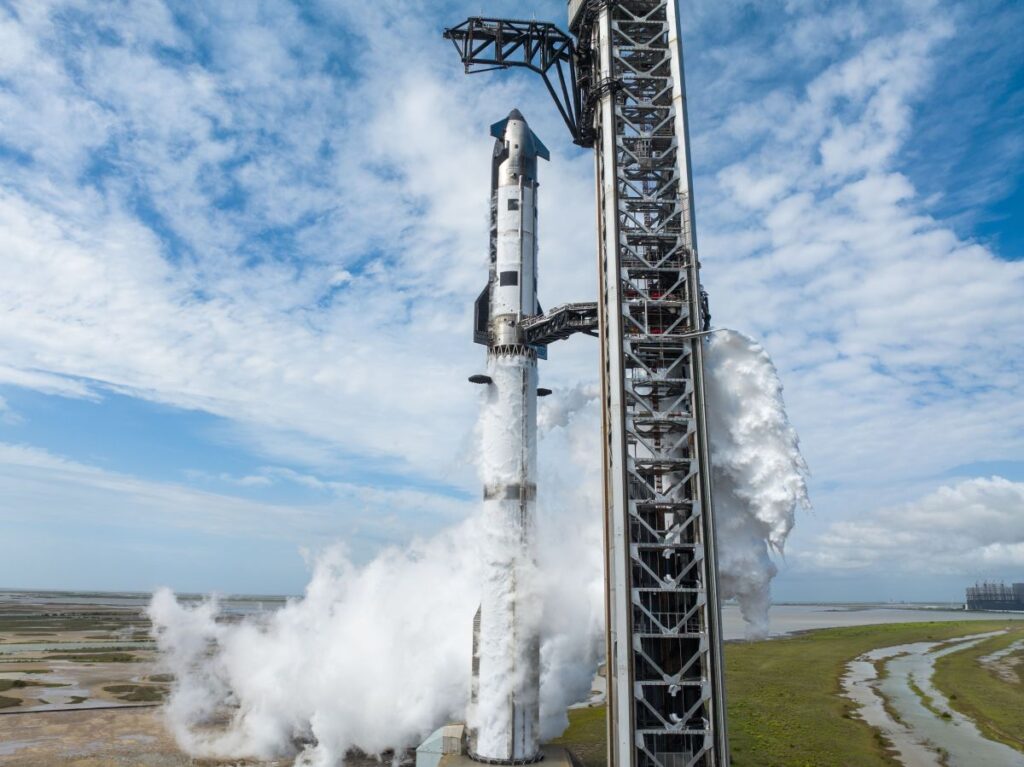
Table of Contents
A Tense Countdown at Starbase
The debut of SpaceX’s third-generation Starship rocket system ended in a nail-biting scrub on Thursday, with the countdown halted just as the vehicle reached its most critical phase. After multiple recycling attempts that pushed the launch toward the very end of its available window, the team at Starbase, Texas, called off the flight with less than 40 seconds remaining on the clock.
The vehicle and its massive Super Heavy booster were already fully fueled—a high-stakes state where any delay increases the risk of propellant boil-off—when a mechanical failure intervened. Elon Musk later clarified via X that the scrub was caused by a specific hardware glitch: a hydraulic pin designed to hold the launch tower arm in place failed to retract. Without that arm clearing the vehicle, liftoff was impossible.
SpaceX has tentatively rescheduled the attempt for Friday at 5:30 p.m. local time, though that window depends entirely on the engineering team’s ability to troubleshoot and fix the pin mechanism overnight.
The V3 Architecture: More Than a Minor Tweak
This isn’t just another test flight; it represents the first operational outing of the V3 hardware. After the lessons learned from the first 11 flights, SpaceX has overhauled the vehicle to move closer to its goal of total, rapid reusability. The most significant changes are buried in the propulsion and structural design.
The V3 utilizes the latest iteration of the Raptor engines, which provide increased thrust and a more streamlined profile to reduce weight and complexity. On the booster side, SpaceX has removed one grid fin and altered the airframe to make the “catch” maneuver—where the tower arms snare the booster mid-air—more reliable.
Furthermore, engineers have redesigned the upper stage to address a recurring ghost in the machine: propellant leaks. Previous flights saw gas build-up in certain sections that threatened the integrity of the vehicle during ascent. The V3 design aims to eliminate these pockets, ensuring the ship can withstand the stresses of orbital velocity without leaking critical fluids.
IPO Pressure and the Starlink Bet
While the technical hurdles are the immediate focus, the timing of this launch is fraught with corporate tension. SpaceX has recently filed for an Initial Public Offering (IPO) and is expected to list on the public market within weeks. For a company that has long operated in the shadows of private funding, a public listing puts a magnifying glass on its primary development programs.
The stakes are particularly high because of Starlink. According to the company’s public IPO filings, the satellite internet constellation generated $11 billion in revenue last year. However, to scale that revenue, SpaceX needs the massive payload capacity of Starship. While the company has successfully deployed dummy versions of upgraded satellites in the past, it has yet to prove that the V3 system can reliably deliver a fully operational commercial payload into a stable orbit.
A Conservative Flight Profile
Despite the hardware upgrades, SpaceX is taking a measured approach for this first V3 outing. The mission will not attempt a full recovery of the booster or the ship. Instead, both stages are slated for “soft landings” in the water—the booster in the Atlantic and the ship in the Indian Ocean.
Because the vehicle will not enter a true Earth orbit, this flight serves as a structural and propulsion validation rather than a full mission demonstration. It is a “shake-down” cruise designed to ensure the Raptor V3 engines and the new airframe can survive the journey to space before SpaceX attempts the high-risk recovery maneuvers that have become the hallmark of the program.


