NASA Taps Blue Origin and Firefly to Build the ‘Logistics Chain’ for a Permanent Moon Base
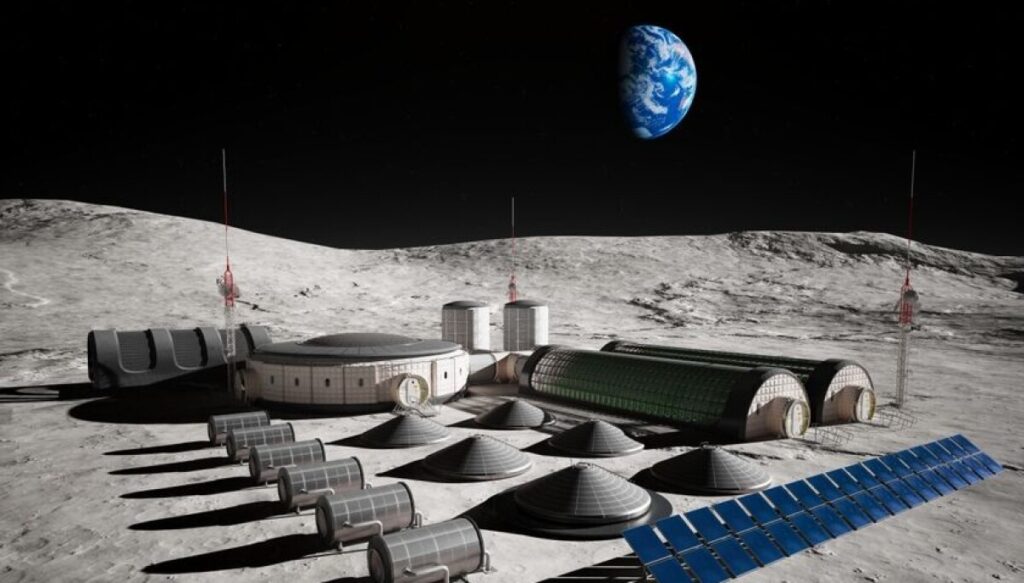
Table of Contents
Shifting from Exploration to Infrastructure
For decades, lunar missions have been snapshots in time—brief visits defined by scientific sampling and the planting of flags. But NASA is now pivoting toward a paradigm of permanence. The agency recently announced a series of strategic contracts aimed at transforming the lunar surface from a destination into a functional outpost, signaling a transition from the ‘visit’ phase of the Artemis program to a sustained industrial presence.
The initiative is centered on the creation of a “lunar economy,” a concept championed by NASA Administrator Jared Isaacman. The goal is to move away from a model where every bolt and battery is funded by taxpayers, instead building the foundational infrastructure necessary for private corporations to eventually finance and operate their own lunar outposts. According to Isaacman, the agency cannot simply mandate a market into existence; it must first build the roads and ports that make commercial lunar activity viable.
The Hardware: Rovers and Cargo Landers
To achieve this, NASA has awarded contracts to four key aerospace players: Blue Origin, Astrolab, Lunar Outpost, and Firefly Aerospace. The immediate priority is mobility and delivery. Blue Origin has secured a $188 million task order (with an additional $280.4 million option) to deploy lunar terrain vehicles to the South Pole via its Mark 1 uncrewed lander. This lander will lead the “Moon Base I” mission, targeting the Shackleton Connecting Ridge as early as fall 2026.
Mobility on the surface is being split between Astrolab and Lunar Outpost, who received contracts worth $219 million and $220 million respectively. These companies are developing crewed and autonomous vehicles capable of hauling two astronauts across the lunar regolith at speeds exceeding 9 mph. Astrolab’s CLV-1, based on its FLEX architecture, and Lunar Outpost’s Pegasus—which leverages partnerships with General Motors and Goodyear—are designed to cover over 124 miles over their operational lifespan, providing the range necessary for deep exploration of the lunar South Pole.
The ‘MoonFall’ Reconnaissance
While the rovers handle the surface, NASA is deploying “eyes in the sky.” Firefly Aerospace will provide the carrier spacecraft for JPL’s “MoonFall” drones. These robotic scouts are designed to map the surface at centimeter-scale resolution and search for subsurface water ice—a critical resource for future life support and fuel production.
Carlos García-Galán, the Moon Base program manager, emphasized that these drones are built for survival. Unlike previous short-lived probes, MoonFall drones are engineered to endure the brutal lunar nights, remaining dormant until the sun returns to resume their objectives.
A Three-Phase Blueprint for Colonization
The agency’s roadmap is structured into three distinct evolutionary phases:
- Phase 1 (Through 2029): The focus is on establishing the logistics chain, delivering approximately four metric tons of cargo and the first transport systems across 25 potential missions.
- Phase 2 (2029–2032): Scaling operations to deliver up to 60 metric tons of cargo, introducing power grids, communication networks, and the first semi-permanent habitation modules.
- Phase 3 (Post-2032): Achieving sustained human habitation supported by nuclear power systems and a consistent annual cargo delivery capacity of 38 metric tons.
Despite the ambition, NASA leadership remains cautious about timelines for full-time occupation. García-Galán noted that permanent habitation is not dependent on a single “hero” asset, but on a complete, reliable logistics chain that is only now being assembled. While Phase 2 will introduce pressurized rovers to extend the duration of surface stays, the leap to a permanent colony remains a complex engineering hurdle.
Funding for these endeavors is being drawn from a combination of $10 billion in reconciliation legislation, FY2026 appropriations, and the FY2027 presidential budget request. As NASA integrates hardware for Artemis IV and V at the Kennedy Space Center, the agency is betting that the successful execution of these commercial contracts will finally bridge the gap between episodic exploration and a permanent human footprint on the Moon.