Ferrari’s First Electric Leap: The Luce Blends LoveFrom Minimalism with Aerodynamic Extremism
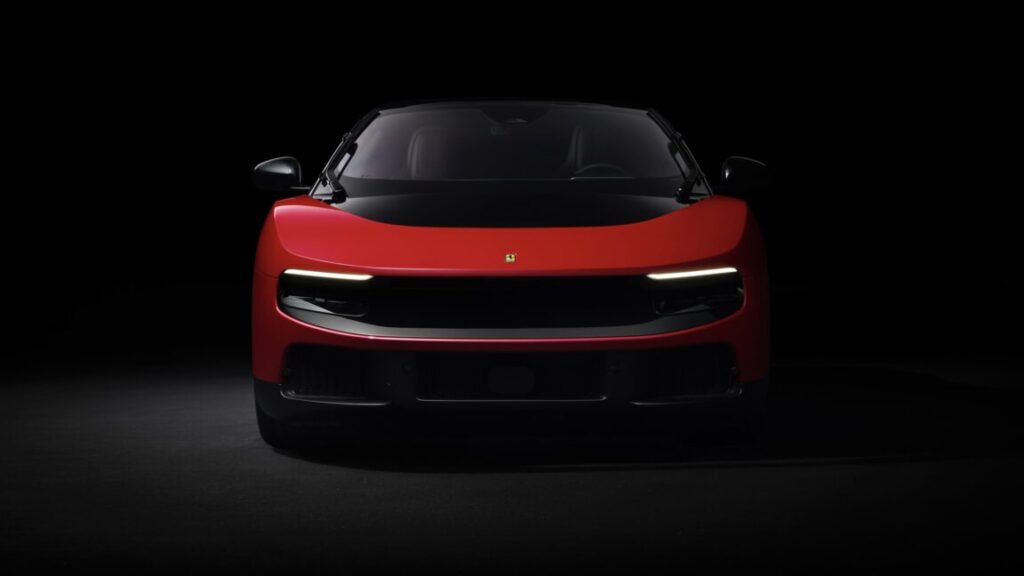
Table of Contents
A Departure from the Prancing Horse Tradition
For decades, Ferrari has operated on a strict set of internal dogmas: two seats, a screaming internal combustion engine, and a silhouette dictated by racing heritage. The arrival of the Luce systematically dismantles all three. As Ferrari’s first four-door sedan, first five-seater, and first fully battery-electric vehicle (BEV), the Luce isn’t just a new model—it is a calculated pivot to survive in a regulatory climate that is increasingly hostile to the V12.
The necessity for the Luce is clear. To maintain a foothold in critical hubs like Silicon Valley and the rapidly electrifying Chinese market, Ferrari can no longer rely on the nostalgia of gasoline. However, the transition has not been without friction. The design is a bold, arguably polarizing, collaboration with LoveFrom, the creative collective helmed by former Apple design chief Jony Ive and Marc Newson. The result is a vehicle that feels less like a traditional Italian exotic and more like a high-fidelity piece of consumer electronics.
The Aero-Efficiency Trade-off
The Luce’s exterior is the product of seven years of obsessive aerodynamic sculpting. Long before the project was officially greenlit as a BEV, Ferrari engineers were tasked with creating the lowest-drag silhouette in the company’s history without sacrificing the downforce required for high-speed stability. The technical investment was massive: 6,000 computational fluid dynamics (CFD) simulations and over 300 hours of wind tunnel testing.
Visually, this manifests in a cab-forward glasshouse and a hood that dives steeply beneath a front wing, channeling air over the roof and toward the rear deck. Active air vents throughout the body modulate based on whether the driver is prioritizing range or raw performance. While the design has drawn comparisons to the Lotus Etna and the one-off F90, the four round tail lights serve as a necessary tether to the 90s-era 360 and 550 models.
Performance efficiency will largely depend on the wheel choice. While the five-spoke options maintain the classic Ferrari aesthetic, the range-optimized aerodisc wheels—machined from single blocks of aluminum—are essential for hitting the company’s target of 330 miles (530 km) under the WLTP cycle.
An Analog Sanctuary in a Digital Age
If the exterior is a point of contention, the interior is a masterclass. In an era where luxury manufacturers are replacing every tactile switch with oversized, smudge-prone tablets, the Luce moves in the opposite direction. The dashboard is a single piece of brushed aluminum, eschewing the trend of passenger-side screens in favor of a clean, architectural layout.
The centerpiece is the instrument binnacle, which is fixed to the steering column and moves with the wheel. It utilizes two sandwiched OLED displays, but cleverly integrates physical needles for the speedometer—a nod to the tactile precision of analog gauges. The climate controls are handled via brushed aluminum rocker switches, ensuring the driver can make adjustments without diverting attention from the road.
The infotainment system is equally thoughtful, featuring a pivot-mounted screen that avoids the distraction of a dual-screen setup. Apple CarPlay is integrated, spanning the width of the display, while a dedicated clock in the upper-right corner transforms into a 60-second stopwatch and a compass at the press of a button. This attention to micro-interactions—the valved air vents and the Gorilla Glass physical buttons—elevates the Luce from a mere transport device to a piece of industrial art.
By marrying Jony Ive’s minimalist philosophy with Ferrari’s obsession with performance, the Luce manages to be something rare: a car that feels fundamentally new while remaining anchored in the brand’s obsession with quality. Whether the traditionalists will accept a four-door EV remains to be seen, but the interior alone makes the Luce a compelling argument for the future of the marque.


