The Taiwan Arms Pause: Why Experts Dismiss the ‘Iran Connection’ as a Diplomatic Smoke Screen
Table of Contents
A Question of Logistics and Timing
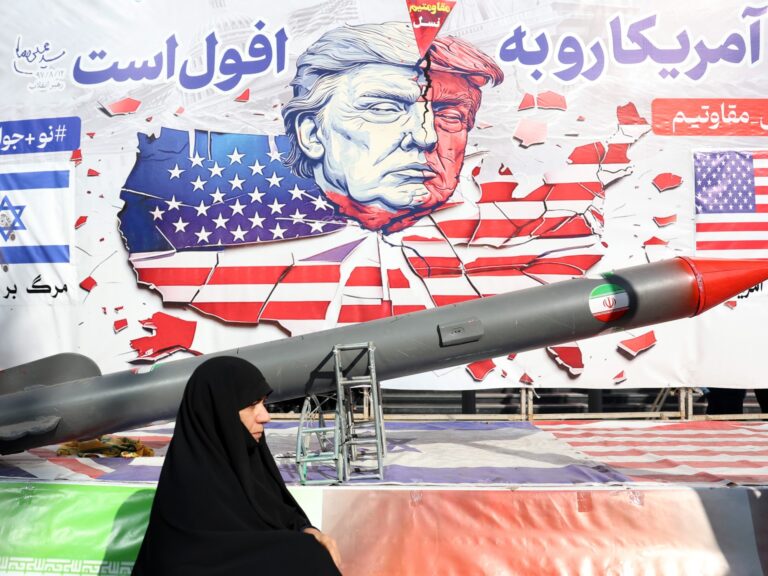
When Acting Navy Secretary Hung Cao testified before Congress this week, he offered a justification for the current freeze on a $14 billion weapons package destined for Taiwan that has left defense analysts scratching their heads. Cao suggested that the pause was a necessary measure to prioritize munitions for ‘Operation Epic Fury’—the ongoing U.S. conflict with Iran.
To the casual observer, the logic seems sound: a nation at war prioritizes its own stockpiles over foreign exports. However, for those embedded in the machinery of U.S. defense procurement, the claim is fundamentally disconnected from how military hardware is actually delivered. The munitions required for a high-intensity conflict in the Gulf are not the same as the advanced platforms and long-lead systems typically found in multi-billion dollar packages for Taipei.
Rupert Hammond-Chambers, president of the US-Taiwan Business Council and a senior adviser at Bower Group Asia, described the justification as making ‘no sense.’ His reasoning is rooted in the grueling timeline of Foreign Military Sales (FMS). Even if the Trump administration signed off on the notifications by the end of June, the process involves months of contract negotiation and years of manufacturing.
“We’re really into the 2030s [by the time Taiwan’s weapons are delivered],” Hammond-Chambers noted, highlighting a gap of three to six years between approval and actual delivery. The idea that a current stockpile shortage in the Middle East would impede a delivery scheduled for half a decade from now is, from a logistical standpoint, nearly impossible.
The Political Chessboard
If the Iran conflict isn’t the driver, the question becomes: why the pause? The timing coincides with a period of extreme volatility in U.S.-China diplomacy. Following a high-stakes meeting between Donald Trump and Xi Jinping in Beijing, the Taiwan issue has shifted from a cornerstone of U.S. strategic policy to what Trump has suggested could be a ‘negotiating chip.’
This represents a sharp departure from the long-standing Washington consensus. Traditionally, arms sales to Taiwan are framed as a statutory obligation to ensure the island’s self-defense capability. By framing the delay as a logistical necessity of war, the administration may be attempting to mask a political pivot, providing a convenient excuse to keep the $14 billion package on the table as leverage for concessions from Beijing.
The confusion is further compounded by contradictory signals coming from within the government. While Cao pointed to dwindling missile stockpiles, an unnamed U.S. official told Reuters that the military possesses more than enough munitions to meet all of the president’s strategic goals, explicitly stating that the pause was unrelated to the war with Iran.
Breaking Diplomatic Protocol
The uncertainty is creating significant anxiety in Taipei. The administration has already signaled a willingness to discard decades of diplomatic choreography. Trump’s recent suggestion that he might speak directly with Taiwan’s president, Lai Ching-te, would break a protocol in place since 1979, when the U.S. shifted official recognition to the People’s Republic of China. Such a call would almost certainly be viewed by Beijing as a provocation.
Peter Mattis, president of the Jamestown Foundation, suggests that Cao’s testimony may simply be a case of a government official ‘misspeaking’ or lacking a grasp of the technical minutiae of defense contracts. “I think these are separate issues and should be treated differently,” Mattis said, echoing the sentiment that the Iran war is a red herring in the Taiwan conversation.
For Taiwan, the clock is ticking. If the sales are approved within the next month, the perceived lack of U.S. support may dissipate. However, if the freeze persists into the autumn—leading into the APEC summit in China and the G20 summit in Miami—the $14 billion package ceases to be a matter of logistics and becomes a clear signal of geopolitical realignment.