Beluga Whales Join the Exclusive Club of Self-Aware Species
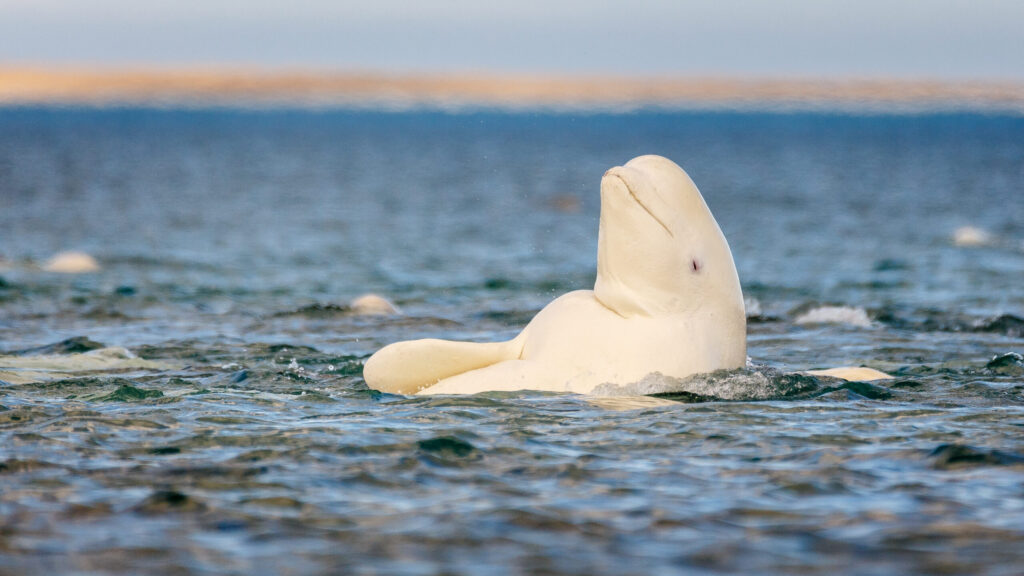
Table of Contents
The Mirror Test: A High Bar for Consciousness
In the world of cognitive biology, the mirror self-recognition (MSR) test is widely regarded as the gold standard—and the most exclusive club—for determining whether a species possesses self-awareness. For decades, the list of animals capable of recognizing their own reflection has remained stubbornly short: humans, a few species of great apes, Asian elephants, and bottlenose dolphins. Now, beluga whales are making a compelling case for entry.
A new study published in PLOS One suggests that beluga whales exhibit the behavioral hallmarks of self-recognition. The findings center on two whales, Natasha and her daughter Maris, who were filmed in a New York aquarium. In the footage, the animals are seen stretching their necks, pirouetting, and nodding while interacting with a two-way mirror—behaviors that suggest they aren’t looking at another whale, but at themselves.
The logic of the MSR test, first developed by psychologist Gordon Gallup in 1970, is straightforward: researchers place a mark on a part of the animal’s body that is only visible via a reflection. If the animal uses the mirror to investigate or touch that mark, it demonstrates a mental representation of itself as a distinct entity. It is a cognitive leap that has eluded most of the animal kingdom, including dogs, cats, and most monkeys.
Digging Through the Archives
The evidence for the belugas didn’t come from a fresh experiment, but from a rigorous re-analysis of data spanning two decades. Senior author Diana Reiss noted that while the original study had hopes for immediate follow-up research, those opportunities never materialized. Instead, the team decided to digitize and analyze the original videotapes, despite some degradation of the media over time.
The experimental process involved a carefully controlled setup. Initially, four belugas were exposed to a mirror in their social housing, but only Natasha and Maris showed the sustained interest required for the formal testing phase. To ensure the results weren’t accidental, researchers used waterproof lipstick to mark the whales during feeding sessions. Crucially, they also conducted “sham-mark” controls—performing the same application process without any pigment—to ensure the whales were responding to the mark itself and not just the sensation of being touched.
According to first author Alexander Mildener, the whales followed the same behavioral progression seen in other self-aware species. The most definitive moment occurred when Natasha repeatedly pressed a marked area behind her right ear directly against the mirror. Because whales lack arms to point, this tactile interaction serves as the strongest evidence that she understood the reflection was her own body.
The Debate Over What ‘Passing’ Means
Despite the results, the scientific community remains divided on what the MSR test actually proves. Gordon Gallup, the test’s creator, is known as a rigorous grader, often pushing back on results that lack clear, active self-directed behavior. Some critics argue that “bubble bite play” or barrel rolls—behaviors exhibited by the belugas—could simply be solo play stimulated by a novel object rather than a sign of consciousness.
Furthermore, some neuroscientists argue that the mirror test may be too human-centric. Anil Seth, a neuroscientist at the University of Sussex, suggests that failing the MSR does not necessarily mean an animal lacks consciousness. For species that rely more on sonar, scent, or tactile feedback than vision, a mirror might simply be irrelevant to their perception of self.
For the beluga whale, however, the data suggests a high level of cognitive complexity. Whether it is a formal “pass” in the eyes of every skeptic or not, the ability to interact with a reflection to investigate one’s own body points to a sophisticated internal life that mirrors our own more than we previously imagined.