Do Belugas Have a Sense of Self? New Analysis Suggests They May Pass the Mirror Test
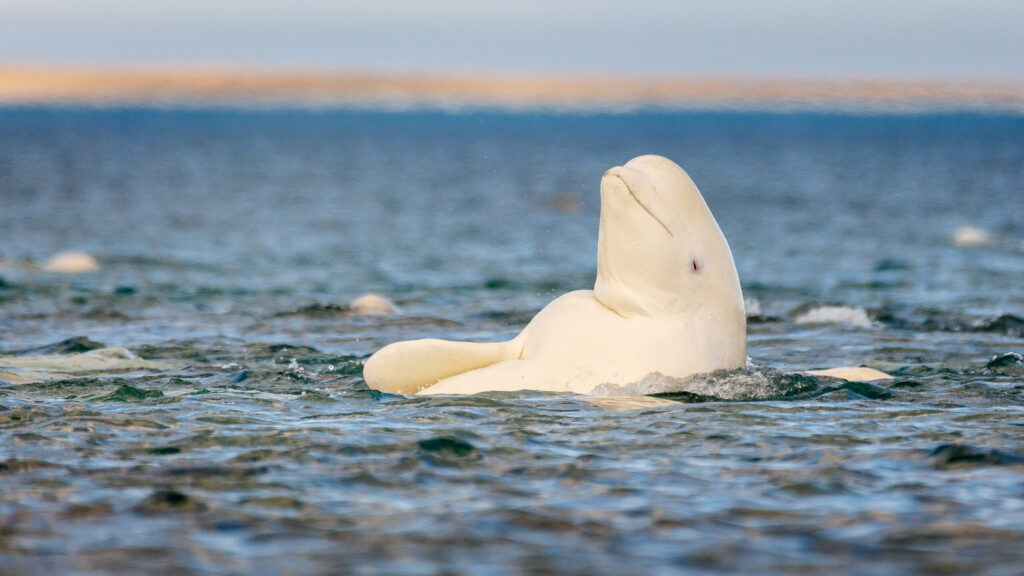
Table of Contents
A Digital Deep Dive into Cetacean Consciousness
In a series of underwater recordings from a New York aquarium, a beluga whale named Natasha exhibits a curious set of behaviors: she stretches her neck, pirouettes, and shakes her head while facing a two-way mirror. Beside her, her daughter Maris mirrors these actions. While it may look like simple play, researchers believe they are seeing something far more profound: mirror self-recognition (MSR).
According to a study recently published in PLOS One, these behavioral hallmarks suggest that belugas possess a level of cognitive self-awareness previously undocumented in the species. If the findings hold, belugas join an elite and eclectic group of animals capable of recognizing their own reflections, a list that currently includes humans, great apes, Asian elephants, and bottlenose dolphins.
The Mechanics of the Mirror Test
The MSR test, pioneered by psychologist Gordon Gallup in 1970, is designed to determine if an animal possesses a mental representation of itself as a distinct entity. The premise is straightforward: researchers place a mark on a part of the animal’s body that is invisible to them but visible in a reflection. If the animal uses the mirror as a tool to investigate the mark, it indicates they understand the image in the glass is “me” and not another animal.
Despite its intuitive nature, the test is notoriously difficult to pass. Most species—including dogs and cats—fail. For Gallup, the bar is high; he argues that unless an animal shows clear, self-directed behavior to examine the mark, the test is a failure. This puts the recent beluga findings in a gray area of interpretation.
Resurrecting Lost Data
The study is an exercise in digital archaeology. The footage being analyzed is more than two decades old. Senior author Diana Reiss explained that while more studies were intended, logistical hurdles prevented immediate follow-ups. The team recently decided to digitize and rigorously analyze the original tapes, though the process was hindered by the natural degradation of the media over time.
The original experiment involved four belugas in social housing. Of the group, only Natasha and Maris showed sustained interest in the mirror. To ensure the reactions weren’t random, researchers used “sham-mark” controls—applying a colorless substance to the whales to simulate the feeling of being marked without the visual pigment. The whales only exhibited self-recognition behaviors when the actual waterproof lipstick was present.
One of the most compelling data points came from Natasha, who repeatedly pressed the marked area behind her right ear against the mirror. Lacking arms to point or touch, this physical orientation is viewed by the researchers as a clear attempt to investigate the mark.
Questioning the Gold Standard
While the result is exciting for cetacean researchers, some in the scientific community are questioning if the mirror test is the right metric for intelligence. The sample size of two animals is tiny, and critics argue that behaviors like “bubble bite play” or barrel rolls are common in belugas even without a mirror present.
More fundamentally, some neuroscientists argue that failing the MSR test doesn’t necessarily imply a lack of consciousness. Anil Seth, a neuroscientist at the University of Sussex, suggests that the test is heavily biased toward human-like perception. Animals may fail not because they lack a sense of self, but because they simply don’t care about mirrors, dislike eye contact, or perceive their world through senses—like sonar—that make a visual reflection irrelevant.
As the study of animal cognition evolves, the focus is shifting away from binary “pass/fail” tests and toward a more nuanced understanding of how different species experience consciousness. Whether Natasha’s pirouettes are a sign of high-level self-awareness or a response to a novel stimulus, the research underscores the complexity of the beluga mind.