SpaceX Successfully Flies Starship V3 Following Brief Technical Delay
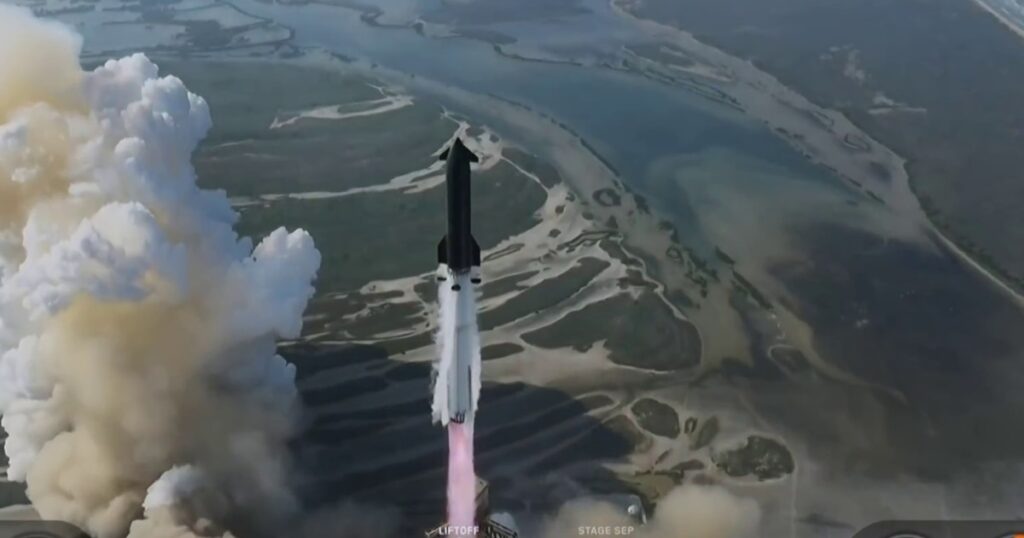
Table of Contents
A 24-Hour Pivot to Liftoff
SpaceX returned to the launch pad at Starbase, Texas, on May 22, 2026, successfully launching the latest iteration of its massive Starship rocket. The flight comes immediately after a frustrating 24-hour delay, as the company was forced to scrub the original May 21 window due to technical difficulties that required immediate attention on the ground.
The V3 prototype represents a significant evolution in the Starship architecture. While the previous iterations focused on basic flight stability and heat shield durability, the V3 is designed with refined propulsion efficiency and structural modifications intended to make the vehicle more reliable for the high-cadence flight schedule SpaceX envisions for its lunar and Martian goals.
Overcoming the Scrub
The scrub on May 21 had sent ripples through the enthusiast and industry community, as the V3 launch was highly anticipated. While SpaceX rarely provides granular detail on the exact nature of “technical difficulties” during the countdown, sources close to the operation suggest the delay was linked to a sensor anomaly in the Super Heavy booster’s propellant feed system. A failure at that stage of flight would have been catastrophic, making the decision to hold the launch a necessary, if disappointing, precaution.
Once the anomaly was resolved and cleared by the flight readiness review board, the countdown resumed. The ignition of the 33 Raptor engines on the Super Heavy booster created the characteristic seismic shake felt across the Brownsville area before the vehicle cleared the tower, ascending on a trajectory that demonstrated the V3’s improved thrust-to-weight ratio.
The Path to Artemis III
This successful flight is more than just a technical victory for Elon Musk’s company; it is a critical proof-of-concept for NASA. The Starship system is the centerpiece of the Artemis III mission, which aims to return humans to the lunar surface for the first time in over half a century.
NASA’s dependency on Starship for the Human Landing System (HLS) means that every successful prototype flight reduces the risk for the crewed missions. The V3’s performance, particularly during the ascent and atmospheric transition, provides data that NASA engineers will use to certify the vehicle for astronaut transport. The ability to consistently launch and recover these vehicles is the only way SpaceX can meet the aggressive timeline set for the moon’s south pole.
Iterative Engineering in Action
The flight reinforces SpaceX’s “fail fast, fix fast” philosophy. Unlike traditional aerospace programs that spend decades in simulation and design before a first flight, SpaceX treats the launch pad as a laboratory. The transition from V2 to V3 has seen a noticeable shift toward refining the vehicle’s reusable components, specifically the landing legs and the flaps that control descent.
While the mission’s primary goal was the successful ascent and initial orbital maneuvers, the data harvested from the V3’s flight will likely dictate the design of the next batch of ships currently under construction in the Starbase workshops. As the company scales its production, the focus is shifting from “can it fly” to “how often can it fly,” moving Starship closer to becoming a routine transport vehicle for the Earth-Moon system.