NTSB Scrambles to Block Public Access After AI ‘Resurrects’ Voices of Dead Pilots
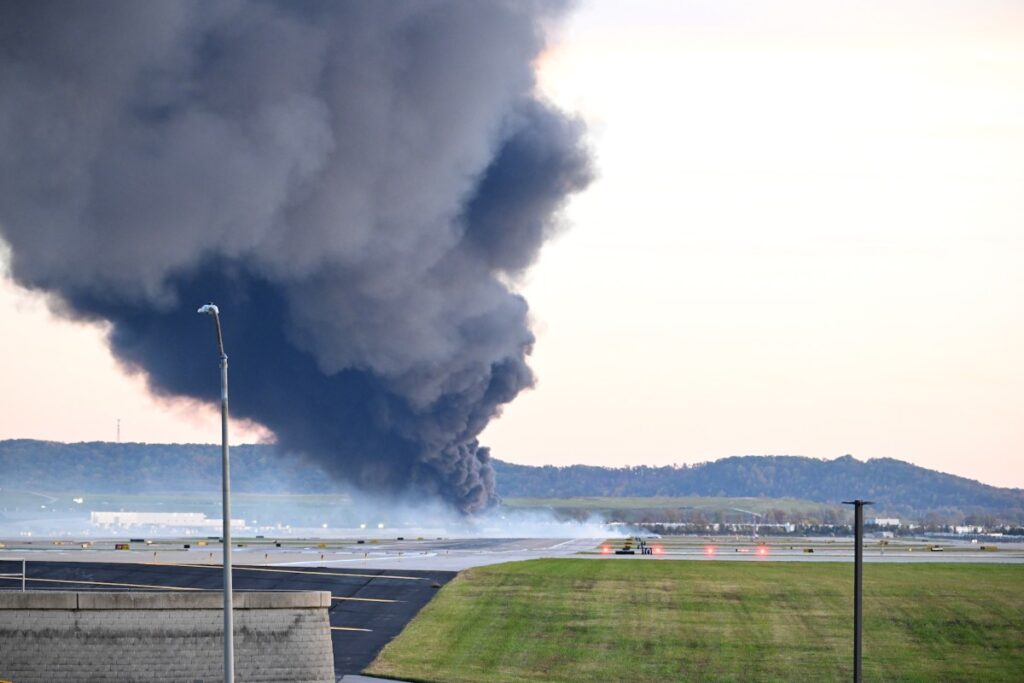
Table of Contents
A Digital Loophole in Federal Privacy
The National Transportation Safety Board (NTSB) recently found itself at the intersection of antiquated data sharing and cutting-edge generative AI, leading to a rare, emergency shutdown of its public docket system. The agency took the drastic step after discovering that the voices of pilots killed in a UPS cargo plane crash had been synthetically recreated and distributed online.
Under federal law, the NTSB is strictly prohibited from releasing raw cockpit voice recorder (CVR) audio to the public to protect the privacy of the deceased and their families. However, while the audio files themselves remained locked away, the agency had uploaded a spectrogram file to the public accident docket for the flight in question. A spectrogram is essentially a visual representation of sound—a mathematical map of frequencies over time. To most, it looks like a complex, abstract image. To a modern AI model, it is a blueprint.
From Visuals to Vocals
The vulnerability was first highlighted by Scott Manley, a YouTuber known for his deep dives into physics and orbital mechanics. In a post on X, Manley pointed out that the sheer volume of data encoded within these spectrogram images could potentially be used to reconstruct the original audio signals. It wasn’t long before internet users moved from theory to execution.
Using a combination of the publicly available transcript and AI tools—with some social media users citing the use of Codex and other synthesis frameworks—hobbyists and researchers began creating approximations of the cockpit audio from UPS Flight 2976, which crashed in Louisville, Kentucky. By feeding the visual frequency data into AI models, they were able to synthesize voices that sounded remarkably like the pilots, effectively bypassing the legal safeguards intended to keep the recordings private.
The NTSB Response
The realization that a visual file could be converted back into a voice sparked an immediate reaction from the agency. On Friday, the NTSB restored general access to its docket system but implemented a strategic blackout on 42 specific investigations, including the Flight 2976 case. These files will remain restricted until the agency can complete a comprehensive review of how data is presented to the public.
This incident exposes a growing friction point for government agencies: the gap between legal compliance and technical reality. For decades, providing a spectrogram was considered a safe way to share technical data with researchers without violating privacy laws. In the era of generative AI, that assumption has been rendered obsolete. The ability to “reverse-engineer” sound from images means that nearly any data representation of a voice—even those that don’t sound like audio—can now be turned back into a speaking human.
The Ethics of Synthetic Grief
Beyond the technical breach, the incident raises a disturbing ethical question about the “resurrection” of the deceased through AI. Unlike a deepfake created for satire or a voice clone used in a movie, these recreations involve the final moments of individuals in a high-stress, fatal environment. The circulation of these clips on social media transforms a professional aviation investigation into a form of digital voyeurism.
As the NTSB audits its files, the broader tech community is facing a reality where privacy is no longer just about locking a file, but about scrubbing the mathematical patterns that AI can exploit. For now, 42 aviation disasters remain hidden from public view as the government figures out how to stop an algorithm from speaking for the dead.


