Runway’s Pivot: From AI Filmmaking to Building the Universe’s Digital Twin
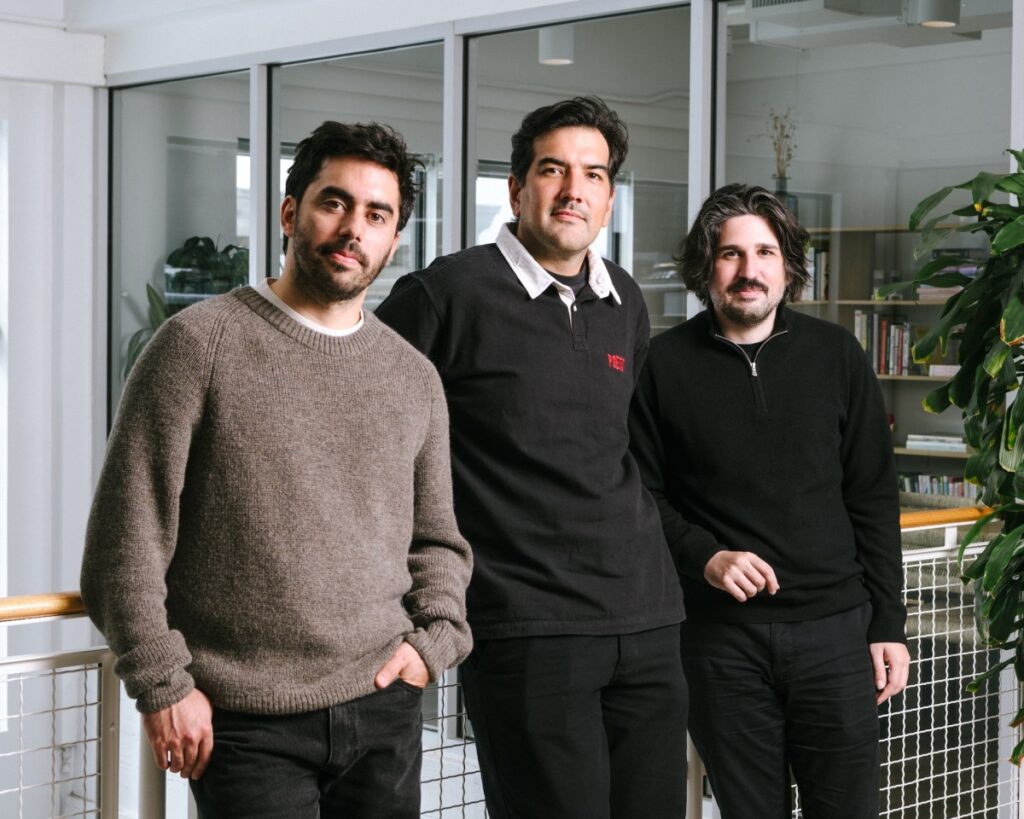
Table of Contents
Runway’s Pivot: From AI Filmmaking to Building the Universe’s Digital Twin
Runway, the startup that revolutionized AI-driven cinematography, is no longer content with just making movies. The company is now pivoting toward a far more ambitious goal: building “world models” that can simulate physical reality, effectively challenging the AI hegemony of giants like Google.
While the industry has spent years obsessed with Large Language Models (LLMs) like OpenAI’s GPT-4 and Claude, Runway is betting that true intelligence doesn’t come from text, but from observing the physical world. By training on vast amounts of observational video data, Runway aims to create AI that understands gravity, friction, and causality—not just how to describe them in a paragraph.
- Main Update: Shift from creative video tools to predictive world models.
- Key Feature: Physics-aware AI capable of simulating environment behavior.
- Market Valuation: Currently valued at $5.3 billion with surging ARR.
- Strategic Goal: Application in robotics, drug discovery, and climate science.
Beyond the Text Box: The Philosophy of World Models
For most AI labs, intelligence is a linguistic puzzle. However, Runway co-founder and co-CEO Anastasis Germanidis argues that relying on text-based data limits AI to a “distillation of existing human knowledge,” which is inherently biased and incomplete.
Runway’s new direction focuses on observational data. By teaching a model how a ball bounces or how water flows through a pipe, the AI develops a functional understanding of the laws of physics. This is the foundation of a “world model”—a system that doesn’t just generate pixels, but predicts future states of an environment.
The Shift from Generative to Predictive
The evolution of Runway’s tech stack marks a critical transition in the AI landscape. While their early tools focused on aesthetic output, the current trajectory is about functional accuracy.
- Observational Learning: Moving away from captioned datasets toward raw sensory data.
- Environmental Simulation: Creating “digital twins” where experiments can be run virtually.
- Cross-Modality Integration: Combining video, voice, and sensor data into a single coherent model.
Competing with the Giants: Runway vs. Google
This ambition puts Runway on a collision course with Google. With the release of Google’s Genie model, the search giant has signaled its intent to dominate interactive, AI-generated environments. Runway, however, leverages its agility and deep roots in the creative community to iterate faster.
The stakes are incredibly high. If Runway successfully bridges the gap between video generation and world simulation, the technology will extend far beyond Hollywood. We are looking at a future where AI can simulate a new drug’s interaction with a protein or predict a climate event with pinpoint accuracy before it happens.
| Feature | Traditional LLMs | Runway World Models |
|---|---|---|
| Primary Data Source | Text/Code (Internet) | Video/Sensory Observations |
| Core Strength | Reasoning & Synthesis | Spatial & Physical Logic |
| Primary Output | Text/Images | Simulated Environments |
| Real-world Application | Chatbots/Coding | Robotics/Scientific Discovery |
The “Art School for Engineers” Pedigree
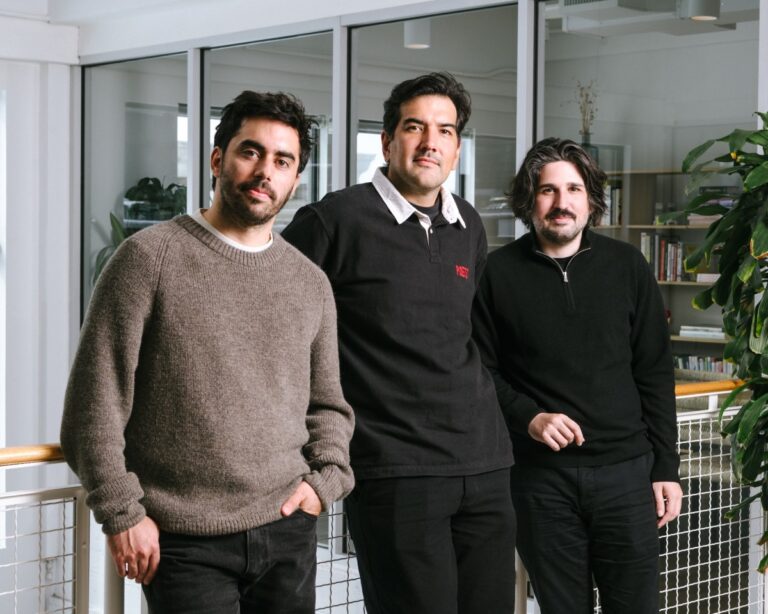
Runway’s unique approach is a direct result of its founders’ eclectic backgrounds. Unlike the typical Silicon Valley trajectory, the founders met at NYU’s Tisch School of the Arts. This intersection of neuroscience, film, and computer science allowed them to view AI not as a calculator, but as a lens for perceiving reality.
Scaling for Global Impact
What started as a tool to make everyone a filmmaker has scaled into a global operation. With 155 employees across New York, London, Tokyo, and Tel Aviv, the company has moved from the periphery of the AI boom to the center of the scientific frontier.
The company’s recent financial performance underscores this growth, adding $40 million in annual recurring revenue in Q2 2026 alone. This capital is being funneled into a new robotics unit, which is already conducting real-world deployments based on these world-model insights.
Why This Matters for the Future of Tech
The transition from “Generative AI” to “Physical AI” is perhaps the most significant shift in the industry since the introduction of the Transformer architecture. When AI can simulate the physical world, the need for expensive, slow, and dangerous real-world trial-and-error vanishes.
Imagine a world where robotics training happens in a perfect digital simulation a million times per second before a single physical motor moves. That is the efficiency Runway is chasing. Germanidis envisions this as “scientific infrastructure,” potentially accelerating anti-aging research and biological breakthroughs by compressing the time it takes to observe results.
What Happens Next
In the coming months, Runway is expected to launch its second major world model of the year. The industry will be watching closely to see if these models can move beyond short clips and into persistent, interactive spaces.
The battle for the “digital twin of the universe” is no longer a theoretical exercise. It is a commercial race with billions of dollars and the future of human scientific progress on the line. Whether Runway can outmaneuver the compute-power of Google remains to be seen, but their roadmap is clear: move beyond the screen and into the world.
Source: Official company statements and interviews via TechCrunch / Runway AI Internal Roadmap