Trump Refuses to Confirm Taiwan Defense Strategy in High-Stakes Meeting with Xi
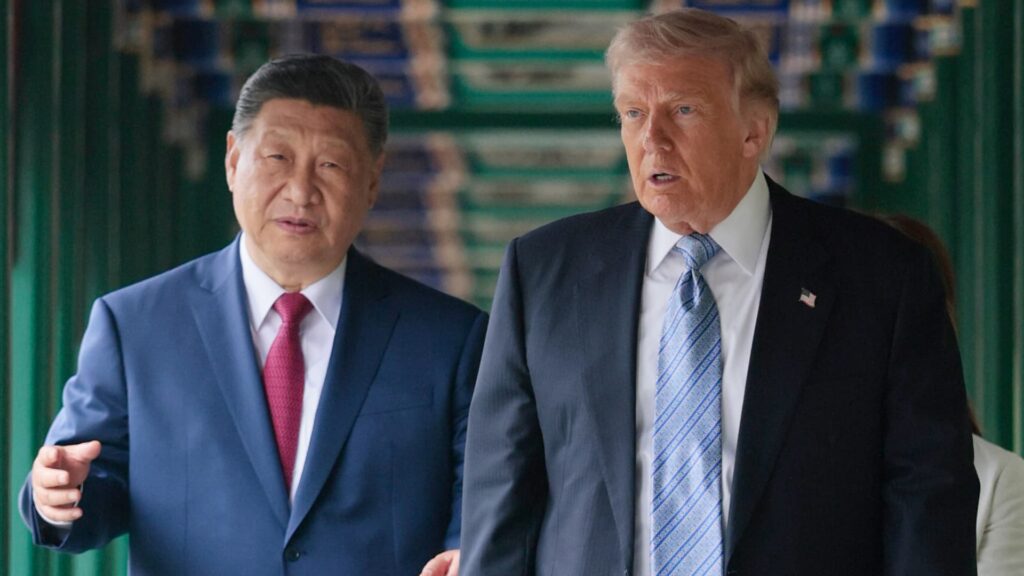
Table of Contents
Trump Refuses to Confirm Taiwan Defense Strategy in High-Stakes Meeting with Xi
In a move that underscores the volatile nature of current U.S.-China diplomatic relations, President Donald Trump has revealed that he refused to give a direct answer to Chinese President Xi Jinping regarding whether the United States would militarily defend Taiwan in the event of an attack.
The admission came during a press gaggle on Air Force One as the President returned to the United States following a high-tension, two-day summit in Beijing. The interaction highlights the ongoing reliance on “strategic ambiguity,” a long-standing U.S. policy designed to deter China from invading Taiwan without explicitly promising military intervention.
- Main Update: Trump declined to confirm Taiwan defense specifics to President Xi.
- Key Conflict: Xi Jinping warned that mishandling Taiwan could put the entire bilateral relationship in jeopardy.
- Diplomatic Stance: The U.S. continues to maintain a non-committal public posture on military intervention.
- Context: Comments made following a high-profile two-day summit in Beijing.
The Dynamics of Strategic Ambiguity
For decades, the United States has navigated the “Taiwan Strait’s delicate balance” by avoiding a clear pledge to defend the island. This approach is intended to keep Beijing guessing about the scale of U.S. involvement while simultaneously signaling to Taipei that they should not declare formal independence.
When reporters pressed for details on the exchange, Trump remained steadfast in his refusal to disclose the specifics of his conversation with the Chinese leader. “That question was asked to me today by President Xi. I said I don’t talk about that,” Trump stated, emphasizing his desire to keep the strategy shielded from public and diplomatic scrutiny.
Analysis of the Presidential Exchange
The refusal to provide a definitive answer is not merely a rhetorical choice but a calculated geopolitical tool. By keeping the answer private, the U.S. avoids triggering a preemptive reaction from the People’s Liberation Army (PLA) while retaining the option to intervene.
- Deterrence: Prevents China from assuming the U.S. will stay neutral.
- Stability: Prevents Taiwan from pursuing provocative independence measures.
- Leverage: Keeps the “Taiwan card” as a bargaining chip in broader trade negotiations.
Xi Jinping’s Warning: The ‘Red Line’
While Trump maintained a cloak of secrecy, President Xi Jinping was far more explicit about the stakes. According to reports from the state-run news outlet Xinhua, Xi pointedly warned that the U.S. and China could face “clashes and even conflicts” if the issue of Taiwan’s independence is not handled with extreme caution.
Xi categorized the “Taiwan question” as the most critical friction point in the entire U.S.-China relationship. The Chinese leadership views Taiwan as a breakaway province and has repeatedly stated that “reunification” is an inevitable historical necessity, whether by peaceful means or by force.
| Perspective | United States Position | China Position |
|---|---|---|
| Taiwan Status | Unofficial support/Strategic Ambiguity | Sovereign territory of China |
| Military Action | Undisclosed commitment | Right to use force if necessary |
| Primary Goal | Regional stability & Democracy | National Reunification |
Why This Matters for Global Security
The tension surrounding the Taiwan Strait is not just a regional dispute; it is a global economic flashpoint. Taiwan produces the vast majority of the world’s high-end semiconductors. Any conflict in the region would lead to an immediate collapse of the global tech supply chain, affecting everything from latest smartphones to advanced AI infrastructure.
Trump’s insistence that he is the “only person” who knows the answer to the defense question suggests a highly centralized decision-making process. This departure from traditional State Department protocols adds a layer of unpredictability that may either unsettle Beijing or provide the U.S. with a psychological edge in negotiations.
What Happens Next
As the U.S. continues to strengthen its regional defense networks and provide tactical support to Taiwan, the risk of miscalculation remains high. Observers will be watching for any shifts in military posture or diplomatic rhetoric following this summit.
The immediate focus now shifts to whether the “Beijing freeze” will thaw or if Xi’s warnings of “great jeopardy” will manifest in increased naval drills or economic sanctions. For those tracking geopolitical shifts, the lack of a clear answer from the Oval Office is, in itself, a significant statement of intent.
Source: Official statements from Air Force One / Xinhua News Agency / White House Press Briefing