Xiaomi X Pro QLED 75 Review: The High-Stakes Gamble on Massive Screens
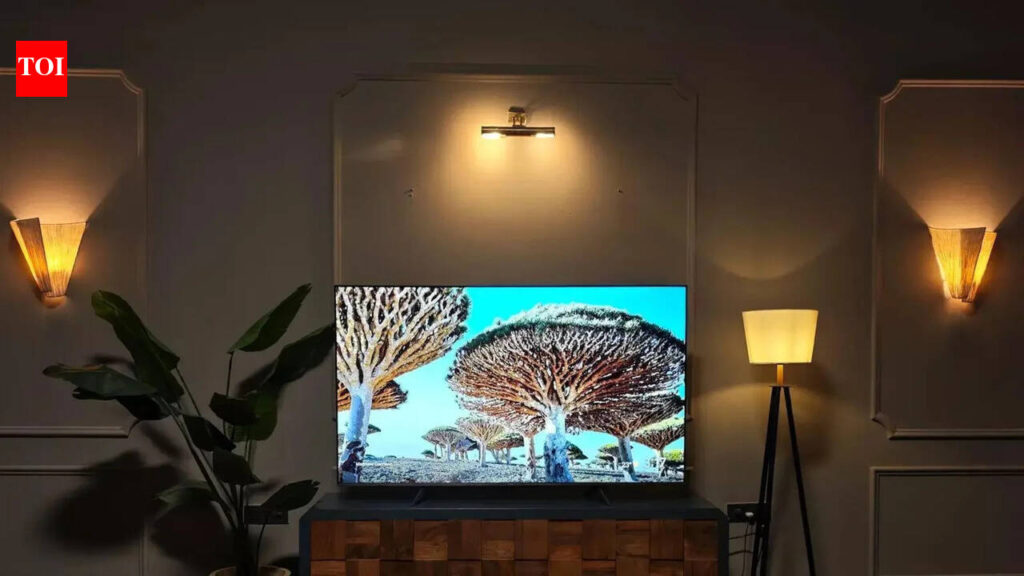
Table of Contents
The Scale Dilemma
There is a specific kind of anxiety that comes with buying a 75-inch television. It is the fear that the screen is so large that every flaw—every muddy shadow, every instance of backlight bleed, every artifact in a low-bitrate stream—will be magnified to an unbearable degree. Xiaomi is betting that most consumers are more interested in the sheer cinematic scale of the X Pro QLED 75 than in the surgical precision of a high-end OLED.
On paper, the X Pro QLED 75 is a value proposition designed to disrupt the living room. By pairing a Quantum Dot layer with a massive chassis, Xiaomi is attempting to bridge the gap between the entry-level LED displays and the prohibitively expensive flagships from Samsung or Sony. In practice, the result is a device that excels in specific environments but reveals the inherent struggle of scaling budget components to a massive physical size.
Color Depth and the QLED Edge
The core of this TV’s appeal is the QLED panel. Unlike standard LED-LCDs, the Quantum Dot layer allows for a wider color gamut and higher brightness peaks. In our testing, the saturation is impressive. Primary colors pop with a vibrancy that makes 4K HDR content from Netflix and Disney+ feel immersive. The brightness is sufficient for most living rooms, though it doesn’t quite reach the blinding peaks of the high-end Mini-LED series.
However, the sheer size of the 75-inch panel exposes some consistency issues. While the center of the screen is brilliant, there is a noticeable drop-off in luminance toward the edges during high-contrast scenes. This ‘vignetting’ effect is a common byproduct of the backlight arrays used in mid-range large screens, where achieving perfectly uniform lighting across such a vast area is a costly engineering challenge.
Performance in the Dark
Contrast is where the X Pro QLED 75 shows its limitations. Because it lacks the local dimming zones found in premium sets, black levels tend to lean toward a dark grey in a dimly lit room. If you are watching a space epic like Interstellar, the void of space isn’t truly black; it’s a hazy charcoal. For a casual viewer in a bright room, this is negligible. For a cinephile with a dedicated home theater, it is a dealbreaker.
Software and the Ecosystem Hurdle
The TV runs on a heavily skinned version of Android, which provides an expansive library of apps but introduces a certain level of unpredictability in navigation. While the interface is generally snappy, there is a perceptible lag when switching between heavy apps like YouTube and gaming consoles. Xiaomi has integrated a decent voice-control system, though the accuracy varies depending on the ambient noise level of the room.
Gaming performance is acceptable for a non-dedicated gaming TV. While it doesn’t boast the 120Hz VRR (Variable Refresh Rate) capabilities of the LG C-series, it handles standard 60Hz output from a PS5 or Xbox Series X without significant input lag. It is a ‘good enough’ solution for those who value screen real estate over competitive frame rates.
The Value Calculus
The real question isn’t whether this is the best 75-inch TV on the market—it isn’t—but whether it’s the best 75-inch TV for the price. Xiaomi has managed to strip away the ‘brand tax’ associated with the legacy giants. You are essentially paying for the panel and the scale, accepting a few compromises in contrast and software polish in exchange for a screen that transforms a living room into a cinema.
For the average household, the X Pro QLED 75 is a rational choice. It provides 90% of the experience of a high-end large-screen TV at a fraction of the cost. It is a machine built for the ‘big game’ and family movie nights, where the impact of size outweighs the nuances of color calibration.


