Xiaomi Pushes POCO Pad C1 Into Global Market as Budget-Friendly 4G Tablet
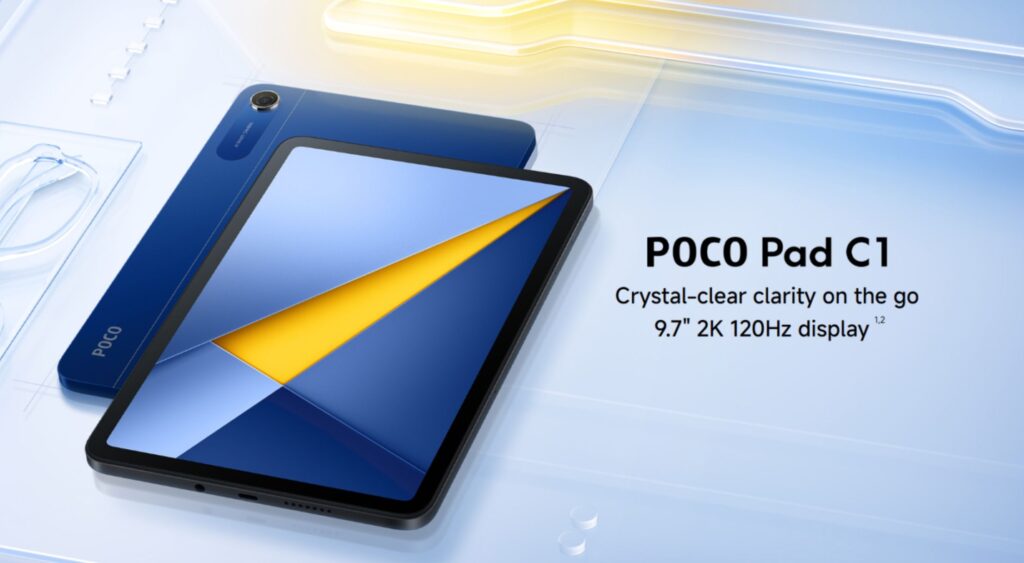
Table of Contents
A Calculated Entry Into the Budget Slate Market
Xiaomi has officially expanded its global portfolio with the launch of the POCO Pad C1, a device clearly designed to bridge the gap between entry-level media consumption and mid-range productivity. While the tablet market has been dominated by high-end OLED slabs and ultra-cheap generic alternatives, the C1 targets a specific niche: users who need a large-screen experience with cellular connectivity without the $500 price tag.
The POCO Pad C1 arrives at a time when Xiaomi is aggressively pushing HyperOS 3.0, its revamped ecosystem designed to unify devices. By integrating this software into a budget-friendly hardware package, POCO is positioning the C1 as a primary gateway for users moving away from smartphones toward a more dedicated digital reading and streaming experience.
Display Performance and Industrial Design
The standout feature of the POCO Pad C1 is undoubtedly its 9.7-inch IPS panel. While many budget tablets settle for standard 60Hz displays, Xiaomi has opted for a 2K resolution paired with a 120Hz refresh rate. This decision significantly improves the fluidity of the UI, making the transition between apps feel more responsive than typical low-cost tablets.
In terms of visibility, the device manages 500 nits of typical brightness, peaking at 600 nits when used outdoors. This makes the C1 viable for outdoor use, though it won’t compete with the extreme brightness of flagship HDR panels. To address eye fatigue, the screen carries TUV Rheinland certification for low blue light and flicker reduction, a nod to the device’s intended use as a PDF reader and e-book companion.
Physically, the C1 maintains a professional aesthetic. It features a slim metal chassis measuring 7.4 mm in thickness and weighs 406 grams. This balance of materials prevents the device from feeling like a ‘plastic toy,’ a common criticism of budget tablets in this weight class.
Technical Constraints and Performance Trade-offs
Under the hood, the POCO Pad C1 utilizes the Qualcomm Snapdragon 6s 4G Gen 2 chipset. It is important to note that this is a 4G-capable device, not 5G. For the vast majority of users, 4G is sufficient for streaming and browsing, but the lack of 5G signals the device’s placement as a cost-saving model.
The hardware configuration is modest: 6 GB of RAM paired with 128 GB of internal storage. While this is sufficient for multitasking between a browser and a document editor, power users may find the limits of the 6s chipset when attempting to run heavy creative apps or high-fidelity games. However, the inclusion of a microSD slot supporting up to 2 TB of expansion allows users to build a massive local library of movies and documents without worrying about cloud subscription fees.
The AI Integration: HyperOS 3.0
One of the more surprising additions to the C1 is the inclusion of Google-powered AI features. Despite its budget positioning, the tablet supports Circle to Search and Gemini integration. This suggests that Xiaomi is leveraging software to provide a ‘premium’ feel to the user experience, allowing users to interact with the web and their apps using generative AI tools that were previously reserved for flagship hardware.
Battery Life and Connectivity
Powering the device is a 7,600 mAh battery. In a real-world scenario, Xiaomi claims this translates to roughly 15 hours of continuous video playback or nearly two days of moderate use. The caveat is the charging speed: 18W wired charging is relatively slow by modern standards, meaning users should expect a several-hour wait for a full charge from zero.
On the connectivity front, POCO has made the welcome decision to retain the 3.5 mm headphone jack, a feature increasingly scrubbed from the market. Combined with dual speakers, the C1 is well-equipped for media consumption without the need for Bluetooth peripherals.
Market Positioning
While final regional pricing is still being rolled out, early indications suggest the POCO Pad C1 will retail below $300. This places it in direct competition with the Samsung Galaxy Tab A series and various Lenovo Tab models. By offering a 120Hz 2K display at this price point, POCO is attempting to undercut the competition on raw visual specs while relying on the Snapdragon 6s to handle the basics.


