Xi Jinping’s Rare Pyongyang Visit Signals a Geopolitical Pivot Amid Shifting US-Russia Dynamics
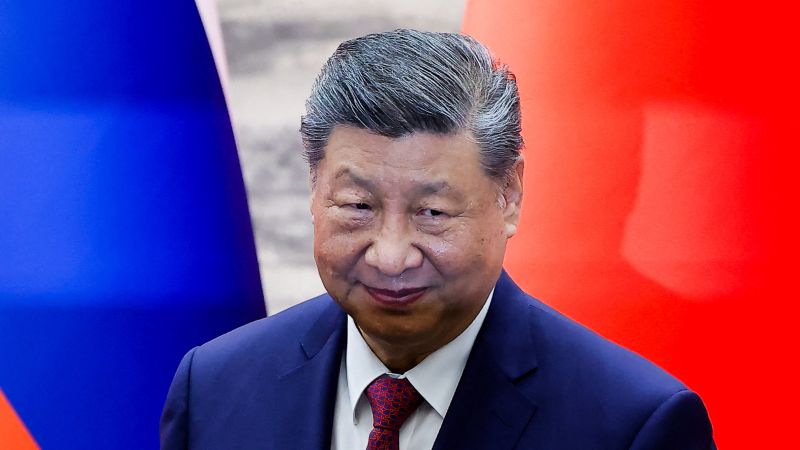
Table of Contents
A Calculated Return to Pyongyang
For the first time in seven years, Chinese President Xi Jinping has touched down in Pyongyang, marking a rare state visit that serves as much as a diplomatic signal to Washington and Moscow as it does a gesture of friendship to Kim Jong Un. The arrival of the Chinese leader on Monday, greeted by Kim and First Lady Ri Sol Ju, underscores Beijing’s attempt to reclaim its role as the primary gravitational force in North Korea’s orbit.
The optics were meticulously curated. State media footage from CCTV and Xinhua showed a city draped in Chinese flags, featuring massive portraits of Xi and an atmosphere of high-ceremony welcome. However, beneath the choreographed hospitality lies a complex web of strategic anxiety and opportunistic realignment. This visit is Xi’s first overseas trip of the year, following high-stakes meetings in Beijing with both Vladimir Putin and U.S. President Donald Trump.
The Russia Factor and the Balancing Act
The timing of the visit is critical. In recent years, the relationship between Beijing and Pyongyang has faced a noticeable chill, exacerbated by pandemic-era border closures and Kim Jong Un’s aggressive pivot toward Russia. The 2024 signing of a mutual defense treaty between Moscow and Pyongyang—which reportedly included the deployment of North Korean troops to aid Russia’s war in Ukraine—sent a clear message that Kim is no longer solely dependent on Chinese patronage.
By arriving now, Xi is attempting to re-establish the hierarchy. While Russia provides military hardware and tactical support, China remains North Korea’s indispensable economic lifeline. For Kim, the visit is a masterclass in strategic hedging; by alternating between the two authoritarian giants, he ensures that neither can exert total control over his regime while maximizing the flow of resources and diplomatic cover.
The Nuclear Paradox
The most friction-filled aspect of the summit remains North Korea’s nuclear trajectory. Just twenty-four hours before Xi’s arrival, North Korean state media reported that Kim had inspected a major munitions company and a new plant producing weapons-grade nuclear material, explicitly stating a plan to expand nuclear forces at an “exponential rate.”
This creates a persistent paradox for Beijing. On one hand, China views a nuclear-armed North Korea as a catalyst for instability on its border and a justification for increased U.S. military presence in the Pacific. On the other, Pyongyang serves as a vital geopolitical buffer—a state that, however volatile, prevents a pro-Western government from appearing on China’s doorstep.
The ‘Trump Variable’ in Regional Stability
The visit also coincides with a volatile shift in U.S. foreign policy. President Donald Trump has previously signaled an openness to restarting direct diplomacy with Kim Jong Un, provided the U.S. moves away from the rigid goal of complete denuclearization—a condition Kim reiterated last fall.
The recent meetings between Xi and Trump in May suggest that the Korean peninsula is a primary bargaining chip in the broader U.S.-China rivalry. While the White House maintains a “shared goal” of denuclearization, the vague language in the Chinese readout suggests a more nuanced approach, where Beijing may leverage its influence over Kim to extract concessions from Washington regarding trade or Taiwan.
As the 65th anniversary of the 1961 Treaty of Friendship, Cooperation and Mutual Assistance approaches, the two leaders are not just celebrating history; they are negotiating a new blueprint for survival in an era of unpredictability. For South Korean President Lee Jae Myung, the widening divide between the North and South remains a pressing concern, even as he continues to advocate for a dialogue that currently feels distant.


