Xi Jinping Warns Trump: Taiwan Misstep Could Put US-China Ties in ‘Great Jeopardy’
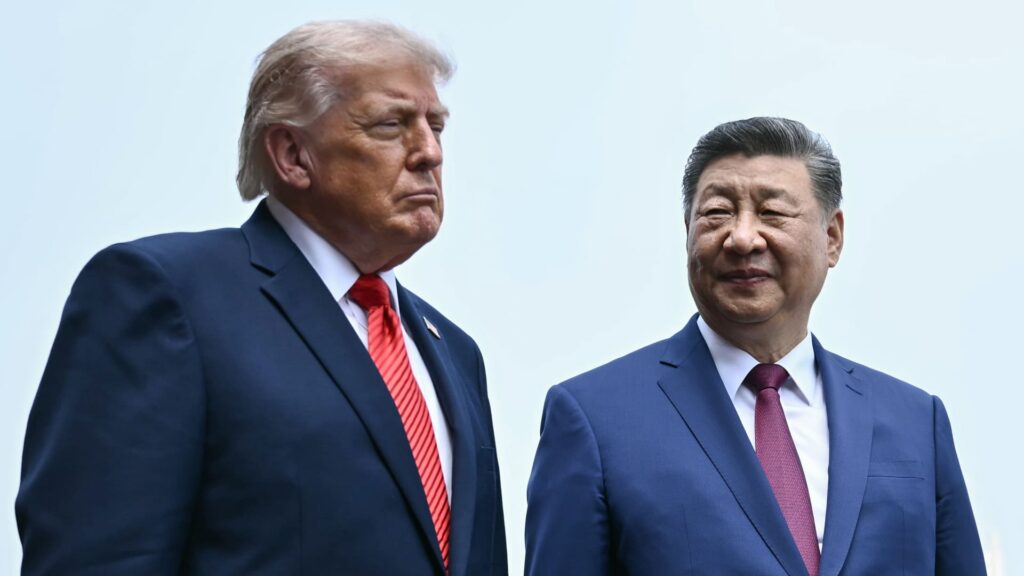
Table of Contents
In a high-stakes diplomatic encounter that underscores the fragility of global stability, Chinese President Xi Jinping has issued a stark warning to U.S. President Donald Trump: the mishandling of the Taiwan issue could plunge the relationship between the world’s two largest economies into ‘great jeopardy.’
The admonition came during the opening phase of a two-day summit in Beijing, marking the first visit by a sitting U.S. president to China in nearly a decade. While the atmosphere at the Great Hall of the People was characterized by public displays of friendship and a state banquet, the underlying tension regarding Taiwan’s sovereignty remains the most volatile friction point in the bilateral relationship.
According to reports from the state-run news outlet Xinhua, President Xi emphasized that the ‘Taiwan question’ is the most critical issue facing U.S.-China relations. He framed the tension between Taiwan’s drive for independence and the pursuit of peace in the Taiwan Strait as being ‘as irreconcilable as fire and water.’ This rhetoric signals that Beijing views any shift in U.S. policy toward Taipei not merely as a diplomatic disagreement, but as a potential catalyst for direct conflict.
For context, the U.S. has historically maintained a complex ‘One China’ policy, acknowledging Beijing’s position while continuing to provide defensive support to the democratically self-ruled island. However, the ambiguity of the U.S. response to a potential attack on Taiwan has long been a source of contention. During the summit, President Trump remained tight-lipped when questioned by reporters on the specifics of his Taiwan stance, though U.S. Treasury Secretary Scott Bessent later told CNBC that Trump is ‘very, very resolute’ in his understanding of the issue.
Beyond the geopolitical brinkmanship, the summit focused heavily on economic pragmatism. A U.S. readout of the talks highlighted a shared desire to enhance economic cooperation. In a strategic move to diversify energy dependencies, President Xi expressed interest in purchasing more U.S. oil, which would reduce China’s reliance on the Strait of Hormuz—a critical maritime choke point currently impacted by the U.S.-Israel conflict against Iran.
Both leaders also discussed increasing Chinese imports of U.S. agricultural products, a move that would provide a significant boost to American farmers and potentially soften the blow of previous tariff wars. This economic diplomacy was further bolstered by the presence of several CEOs from the United States’ largest companies, who joined a portion of the meeting to advocate for stable market access.
One of the most intellectually provocative moments of the summit occurred when President Xi referenced the ‘Thucydides Trap.’ This concept, popularized by Harvard professor Graham Allison, describes the historical tendency for a rising power to clash with a ruling power. By invoking this theory, Xi is essentially challenging Trump to break the historical cycle of inevitable conflict through mutual respect and partnership.
However, the power dynamics have shifted since Trump’s first visit to China in 2017. Analysts suggest that China enters these talks with significantly more confidence. Scott Kennedy, a senior adviser at the Center for Strategic and International Studies, noted that Beijing has become more adept at neutralizing U.S. tariffs and trade restrictions over the last several years, making them less susceptible to the ‘shock’ tactics often employed by the Trump administration.
As the summit continues through Friday, the world watches to see if the ‘friendship’ described by Trump and the ‘mutual respect’ demanded by Xi can translate into a formal trade agreement or a sustainable security framework. With a proposed invitation for President Xi to visit the U.S. on September 24, the window for a diplomatic breakthrough remains open, provided the volatile issue of Taiwan does not trigger the ‘clashes’ Xi warned about.