Vivo Price Hikes in India: V70 and Y-Series Cost Surge Amid Component Shortages
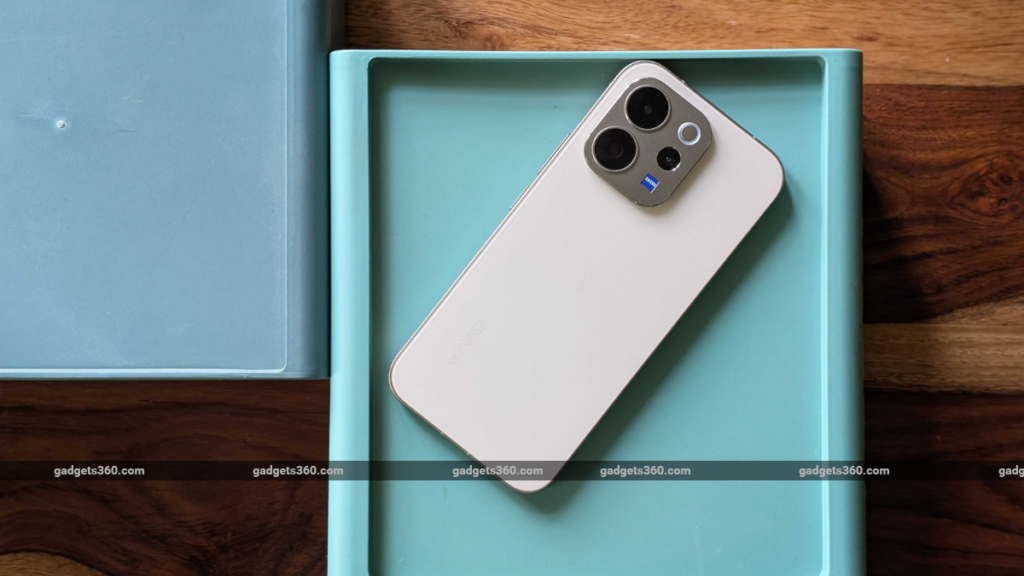
Table of Contents
Sudden Shifts in Vivo’s India Pricing Strategy
Consumers in the Indian smartphone market are facing a new hurdle as reports emerge that Vivo has quietly adjusted the pricing for several of its most popular handsets. The price revisions primarily target the high-performing V-series, specifically the Vivo V70 and Vivo V70 Elite, as well as the budget-friendly Y-series. While Vivo has yet to issue a formal press release detailing these changes, the shifts have become apparent through retail listings and supply chain leaks.
The scale of these increases is significant for the mid-range and premium-mid-range segments. According to data shared by industry tipster Sanju Choudhary, price jumps range from ₹1,000 to as much as ₹4,000 depending on the specific hardware configuration and storage capacity of the device. For a consumer already weighing the value proposition of a mid-range device, a ₹4,000 spike can be the deciding factor in switching to a competitor.
- V70 Elite (12/256GB): Increased from ₹59,999 to ₹63,999.
- V70 Elite (8/256GB): Increased from ₹54,999 to ₹58,999.
- V70 (12/256GB): Increased from ₹53,999 to ₹56,999.
- V70 (8/256GB): Increased from ₹49,999 to ₹53,999.
- Y-Series: Models like the Y21 and Y400 are also seeing upward revisions.
The ‘Memory Crisis’: Why Smartphone Prices Are Climbing
The catalyst for these price hikes isn’t a sudden desire by Vivo to increase profit margins, but rather a systemic issue within the global semiconductor supply chain. Specifically, the industry is grappling with a severe shortage of memory components (DRAM and NAND flash). This isn’t a random fluke; it is a direct consequence of the explosive growth in Artificial Intelligence (AI) infrastructure.
Modern enterprise-focused data centers are currently in an arms race to build out LLM (Large Language Model) training clusters. These facilities require massive amounts of High Bandwidth Memory (HBM) and high-capacity storage. Because the fabrication process for enterprise-grade memory often shares the same foundational capacity and raw materials as the LPDDR and UFS memory used in smartphones, the sheer volume of demand from the AI sector is cannibalizing the supply for consumer electronics.
When the cost of raw silicon and memory modules rises, OEMs (Original Equipment Manufacturers) face a choice: absorb the cost and take a hit on margins, or pass the cost to the consumer. Given the competitive nature of the Indian market, where margins are already thin, Vivo has opted for the latter.
Breaking Down the V70 and Y-Series Impacts
The V-series is Vivo’s attempt to bridge the gap between budget devices and flagship luxury. By targeting the “premium mid-range” demographic, the V70 and V70 Elite rely heavily on high-spec memory configurations to support their camera-centric features and multitasking capabilities. This makes them particularly susceptible to memory price volatility.
The Premium Hit: V70 Elite
The V70 Elite, particularly the 12GB RAM variant, has seen a sharp ₹4,000 increase. This suggests that the cost of high-density RAM modules has spiked more aggressively than lower-capacity parts. For users, this means a device that was positioned just under the ₹60k psychological barrier is now pushing toward the ₹64k mark, potentially overlapping with older flagship models from Samsung or Apple.
The Budget Squeeze: Vivo Y-Series
While the V-series absorbs the headlines, the impact on the Y-series is arguably more disruptive. In the budget segment, where users are extremely price-sensitive, a ₹1,000 to ₹2,000 increase can drastically alter a phone’s competitiveness. The Y21 and Y400 are essential volume drivers for Vivo; if these become too expensive, the brand risks losing market share to aggressive competitors like Xiaomi or Realme, who may have better stockpiles of older, cheaper components.
What This Means for the Indian Consumer
For the average buyer, these price hikes signal a transition in the smartphone market. We are moving away from the era of “spec inflation” where prices stayed flat while RAM and storage doubled every year. Instead, we are entering a period of cost-push inflation driven by external technological demands.
If you are planning to upgrade, the immediate implication is that waiting for a “price drop” may no longer be a winning strategy. Unlike software-driven discounts or seasonal sales, these hikes are tied to hardware costs. Unless there is a significant correction in the global memory market, these prices are likely to remain the new baseline.
Furthermore, this trend may force users to reconsider their storage needs. If 256GB models become prohibitively expensive, we may see a return to 128GB as the standard, or an increased reliance on cloud storage solutions to offset the cost of physical on-device memory.
Market Context: A Broader Industry Trend
Vivo is not alone in this struggle. Throughout 2024 and into early 2025, several other OEMs have hinted at similar pressures. The ripple effect of AI-driven data center expansion is felt across the entire electronics ecosystem. When Nvidia’s H100 or B200 GPUs require massive amounts of memory, the global production schedules for all memory chips are shifted to prioritize high-margin enterprise contracts over consumer-grade chips.
Industry data suggests that DRAM prices can fluctuate by as much as 15-30% in a single quarter when supply constraints hit. While Vivo hasn’t quantified the exact cost increase per unit, a ₹4,000 hike across a retail price point suggests a significant increase in the Bill of Materials (BoM) for these specific models.
Frequently Asked Questions
Why did Vivo increase the price of the V70 and Y-series?
The price hikes are primarily attributed to a global shortage of memory components (DRAM and NAND flash). This shortage is driven by the massive demand for high-capacity memory in enterprise AI data centers, which increases the production cost of smartphone memory.
Which Vivo models are affected by the price hike in India?
Reports indicate that the Vivo V70, Vivo V70 Elite, and several Y-series models (including the Y21 and Y400) have seen price increases ranging from ₹1,000 to ₹4,000.
Will the prices go back down soon?
It is unlikely in the short term. Memory prices are tied to global supply and demand. As long as the demand for AI infrastructure remains at its current peak, the cost of memory components is expected to remain high, keeping smartphone prices elevated.
Is it better to buy a Vivo phone now or wait?
Given that these are cost-push increases based on component shortages, waiting may not result in lower prices unless there is a significant surplus of memory chips. If you need a device now, buying before further potential revisions may be the safer bet.
Does this affect all storage variants?
Yes, but the impact varies. Higher storage and RAM configurations (like 12GB/256GB) generally see higher price increases compared to base models, as they require more of the scarce memory components.
Final Perspective on the Price Shift
The reported price hikes for the Vivo V70 and Y-series are a microcosm of a larger shift in the global tech economy. The tension between consumer electronics and the AI revolution is becoming tangible. For now, the burden of this transition is falling on the end-user. While Vivo’s silence on the matter is typical for OEMs during pricing transitions, the numbers provided by supply chain sources suggest a stark new reality for mid-range smartphone affordability in India.