US Seafood Imports Under Threat as Petition Targets Chinese Shark Finning Practices
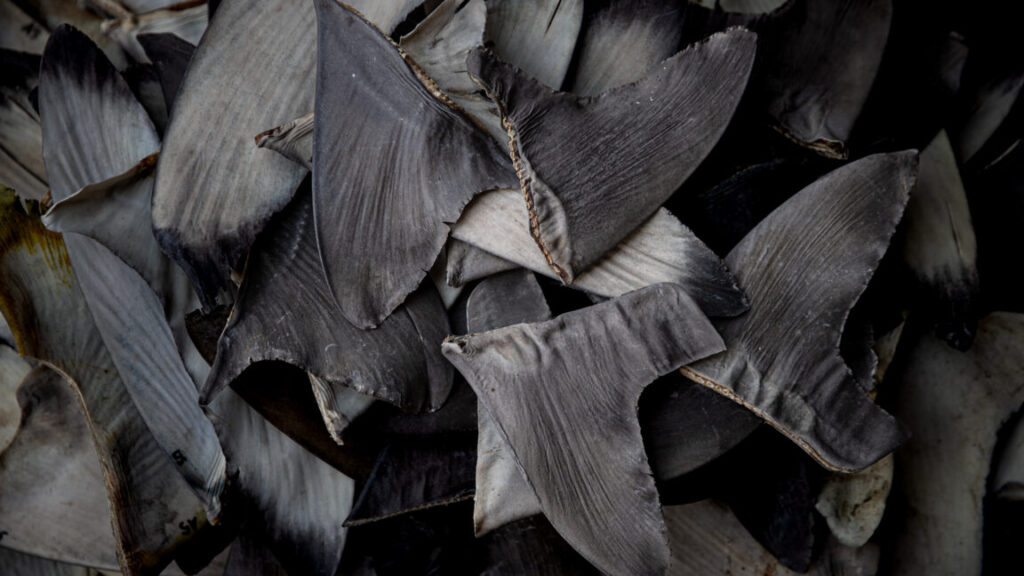
Table of Contents
A High-Stakes Regulatory Clash
The U.S. seafood market could be facing a significant disruption as a new legal push seeks to penalize China for its shark finning practices. The Center for Biological Diversity has filed a formal petition urging the U.S. government to sanction China, arguing that the nation’s failure to adhere to American shark conservation standards constitutes a violation of international norms and domestic law.
At the heart of the dispute is the Moratorium Protection Act. If the National Marine Fisheries Service determines that China has bypassed these critical protections, it could trigger a sweeping ban on the import of all Chinese seafood—a trade sector valued at approximately $1.5 billion. The move would represent one of the most aggressive environmental trade penalties used by the U.S. in recent years.
The Loophole in the Law
While China officially bans shark finning, the reality on the water is starkly different. The controversy centers on a regulatory loophole: China allows fisheries to remove fins as long as they do not exceed a specific percentage—typically 5%—of the shark’s total body weight upon landing. To the U.S. and over 90 other jurisdictions, this is an unacceptable standard.
The U.S. mandates a “fins naturally attached” policy, which requires the entire animal to be landed. Without this, enforcement becomes nearly impossible. According to Alex Olivera, a senior scientist at the Center for Biological Diversity, the current Chinese system turns conservation into a “math game.” Once fins are detached, inspectors cannot reliably determine which species were targeted or if protected sharks were simply dumped back into the ocean to die.
The biological stakes are immense. Shark populations have plummeted by more than 70% since 1970, with one-third of all shark and ray species now facing extinction. Because sharks grow slowly and have few offspring, they cannot recover from the industrial scale of modern finning, which is driven largely by the demand for shark fin soup and traditional medicine in East and Southeast Asia.
Reports From the High Seas
The scale of the operation is highlighted by data from 2023, showing that over 10,000 blue sharks and nearly 1,700 shortfin mako sharks were discarded by Chinese crews in the western and central Pacific alone. However, the most harrowing evidence comes from the crews themselves.
Interviews conducted by the Environmental Justice Foundation (EJF) reveal a systemic culture of brutality aboard Chinese distant-water fleets. In the Southwest Indian Ocean, 80% of interviewed crew members reported engaging in shark finning. Another survey of squid jiggers in the Southeast Pacific found that 60% of the crew witnessed sharks being thrown back into the sea without fins—a death sentence for the animals.
One Indonesian fisher, recounting his time on a Chinese vessel in 2022, described a process where entangled sharks were lifted, fins were severed, and the remaining bodies were discarded. The process is described not just as an ecological failure, but as “sadistic” by some of the workers trapped in these offshore supply chains.
Diplomatic Friction
When pressed for a response, the Chinese Embassy in Washington maintained a diplomatic distance. A spokesperson stated that China is “deeply committed to science-based conservation” and follows international law and vessel monitoring requirements. However, the embassy noted it was “not familiar” with the specifics of the Center for Biological Diversity’s petition and avoided direct mention of finning or the looming threat of seafood sanctions.
As the petition moves through the regulatory pipeline, the outcome will likely depend on whether the U.S. views this as a purely environmental issue or a strategic trade lever. For the sharks, however, the clock is ticking. With 100% of shark species now impacted by overfishing and bycatch, the gap between official policy and high-seas reality continues to widen.