Ukraine’s Long-Range Drone Surge Hits St. Petersburg Infrastructure Ahead of Global Economic Forum
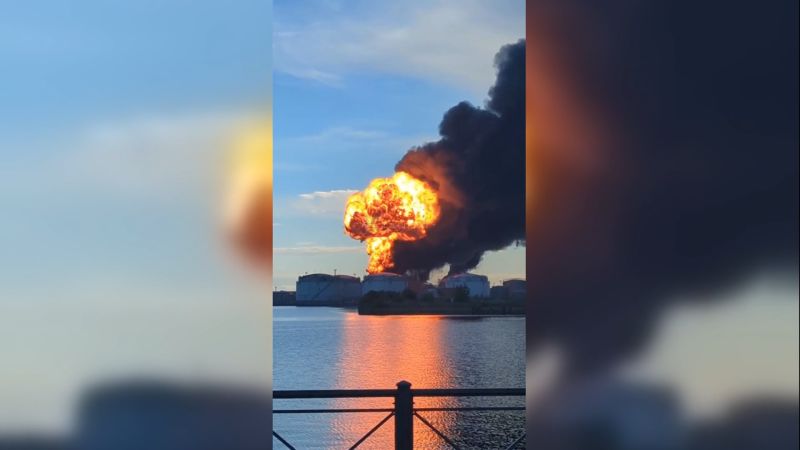
Table of Contents
A Calculated Breach of Airspace
In a coordinated escalation of aerial warfare, Ukraine launched a massive drone offensive targeting St. Petersburg and other strategic Russian hubs, timing the strikes to coincide with the opening of the St. Petersburg International Economic Forum (SPIEF). The operation, which saw hundreds of unmanned aerial vehicles (UAVs) penetrate deep into Russian territory, signals a maturing capability in Kyiv’s long-range strike architecture.
The Russian Ministry of Defense claimed its air defenses intercepted over 350 drones across the border regions, Moscow, and Novgorod. However, the sheer volume of the assault—including at least 60 drones over the Leningrad region alone—managed to overwhelm localized defenses, leading to successful strikes on critical logistics and military assets.
Targeting the Shadow Fleet and Naval Power
One of the most significant claims from the Ukrainian military involves the Boikiy, a Russian Navy Baltic Fleet corvette stationed at the Kronstadt island port near St. Petersburg. The Boikiy is not merely a tactical asset; it is equipped with guided missile systems and has been instrumental in escorting the Kremlin’s “shadow oil fleet.”
By targeting the Boikiy, Ukraine is attacking the mechanism Russia uses to evade international sanctions. The shadow fleet consists of aging tankers and escort vessels that transport Russian crude to global markets outside the purview of Western price caps. Disrupting the naval security of these shipments creates a tangible economic risk for Moscow’s primary revenue stream.
The Strategic Logic of Oil Terminal Strikes
Beyond naval assets, President Volodymyr Zelensky reported “positive results” from strikes against the St. Petersburg oil terminal. As one of the largest oil transshipment complexes in northwestern Russia, the terminal is a linchpin for fuel exports and regional logistics. This follows a broader pattern of Ukrainian strategy: shifting from tactical battlefield gains to the systemic degradation of Russian energy infrastructure.
The technical shift is evident. Over the last year, Ukraine has rapidly iterated its medium and long-range drone platforms, moving away from small-scale reconnaissance tools toward heavy-payload strike UAVs capable of navigating complex electronic warfare (EW) environments. These drones are increasingly designed to hit “hardened” targets—facilities that were previously considered beyond the reach of Kyiv’s organic arsenal.
The Optics of ‘Putin’s Davos’
The timing of the strikes was overtly political. The SPIEF, often described as the Russian alternative to the World Economic Forum in Davos, was set to welcome 20,000 participants from over 100 countries. The drone incursions resulted in restricted airspace around St. Petersburg International Airport, causing flight delays and serving as a visceral reminder of the war’s reach to the international delegates arriving in the city.
While the forum features high-profile figures and remnants of U.S. political ties—including the attendance of US Commission of Fine Arts Chairman Rodney Mims Cook, Jr.—the overnight explosions and plumes of black smoke over the city’s industrial sectors undermined the narrative of domestic stability that President Vladimir Putin intends to project during his scheduled address on Friday.
A Cycle of Escalation
The drone campaign is part of a deadly tit-for-tat exchange. Just prior to the St. Petersburg strikes, Russia launched a devastating barrage against Kyiv and Dnipro, leaving at least 23 dead. This cycle demonstrates a shift in the conflict’s geography; the “front line” has effectively expanded to include the industrial heartlands and capitals of both nations.
As Kremlin spokesperson Dmitry Peskov warned that Russian responses would be “systemic,” the operational reality suggests that Ukraine now views the deep interior of Russia as a legitimate theater of war. By combining strikes on weapons production facilities in the Tambov region with hits on oil terminals and naval ports, Kyiv is attempting to create an unsustainable economic and psychological burden on the Russian state.


