Ukraine’s Long-Range Drone Fleet Hits St. Petersburg During ‘Putin’s Davos’
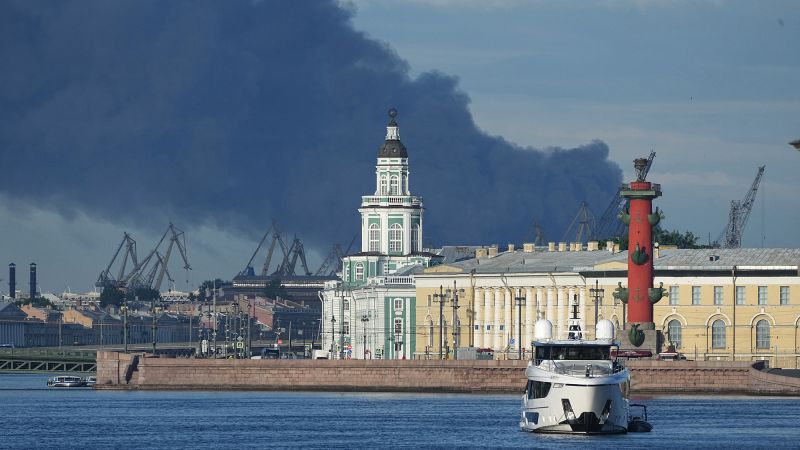
Table of Contents
A Calculated Strike on Russia’s Economic Stage
As the St. Petersburg International Economic Forum (SPIEF)—often described as Vladimir Putin’s answer to the World Economic Forum in Davos—opened its doors on Wednesday, the city’s skyline was punctuated by plumes of thick, black smoke. A coordinated Ukrainian drone assault targeted the northwestern hub, signaling a sophisticated evolution in Kyiv’s ability to project power deep into Russian territory.
The timing was clearly strategic. While global and domestic business leaders gathered to discuss Russia’s economic resilience under sanctions, Ukrainian forces demonstrated that the geography of the conflict has shifted. The attacks were not merely tactical harassments but targeted strikes on high-value economic and military assets, specifically designed to disrupt the narrative of security that the Kremlin seeks to project during the forum.
The Technical Reach of Ukraine’s New Arsenal
The scale of the operation underscores a rapid acceleration in Ukraine’s drone capabilities. Russian officials claim that air defenses intercepted more than 350 drones across multiple regions, including Moscow, Novgorod, and the Leningrad region. However, the effectiveness of these drones is measured not by how many are downed, but by the targets that were successfully reached.
President Volodymyr Zelensky confirmed that the strikes hit the St. Petersburg oil terminal, one of the largest transshipment complexes in northwestern Russia. By targeting energy infrastructure and the Kronstadt naval base, Ukraine is leveraging a strategy of asymmetric warfare—using relatively low-cost, autonomous systems to inflict high-cost damage on critical state assets.
This campaign marks a departure from the smaller, tactical drones used on the frontlines in Donbas. Ukraine is now deploying medium and long-range platforms capable of navigating hundreds of miles, bypassing traditional radar nets, and striking precision targets. The ability to hit a facility in the Tambov region involved in weapons production simultaneously with a port in St. Petersburg suggests a level of coordination and fleet management that was absent in earlier stages of the war.
Collateral Damage and Infrastructure Chaos
The human and logistical cost of the incursion was immediate. In Smolensk, near the Belarus border, the strikes on critical infrastructure resulted in the deaths of two firefighters who were combating blazes caused by falling drone debris. Governor Vasiliy Anokhin reported additional injuries to civilians and emergency personnel, highlighting the volatility of drone debris even when the primary aircraft is intercepted.
The disruption extended to civilian aviation. St. Petersburg international airport restricted its airspace on Wednesday morning, causing delays for dozens of flights. For a city hosting an international summit, the closure of airspace serves as a potent psychological blow, reminding attendees that the conflict is no longer confined to the eastern borders.
The Cycle of Escalation
The drone swarm follows one of the deadliest Russian offensives in recent months. On Tuesday, Russia launched a massive wave of strikes involving over 600 drones and dozens of missiles, killing at least 23 people in Kyiv and Dnipro. UN Secretary-General António Guterres issued a strong condemnation of these attacks, which targeted civilian infrastructure.
Kyiv’s response appears to be a calculated move to shift the cost of the war back onto Russian soil. By targeting the oil terminal and naval bases, Ukraine is not just attempting to degrade military capacity but is actively attempting to choke the economic arteries that fund the Russian war machine. As Zelensky noted, these long-range strikes are intended to bring the reality of the war home to the Russian administration, directly coinciding with their attempt to showcase economic stability at SPIEF.