Ukraine’s Long-Range Drone Campaign: The Strategic Siege of Moscow’s Kapotnya Refinery
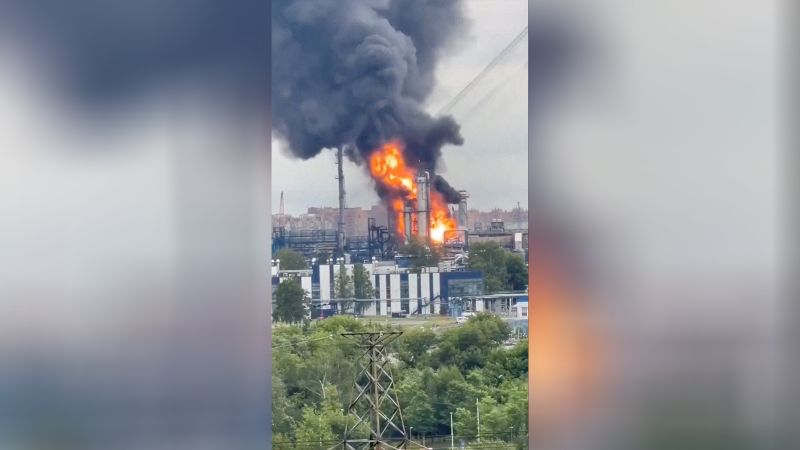
Table of Contents
The Escalation at Kapotnya: A New Pattern of Attrition
For the second time in a single week, the skyline of Moscow’s southeastern district was dominated by plumes of black smoke as Ukrainian long-range drones penetrated the capital’s inner defensive perimeter. The target was the Kapotnya oil refinery, a critical node in the metropolitan area’s fuel supply and a symbolic pillar of Russian industrial stability. While Russian officials, including Moscow Mayor Sergei Sobyanin, reported that dozens of drones were intercepted, the physical evidence—captured in geolocated footage showing roof collapses on fuel tank containers—confirms that the breach was successful.
This isn’t an isolated incident of opportunistic raiding. The repetition of strikes within a 48-hour window suggests a calculated effort by Kyiv to test the response times of Russian air defense systems and identify vulnerabilities in the refinery’s structural layout. By hitting the same facility twice, Ukraine is signaling that its ability to penetrate the ‘ring of steel’ around Moscow is not a fluke, but a sustainable capability.
- Strategic Attrition: Ukraine is shifting from tactical battlefield gains to strategic economic warfare.
- Infrastructure Vulnerability: The strikes target the midstream sector (refining) rather than just upstream (extraction).
- Psychological Impact: Bringing the war to the gates of the capital erodes the Kremlin’s narrative of internal security.
The Technical Evolution of Ukrainian Long-Range Drones
The ability to hit a target 500 kilometers away, as confirmed by President Volodymyr Zelensky, indicates a significant leap in Ukrainian drone technology. These are not the small, commercial quadcopters used in trench warfare. The drones striking the Kapotnya refinery are sophisticated, long-range UAVs (Unmanned Aerial Vehicles) capable of autonomous navigation and precision targeting.
Most of these assets are likely a mix of indigenous Ukrainian designs and adapted platforms. To achieve such range, these drones utilize a combination of GPS/GNSS guidance and potentially inertial navigation systems (INS) to circumvent electronic jamming. The fact that multiple drones reached their target despite the reported interception of ‘four dozen’ others suggests a ‘swarm’ tactic, where a volume of low-cost decoys is used to saturate air defense radars, allowing a few high-value precision munitions to slip through.
Analyzing the ‘Saturate and Penetrate’ Tactic
Modern air defense systems, such as the S-400s deployed around Moscow, are designed to handle high-altitude, high-speed threats. However, low-flying, slow-moving drones create a ‘radar shadow’—they blend into the terrain or fly below the radar horizon. When Ukraine launches a mass wave of these drones, the Russian operators are forced to prioritize targets. By the time the system identifies the actual strike drones among the decoys, the damage to the refinery’s fuel tanks is already done.
Economic Warfare: Severing the Oil Arteries
To understand why a refinery in Moscow matters, one must look at the Russian state budget. Oil and gas earnings historically account for at least one-third of Russia’s federal revenue. While the Kremlin has managed to bypass some Western sanctions by pivoting sales to China and India, the refining process remains a critical bottleneck.
Crude oil is easy to transport; refined fuel (gasoline, diesel, jet fuel) is where the highest value resides. By damaging refineries, Ukraine isn’t just stopping the export of oil; it is creating internal shortages. This was vividly seen in Crimea, where residents faced gasoline rationing following attacks on road supplies and storage. If Kapotnya’s capacity is significantly reduced, Moscow may face logistical challenges in distributing fuel, which directly affects both civilian morale and military mobilization.
The Midstream Bottleneck
In the oil industry, ‘midstream’ refers to the transportation and storage of crude, as well as the refining process. Attacking a refinery is far more effective than attacking a pipeline. A pipeline can be patched in hours; a damaged distillation tower or a collapsed fuel tank roof requires specialized parts and engineering that are currently under the pressure of international sanctions. This creates a ‘compounding failure’ where the cost of repair grows over time.
The Geopolitical Backdrop: G7 and the Trump Factor
The timing of these strikes coincides with the G7 summit in France, where President Zelensky has been aggressively lobbying for increased air defense capabilities. The narrative is clear: Ukraine can disrupt Russian energy, but it needs more ‘shields’ to protect its own cities while it continues to extend its ‘sword.’
Zelensky’s discussions with Donald Trump are particularly pivotal. Trump’s public comments suggesting that Russia and Ukraine should ‘agree to a deal’ reflect a shift in US political discourse toward a negotiated settlement. By demonstrating the ability to strike deep inside Russia, Zelensky is effectively increasing Ukraine’s leverage at the negotiating table. He is proving that the cost of continuing the war is not just a burden for Ukraine, but a direct threat to the Russian heartland.
What This Means for the Conflict’s Trajectory
The shift toward energy infrastructure marks a transition into a ‘war of endurance.’ Ukraine is no longer just fighting for territory; it is fighting to make the war financially and logistically unsustainable for the Kremlin.
Implications for Different Stakeholders
- For the Russian Military: Increased pressure on logistics and fuel transport, potentially slowing the movement of armor and aircraft.
- For the Russian Public: Potential fuel price hikes and shortages in the Moscow region, challenging the image of stability.
- For Western Allies: A debate over the ‘red lines’ of providing long-range weapons. If Ukraine can do this with indigenous drones, it validates the request for more advanced Western missiles.
Common Questions Regarding the Drone Campaign
How does Ukraine hit targets so far away?
Ukraine uses a combination of long-range UAVs and cruise missiles. The drones typically fly at low altitudes to avoid radar detection and use pre-programmed coordinates combined with satellite guidance to reach targets deep in Russian territory.
Are these attacks impacting global oil prices?
While individual refinery strikes don’t usually cause global price spikes, a sustained campaign against Russian refining capacity reduces the global supply of refined products, which can put upward pressure on diesel and gasoline prices worldwide.
Why not target the oil wells instead of the refineries?
Oil wells are often easier to restart or bypass. Refineries are complex chemical plants with highly specialized equipment. Destroying a distillation unit is far more damaging to the economy than damaging a pump jack.
Is Russia’s air defense failing?
Not entirely, but it is being challenged. The use of low-cost drones against high-cost interceptor missiles is a form of ‘asymmetric attrition.’ Russia is spending millions on missiles to shoot down drones that cost a few thousand dollars.
Will this lead to a larger escalation?
The Kremlin has repeatedly warned of retaliation, but the strikes on infrastructure are generally viewed as a response to Russia’s own campaign of bombing Ukraine’s power grid. It is a reciprocal strategy of infrastructure degradation.
The Logistics of Energy Sabotage
The precision of the Kapotnya strikes suggests the use of high-resolution satellite imagery and potentially intelligence shared by allies to map the facility’s layout. By targeting the roofs of fuel tanks, the drones maximize the risk of fire and atmospheric contamination, which complicates the cleanup and repair process.
As the conflict enters its fifth year, the focus on the ‘economic engine’ of the Russian state suggests that Ukraine is playing a long game. The goal is not to conquer Moscow, but to make the cost of the war exceed the Kremlin’s ability to pay for it. In this context, the Kapotnya refinery is not just a target; it is a catalyst for economic pressure.