UK Space Agency Partners with Vast to Send First Physically Disabled Astronaut to Orbit
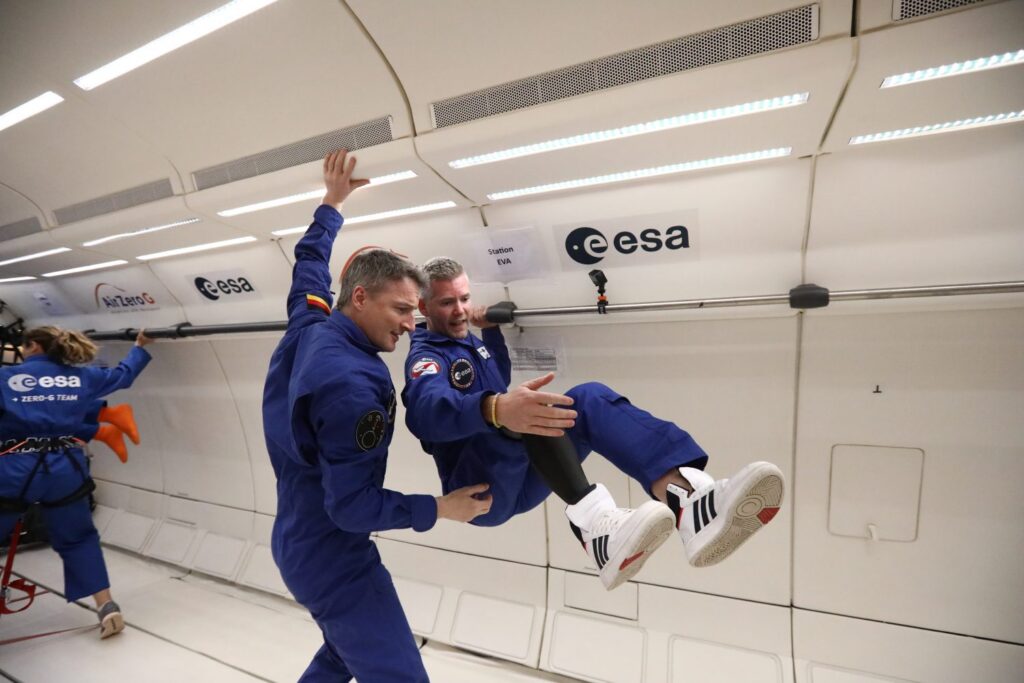
Table of Contents
A New Standard for Orbital Accessibility
The UK Space Agency (UKSA) has entered into a strategic agreement with the U.S.-based aerospace firm Vast to facilitate a historic mission: sending British astronaut John McFall to the Haven-1 space station. If successful, McFall would become the first person with a physical disability to live and work in orbit, signaling a departure from the rigid physical requirements that have historically defined astronaut selection.
The mission, projected for a 14-day duration, is slated to take place following the deployment of Haven-1, which is scheduled to launch on a SpaceX Falcon 9 rocket next year. Unlike the International Space Station (ISS), which is a sprawling multi-national complex, Haven-1 is a single-module commercial station designed to house four crew members, accessible via SpaceX’s Crew Dragon spacecraft. The station is intended to remain in low Earth orbit for three years, serving as a functional prototype for the more ambitious, multi-module Haven-2.
The Science of Adaptive Spaceflight
John McFall is not a typical commercial passenger. A surgeon and a reserve astronaut with the European Space Agency (ESA), McFall lost his right leg in a motorcycle accident. In a landmark move last year, he became the first person with a physical disability to be medically cleared for long-duration spaceflight. This clearance was the result of the ESA’s Fly! Project, an initiative specifically designed to challenge the traditional medical paradigms of space travel and pioneer the inclusion of disabled astronauts.
McFall’s presence on Haven-1 will be more than symbolic. His mission will focus on critical physiological and technical research, including:
- Prosthetic Performance: Evaluating how prosthetic limbs interact with microgravity and whether current designs require modification for orbital environments.
- Musculoskeletal Adaptation: Studying the effects of weightlessness on a body with asymmetrical limb loss.
- Orbital Kinematics: Analyzing how individuals with physical disabilities navigate and move within the confined, zero-G environment of a commercial station.
The Commercial Funding Hurdle
While the technical and medical hurdles are being cleared, the financial architecture of the mission remains a point of focus. The UKSA agreement is not a direct funding grant but rather a framework for support. According to a British government spokesperson, the agency will assist Vast in securing corporate sponsorships to cover the total cost of the mission, while also managing the complex legal and regulatory requirements of a transatlantic flight.
Vast has not yet disclosed the specific funding gap it needs to bridge through these sponsorships. This commercial-first approach mirrors a growing trend in the industry where national agencies provide the legitimacy and regulatory pathway, while private sponsors foot the bill. This follows a similar, though less publicized, 2023 agreement between the UKSA and Axiom Space aimed at sending a commercially sponsored Briton to the ISS.
Contextualizing the Shift in Human Spaceflight
This move comes on the heels of other milestones in accessibility. In December, German engineer Michaela Benthaus became the first wheelchair user to reach space during a brief suborbital flight with Blue Origin. However, there is a vast technical difference between a 10-minute suborbital hop and a 14-day orbital stay. The latter requires complex waste management, sleep systems, and emergency egress protocols that must be adapted for someone with a physical disability.
Beyond the inclusive nature of the mission, the flight carries significant national weight for the UK. It would mark the first time a British citizen has reached orbit in over a decade, since Tim Peake’s 2015 mission to the ISS. By aligning with Vast, the UK is positioning itself within the burgeoning ecosystem of commercial LEO (Low Earth Orbit) destinations, diversifying its reliance away from traditional government-led programs.
British Space Minister Liz Lloyd emphasized that the agreement is intended to show that “space is for everyone,” framing the mission as both a scientific endeavor and a societal statement on the universality of exploration.