UK Court of Appeal Upholds Terror Designation for Palestine Action: Legal Implications for Free Speech and National Security
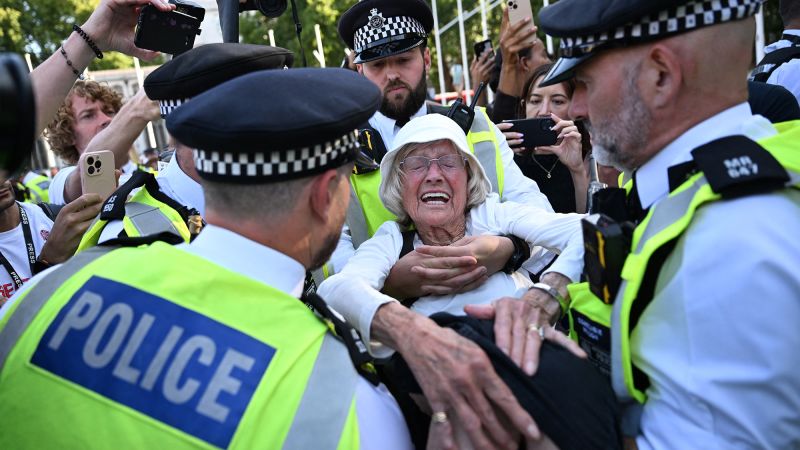
Table of Contents
The Legal Pivot: How the Court of Appeal Redefined Palestine Action
In a decisive ruling on Monday, the UK Court of Appeal in London affirmed that the British government acted within the law by proscribing Palestine Action as a terrorist organization. The ruling, delivered by Chief Justice Sue Carr, effectively dismantles the group’s primary legal defense: that it is a non-violent organization dedicated to civil disobedience.
The decision marks a significant reversal of a February High Court ruling, where three senior judges had previously suggested that while the group’s activities were criminal, they did not reach the threshold of terrorism required for a full state ban. By overturning this, the Court of Appeal has solidified the government’s power to use the Terrorism Act against domestic groups engaging in targeted property destruction, even when those actions are tied to political grievances.
- Government Position: Palestine Action’s use of “covert cells” and targeted sabotage of defense infrastructure constitutes terrorism.
- Group Position: Their actions are a form of non-violent direct action and civil disobedience aimed at stopping arms transfers to Gaza.
- Legal Conflict: Whether targeted property damage at military sites crosses the line from “criminal damage” to “terrorism.”
Chief Justice Carr was explicit in her critique of the group’s self-portrayal, stating that the premise of Palestine Action being a non-violent organization was “seriously flawed.” The court focused on the operational structure of the group—specifically the use of covert cells to target defense companies and military bases—as evidence of a calculated campaign that exceeds the boundaries of traditional protest.
The Path to Proscription: From Vandalism to Terror Designation
The escalation toward a terror ban was accelerated by a series of high-profile incursions. The most critical catalyst occurred in June 2025, when activists breached a Royal Air Force (RAF) base to protest the UK’s military support for Israel’s operations in Gaza. This was not an isolated event but the culmination of a multi-year campaign targeting Elbit Systems UK, an Israeli defense contractor.
Under UK law, once an organization is proscribed under the Terrorism Act, the legal landscape for its members shifts dramatically. It is no longer merely a matter of charging individuals with “criminal damage” or “trespass.” Instead, membership in, or the expression of support for, a proscribed group becomes a criminal offense. The penalties are severe, with potential prison sentences of up to 14 years.
The Impact on Public Protest and Arrests
The ripple effects of this designation have been immediate and widespread. According to recent data, more than 3,300 individuals have been arrested during demonstrations for displaying signs that state, “I oppose genocide. I support Palestine Action.” While these individuals may not be members of the group’s “covert cells,” the law now treats the public expression of support for the group as a terror-related offense.
Currently, over 700 people have been charged under the Terrorism Act. However, a critical gap exists between charges and convictions; to date, no one has been convicted solely for the act of supporting the group through peaceful protest. This disparity has led to accusations from civil liberties organizations that the state is using terror legislation to “chill” legitimate political speech.
What This Means: Legal and Social Implications
This ruling creates a potent legal precedent regarding the definition of “terrorism” within the UK. Historically, terror designations were reserved for groups seeking to coerce a government or population through violence against people. The Court of Appeal’s decision suggests that systematic property destruction—when aimed at national security infrastructure—can be interpreted as terrorism, regardless of whether the group intends to kill or injure humans.
For the average citizen and activist, this means the “safe harbor” of civil disobedience is shrinking. If a group is designated as a terrorist organization, the act of holding a sign or donating to a legal defense fund associated with that group could potentially trigger a counter-terrorism investigation.
From a national security perspective, the government argues that the millions of pounds in damages caused to defense facilities and the breach of secure military sites represent a direct threat to the state’s operational capability. The court agreed that these actions affect national security, thereby justifying the extreme measure of proscription.
Technical Legal Breakdown: Criminal Damage vs. Terrorism
To understand why this ruling is controversial, one must examine the technical distinction between a criminal act and a terrorist act. In most democratic legal systems, the difference lies in the intent and the scale.
| Feature | Criminal Damage/Trespass | Terrorism (as per this ruling) |
|---|---|---|
| Primary Goal | Disruption or property damage | Coercing government/threatening national security |
| Operational Method | Public protests, open actions | Covert cells, coordinated sabotage |
| Legal Penalty | Fines or short-term imprisonment | Up to 14 years in prison |
| Status of Support | Legal to support a cause | Illegal to support the designated organization |
The High Court had originally argued that the group’s actions could be handled via standard criminal prosecution. The Court of Appeal, however, rejected this, implying that the methodology (covert cells) and the targets (military bases) shifted the activity from simple crime to a threat to the state.
Dissent and the Human Rights Perspective
The ruling has met with fierce resistance from human rights advocates. Huda Ammori, co-founder of Palestine Action, described the move as “one of the most extreme attacks on free speech and the right to protest in modern British history.” The group has vowed to take their case to the Supreme Court and the European Court of Human Rights (ECHR).
Organizations like Defend Our Juries argue that the judiciary is being “instrumentalized” to suppress political opposition to the UK’s foreign policy in the Middle East. They contend that by labeling political activists as terrorists, the government is effectively criminalizing the act of opposing genocide, regardless of the legality of the tactics used.
This tension highlights a broader global trend where “domestic terrorism” labels are increasingly applied to environmental and political activists (such as those targeting pipelines or arms factories), creating a precarious environment for non-violent direct action (NVDA).
The Bristol Case: A Precedent for Conviction
The gravity of the current legal climate was underscored just last Friday, when four members of Palestine Action were imprisoned after breaking into an Elbit factory in Bristol in 2024. Unlike previous cases where activists were charged with vandalism, the judge in this instance found that they acted as terrorists. This marks a critical transition from the proscription of the group to the conviction of individuals under terror laws.
Frequently Asked Questions
Is it illegal to support Palestine Action in the UK?
Yes. Because the Court of Appeal has upheld the ban, Palestine Action is a proscribed organization. Under the Terrorism Act, it is a criminal offense to be a member of, invite support for, or wear clothing/carry items that suggest support for a proscribed organization.
What is the difference between civil disobedience and terrorism in this case?
Civil disobedience typically involves open, non-violent law-breaking to highlight an injustice. The Court of Appeal ruled that Palestine Action’s use of covert cells and targeted sabotage of national security infrastructure moved their activities beyond civil disobedience into the realm of terrorism.
What are the penalties for supporting a proscribed group?
Depending on the level of involvement—ranging from membership to providing financial support—individuals can face significant prison sentences, with the maximum penalty for some offenses reaching 14 years.
Why was the High Court ruling overturned?
The High Court originally found that the scale of the group’s activities did not warrant a total ban. The Court of Appeal overturned this, arguing that the High Court underestimated the threat posed by the group’s covert operational structure and the impact on national security.
Will this case go to the Supreme Court?
Palestine Action’s leadership has stated their intention to challenge the ruling at the Supreme Court and the European Court of Human Rights, arguing that the ban violates fundamental rights to free speech and assembly.
The finality of this ruling rests on whether the highest courts in the land agree that property damage at military sites constitutes a “threat to the life of the state” or merely a criminal nuisance. For now, the British government maintains a powerful new tool in its arsenal to suppress targeted activism against the defense industry.