Twenty Years Later: Is the Nintendo Wii Still a Viable Console in 2026?
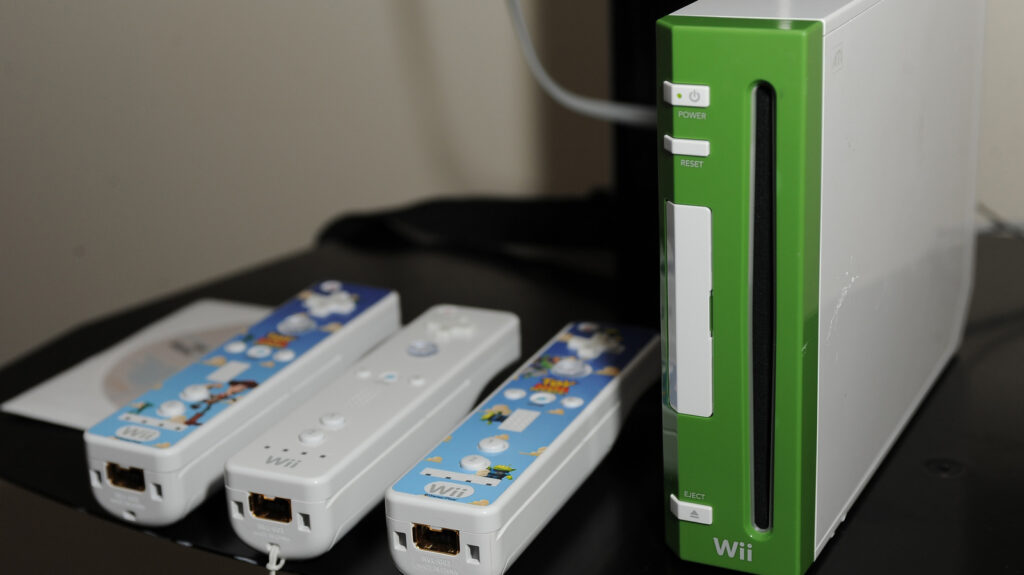
Table of Contents
The 20-Year Legacy of a Motion-Control Phenomenon
The Nintendo Wii officially hit its 20th anniversary this year, marking two decades since it fundamentally shifted how the industry viewed ‘casual’ gaming. While the gaming world has since moved through the era of the Wii U’s failure and the massive success of the Nintendo Switch—and more recently, the 2025 rollout of the Nintendo Switch 2—the original Wii continues to appear in the used markets of eBay and local retro shops. But in 2026, the question isn’t just about nostalgia; it’s about utility.
For the uninitiated or the parent looking for a cheap starter console, the Wii remains an alluringly simple machine. However, the gap between 2006 hardware and 2026 display standards has become a chasm that is increasingly difficult to bridge.
The Hardware Hurdle: 480p in a 4K World
The most immediate shock for anyone plugging a Wii into a modern OLED or 4K LED panel is the resolution. The Wii outputs a maximum of 480p or 480i, a standard that looks profoundly blurry on screens designed for ultra-high definition. While the aesthetic charm of standard definition works for some, others find the lack of clarity jarring, particularly in fast-paced titles.
Furthermore, most modern televisions have phased out composite AV inputs entirely. To get a signal, users are forced to rely on third-party ‘Wii to HDMI’ adapters. While these are readily available—often retailing for under $10 on Amazon or roughly $24 through specialty vendors like Electron Shepard LLG—they are essentially a bandage on a dated system. They provide a connection, but they don’t magically upscale the internal resolution to modern standards.
The Software Dead-End and the Rise of Homebrew
From an official standpoint, the Wii is a ghost town. Nintendo shuttered the Wii Shop Channel in 2019, effectively killing the ecosystem’s digital storefront. There are no updates, no new first-party titles, and no official cloud support. This leaves buyers with two distinct paths: the purist route or the modder’s route.
The purist route requires hunting for physical discs. While titles like Wii Sports and Mario Kart Wii remain staples, the secondary market is volatile. Prices for used consoles now fluctuate wildly between $70 and $200. Collectors often list factory-sealed units for exorbitant sums, but for the average user, these are overpriced curiosities rather than functional gaming machines.
The more appealing—though legally complex—alternative is the ‘homebrew’ scene. Modding a Wii to run unofficial software allows the console to transform into a versatile emulation hub, capable of running older GameCube or NES titles. For tech-savvy users, this is the only way to unlock the machine’s full potential in 2026. However, this requires a level of technical tinkering that may be daunting for those simply wanting a ‘plug-and-play’ experience.
The Value Proposition
Is it actually worth the investment? If you can find a bundle for under $80, the Wii still serves as an excellent ‘entry-level’ console for young children. It is a low-stakes environment where the cost of a dropped controller is minimal compared to the high price of modern peripherals. Moreover, its current status as a completely offline machine is an accidental benefit for parents who want a gaming experience devoid of microtransactions, online toxicity, or data tracking.
However, for anyone already owning a Nintendo Switch or the newer Switch 2, the Wii is largely redundant. The motion controls that once felt revolutionary have been integrated into almost every modern platform. Unless you are specifically seeking the tactile feel of the Wii Remote or are diving into the homebrew community, the Wii has transitioned from a living piece of technology into a digital museum exhibit.