Trump Vows Release of US-Iran Agreement Text Amid G7 Tension and Intelligence Gaps
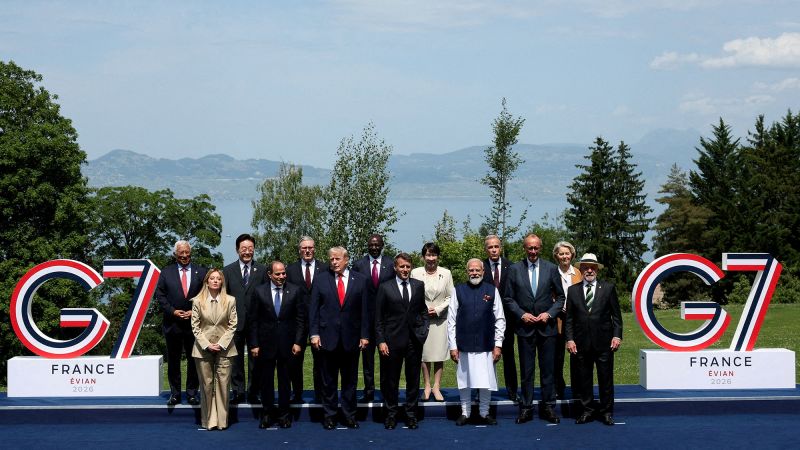
Table of Contents
A Promise of Transparency in a Climate of Secrecy
President Donald Trump has committed to publicly releasing the full text of the recent US-Iran agreement within a matter of days. While the promise of transparency typically serves to stabilize markets and reassure allies, this specific move arrives amidst a backdrop of significant diplomatic friction and conflicting reports regarding what the document actually entails.
The core of the tension lies in a fundamental disconnect between the formal wording of the agreement and the ‘back-channel’ commitments allegedly made by Tehran. US negotiators have reportedly downplayed the legal text, suggesting it is a framework that does not fully capture the nuanced, private assurances Iran has provided to US intelligence and diplomatic channels. This creates a precarious situation: the public may see a document that appears weaker or more lenient than the private deals the administration claims to have secured.
- Public Disclosure: President Trump has vowed to release the US-Iran agreement text in a few days to provide clarity on the deal’s terms.
- The Intelligence Gap: US officials suggest the formal text is less significant than private, back-channel commitments made by Iran.
- Allied Friction: Israel’s request to review the text was explicitly rejected by the US, signaling a rift in intelligence sharing.
- Geopolitical Context: The announcement coincides with the G7 summit in France, where leaders are engaged in ‘frank’ discussions regarding the deal’s viability.
The decision to withhold the text from Israel—a primary stakeholder in Iranian nuclear and regional security—has sent ripples through the intelligence community. An Israeli source confirmed that the request for a preview of the document was denied, a move that contradicts the traditional ‘special relationship’ regarding shared security data on Iran.
The Divergence Between Formal Text and Back-Channel Diplomacy
In high-stakes diplomacy, there is often a wide gulf between a Memorandum of Understanding (MoU) and the operational reality of an agreement. In this instance, US negotiators are treating the upcoming text as a public-facing instrument rather than a comprehensive ledger of commitments.
According to US officials, the document’s wording is secondary to the verbal and private assurances given during negotiations. This approach is risky. When the text is released, critics—both domestic and international—will judge the success of the deal based on the written word. If the text lacks specific, enforceable triggers or verifiable benchmarks for Iranian compliance, the administration may face accusations of ‘diplomatic theater’ regardless of what was promised in private.
The Role of Verification and Trust
The central question remains: how can the international community trust back-channel commitments that are not codified in the formal text? In previous nuclear agreements, the IAEA (International Atomic Energy Agency) served as the primary verification body. If the new agreement relies on private trust rather than documented verification protocols, it leaves the deal vulnerable to the ‘trust but verify’ paradox.
G7 Friction and the French Summit
The timing of the announcement is no coincidence. The G7 summit in France has become the primary arena for world leaders to debate the merits of the US approach to Iran. Sources close to the summit describe the atmosphere as ‘frank,’ a diplomatic euphemism for disagreement.
European leaders, particularly from France and Germany, have historically favored a multilateral approach to containment and diplomacy. The US’s unilateral movement toward a specific agreement—and the subsequent lack of transparency with allies—has created a tension point. While President Trump has engaged in bilateral talks with Ukrainian President Volodymyr Zelensky and leaders of three Arab states, the broader G7 consensus on Iran remains elusive.
The Hezbollah Variable and Regional Stability
Parallel to the diplomatic maneuvering over the text, President Trump has voiced growing frustration with the longevity of the conflict between Israel and Hezbollah. By stating that Israel has been fighting the Iran-backed group for “too long” and noting that “too many people are being killed,” the President is signaling a potential shift in US regional strategy.
The suggestion that Syria might “do a better job” at dealing with Hezbollah is a complex geopolitical gambit. It implies a willingness to engage with the Assad regime or shift the burden of containment to Damascus, potentially in exchange for other concessions. This pivot suggests that the US-Iran agreement is not just about nuclear proliferation, but about a broader regional realignment involving Syria, Lebanon, and the Gulf states.
What This Means for Global Security and Markets
The release of the agreement text will likely trigger immediate reactions across three primary sectors:
- Energy Markets: If the text suggests a return to Iranian oil exports or a loosening of sanctions, oil prices may see downward pressure. Conversely, a perceived ‘weak’ deal that fails to curb Iranian influence could lead to increased volatility.
- Defense Contracting: The shift in rhetoric regarding Hezbollah and the potential involvement of Syria could alter the procurement patterns for defense systems in the Middle East.
- Diplomatic Precedent: The rejection of Israel’s request to see the text sets a precedent for a more transactional relationship between the US and its closest regional ally.
For the average observer, this means the ‘text’ is less about law and more about perception. The administration is attempting to balance the need for public victory (the release of a deal) with the need for operational flexibility (the back-channel commitments).
Frequently Asked Questions
What is the difference between the formal agreement and back-channel commitments?
A formal agreement is a written legal document that defines the terms, obligations, and penalties of a deal. Back-channel commitments are private, often unwritten assurances made between negotiators that are not intended for public record but are expected to be honored in practice.
Why did the US refuse to show the text to Israel?
While the US has not provided an official reason, sources suggest it was to maintain leverage in the final stages of the deal and to prevent premature leaks or public objections from the Israeli government that could derail the announcement.
How does the G7 summit in France impact this deal?
The G7 serves as a vetting mechanism. If the majority of G7 leaders express skepticism about the deal’s efficacy, it reduces the diplomatic legitimacy of the agreement and may lead to a fragmented international response to Iranian activity.
What is the significance of the mention of Syria regarding Hezbollah?
It suggests a strategic pivot where the US may look to Syrian authorities—who have a direct border and security interest in Hezbollah’s presence—to manage the group, potentially reducing the direct military burden on Israel and the US.
When will the text of the US-Iran agreement be released?
President Trump has stated it will be released “in a couple of days,” though exact timing depends on final diplomatic scrubbing and the coordination of the G7 summit schedule.
Analysis of the Intelligence Gap
From a technical intelligence perspective, the reliance on non-codified commitments is a high-risk strategy. In the world of statecraft, an agreement is only as strong as its verification mechanism. If the US is relying on ‘commitments’ that aren’t in the text, they are essentially operating on a ‘gentleman’s agreement’ with a regime that has a historical track record of interpreting agreements flexibly.
The risk is that once the text is public, the Iranian government may claim that they are only bound by the written word, effectively nullifying the back-channel promises the US is currently counting on. This is precisely why Israel and other G7 members are pushing for a transparent, detailed document over a vague framework.