Trump Signs Pared-Back AI Executive Order Following Internal Policy Tug-of-War
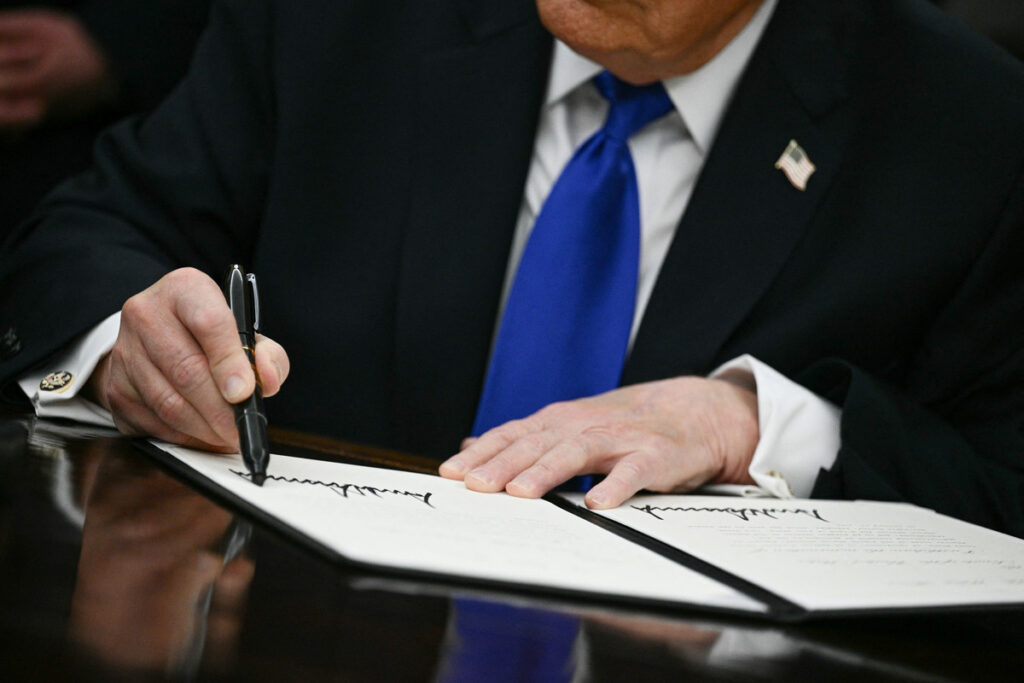
Table of Contents
A Pivot Toward Deregulation
After several weeks of public contradictions and internal drafting reversals, President Trump has officially signed an executive order regarding the development and deployment of artificial intelligence. While the administration initially signaled a desire to overhaul the previous administration’s comprehensive AI framework, the final document arrives significantly pared-down, reflecting a lean toward deregulation over the rigorous safety guardrails previously championed by federal agencies.
The new order effectively dismantles several oversight mechanisms established under the Biden administration, most notably those requiring developers of the most powerful AI models to share safety test results with the federal government before public release. This shift is a victory for several Silicon Valley giants and emerging startups that have argued that overly stringent reporting requirements stifle innovation and hand a competitive advantage to overseas rivals, specifically in China.
The Friction Over ‘Compute’ and Safety
The path to this signature was far from linear. Insiders report a weeks-long struggle between the administration’s pro-growth wing and a smaller cohort of security advisors who pushed for continued monitoring of “frontier models”—the largest, most capable LLMs that possess the potential for dual-use in biological or cyber weaponry.
The previous framework focused heavily on the concept of “compute thresholds,” where any model trained using a specific amount of processing power triggered mandatory government notifications. The new order significantly relaxes these triggers. By raising the threshold of what constitutes a “critically capable” model, the administration is essentially exempting a broader range of mid-sized AI labs from federal scrutiny.
Critics of the move, including several prominent AI safety researchers, argue that this creates a regulatory blind spot. “The risk doesn’t vanish just because you stop reporting it,” says one former policy advisor. “We are moving from a posture of proactive risk mitigation to one of reactive crisis management.”
Industry Reaction and Market Implications
For the tech sector, the reaction has been largely positive. The removal of burdensome reporting requirements allows companies to accelerate deployment cycles. However, the lack of a clear, standardized safety framework may create a fragmented landscape where individual companies set their own ethical boundaries, leading to inconsistent user experiences and unpredictable safety failures.
The order also touches upon the procurement of AI services for government agencies, streamlining the process for private companies to sell AI tools to the Department of Defense and other federal arms. This suggests that while the administration is cutting regulation on the development side, it is aggressively expanding the integration of AI into the state apparatus.
Strategic Ambiguity
What remains notably absent from the order is a detailed strategy for dealing with the global race for AI supremacy. While the rhetoric from the White House has emphasized “winning the AI war,” the executive order focuses more on domestic deregulation than on the international treaties or export controls necessary to manage the geopolitical fallout of AGI (Artificial General Intelligence).
The resulting document is less a comprehensive roadmap and more of a signal to the markets: the federal government will no longer be the primary arbiter of AI safety, leaving that responsibility to the innovators themselves.