Tragedy in La Guaira: Deported Venezuelans Trapped in Deadly Hotel Collapse
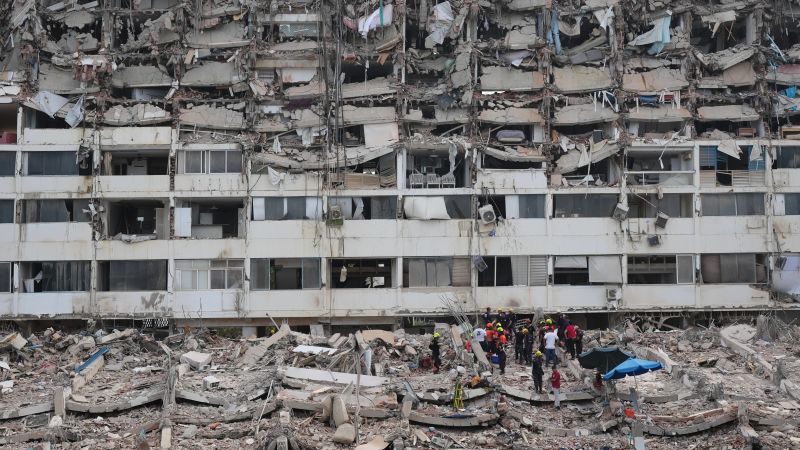
Table of Contents
A Convergence of Crises
In a devastating intersection of geopolitical policy and natural disaster, families are searching for answers after a hotel housing over 100 recently deported Venezuelans collapsed during a series of catastrophic earthquakes. The events unfolded in La Guaira, a coastal city north of Caracas, where the Hotel Santuario became a temporary waypoint for those returned to Venezuela by U.S. immigration authorities.
The timing was precise and cruel. On Wednesday, a deportation flight from Miami landed at Simón Bolívar International Airport at 10:22 a.m. local time. By that evening, two once-in-a-century earthquakes struck the region within seconds of each other. The resulting seismic surge leveled structures across La Guaira, claiming at least 1,943 lives and leaving thousands more displaced or missing.
Survival Amidst the Rubble
For Ninoska Gutierrez, 45, the collapse was a blur of chaos and instinct. Recounting the moment to CNN, Gutierrez described fleeing her room barefoot, only to have the wall beside her split open. She described a sensation of “floating in mid-air” as the structure gave way. Gutierrez survived by crawling through a gap in the ceiling after clearing debris from her legs, but she was one of the few.
Many others remained trapped. For families like that of Amanda Donizete, the silence from officials is the most grueling part of the disaster. Donizete, who had been working in Georgia after fleeing the humanitarian crisis in her home country, had expressed joy at the prospect of returning to her family. Her brother, Luis Armando Dasilva, reports that local authorities have been unable to confirm whether she is in a hospital or a morgue.
The Logistics of Deportation
The flight in question, tracked by the Human Rights First initiative ICE Flight Monitor, carried 146 individuals, including 19 women and seven children. This surge in returns follows a significant legal shift in the U.S.; in October, the Supreme Court permitted the Trump administration to terminate Temporary Protected Status (TPS) for approximately 300,000 Venezuelan migrants.
The scale of these operations has accelerated. In May alone, the U.S. deported 1,746 Venezuelans. For many, the transition from U.S. custody to Venezuelan soil was brief. One woman reported her husband was held by ICE for only 15 days before being placed on the flight that preceded the tragedy.
Accountability and Relief
The U.S. Department of Homeland Security has distanced itself from the tragedy, maintaining a strict legal boundary regarding custody. A DHS spokesperson stated that because the flight safely reached Venezuela, Immigration and Customs Enforcement (ICE) was no longer responsible for the individuals once they were handed over to local authorities.
Despite the lack of direct liability, the U.S. government has committed more than $300 million in relief efforts and deployed search-and-rescue teams to assist in the wreckage. However, for those like Yulis Salcedo, the financial aid does little to mitigate the trauma. Her 21-year-old son, Anderson, survived the collapse but remains in critical condition, fighting for his life on respiratory support with both legs amputated.
As days pass, the mission for rescue workers at Hotel Santuario has shifted toward recovery. Families continue to plead with officials to release the bodies of their loved ones, seeking the dignity of a proper burial in a landscape still reeling from seismic shock.