Thomson Aggressively Undercuts the Budget Market with New Google TV 5.0 QLED Range in India
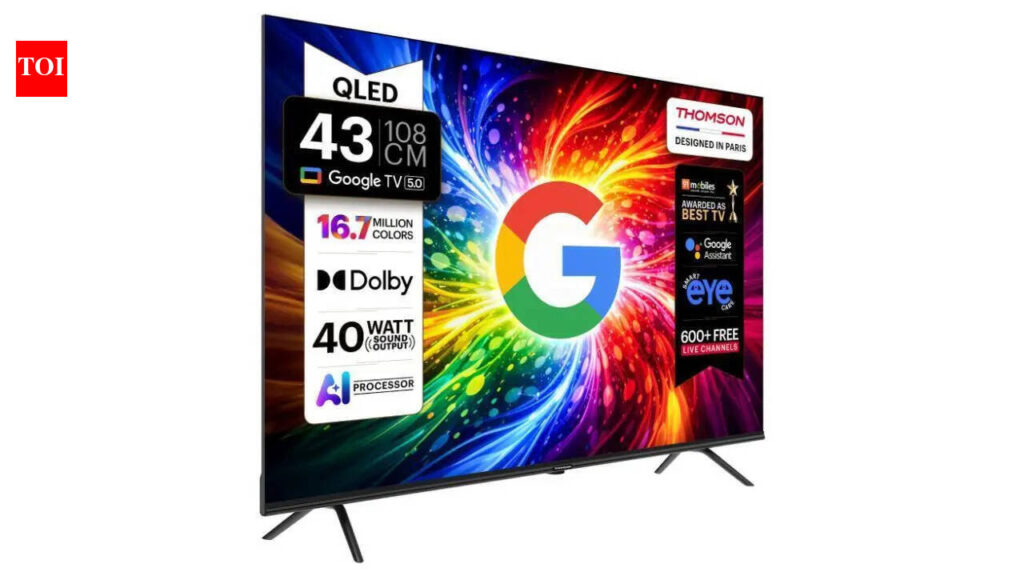
Table of Contents
The Race to the Bottom of the Budget QLED Market
Thomson is making a loud play for the entry-level smart TV segment in India, launching its latest Google TV 5.0 QLED range with a starting price that feels almost disruptive. At ₹10,999 for the base model, Thomson isn’t just competing with other budget brands; it’s attempting to make Quantum Dot technology—once reserved for mid-to-high-end panels—accessible to the mass market.
The move comes as the Indian consumer electronics market sees a widening gap between premium OLEDs and standard LED panels. By pricing QLEDs at this level, Thomson is targeting the ‘aspirational budget’ buyer: someone who wants better color accuracy and higher brightness than a standard LED provides, but cannot justify a ₹30,000 spend.
Hardware and Panel Performance
The core appeal here is the integration of Quantum Dot technology. Unlike traditional LEDs, QLEDs use a layer of nano-crystals to produce more precise colors and deeper reds and greens. While the ₹10,999 price point suggests some compromises in peak brightness (nits) and local dimming capabilities, the jump in saturation over basic LED sets is noticeable.
The range runs on Google TV 5.0, which provides a more streamlined, content-first interface compared to the older Android TV builds. This means better integration with Google Assistant and a more intuitive recommendation engine that pulls from across various streaming apps. For the end user, this reduces the friction of navigating fragmented app ecosystems like Disney+ Hotstar, Netflix, and Prime Video.
The Technical Trade-off
To hit this price point, Thomson has likely optimized its cost structure in a few key areas. We expect a focus on standard 60Hz refresh rates and basic HDR support rather than high-end Dolby Vision certification across the entire range. However, the inclusion of a modern SoC (System on a Chip) to power the Google TV 5.0 interface is critical; budget TVs often suffer from ‘UI lag’ after six months of use. Whether Thomson’s hardware can maintain the fluid experience of Google TV 5.0 over the long term remains the primary question for potential buyers.
Market Positioning Against the Competition
Thomson is entering a crowded field. Brands like Xiaomi, Hisense, and TCL have already established a foothold in the budget QLED space. However, by pushing the entry price below the ₹11,000 mark, Thomson is effectively moving the goalposts. They are no longer just selling a TV; they are selling the cheapest possible way to own a QLED.
This strategy puts pressure on other manufacturers to either drop prices or add more value (such as better sound systems or extended warranties) to justify a higher cost. For the consumer, this price war is a net positive, accelerating the transition from basic LEDs to more vibrant panel technologies.
Availability and Logistics
The range is expected to be available through major e-commerce platforms in India, leveraging a digital-first distribution model to keep overheads low. This lean approach is likely why Thomson can sustain such thin margins on the hardware, potentially hoping to recoup value through ecosystem lock-in or future model upgrades.


