The Unkillable Glass: How Hanoi’s ‘Bia Hơi Cốc’ Defies Modern Industrial Design
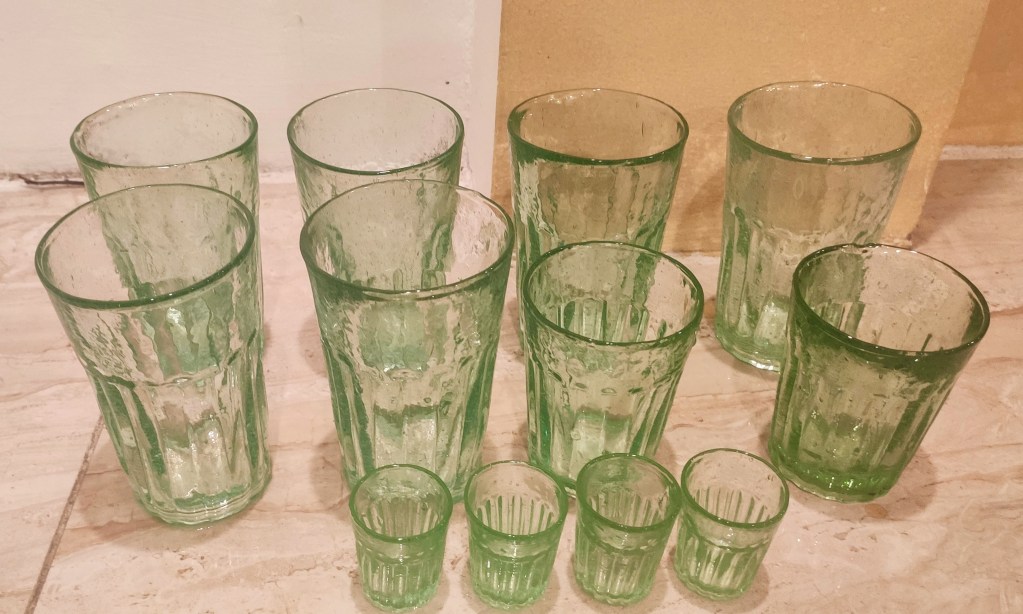
Table of Contents
A Relic of the Subsidy Era
At the Ba Dinh Sports Center in Hanoi, the beer served is superficially identical to the light draft lager found on nearly every street corner in the capital. It is Bia hơi—a fresh, uncarbonated brew produced by state-owned entities. But for the regulars, the difference lies in the timing. They seek the “blood-cut” brew, beer tapped and poured the moment it leaves the brewery, a privilege that traces back to the restrictive subsidy era following the fall of Saigon in 1975.
Yet, despite the prestige of the pour, the vessel remains the same: the Bia hơi cốc. A sturdy, blue-green, handmade glass tumbler, the cốc is a piece of functional hardware that has survived decades of economic upheaval, from the 1986 Đổi Mới reforms to the current surge of Vietnam as a global manufacturing hub.
The Engineering of Necessity
The cốc was not designed for aesthetics or brand prestige; it was engineered for a command economy. During the post-colonial nation-building phase, the government sought to make beer a morale booster for the masses. However, the logistics of distribution were fraught. Bottles were impractical for a fresh, preservative-free product, and relying on customers to bring their own vessels made rationing impossible.
The solution came from the Vietnamese Central Cooperative Union of Handicrafts and Crafts (CCUHC). They developed a standard-sized glass that could act as a physical unit of currency. One ticket equaled one cốc. This effectively standardized the consumption of beer across Hanoi, turning the glass into a tool of administrative efficiency.
Defying the Logic of Scale
From a modern product design perspective, the cốc is an anomaly. In a market now flooded with mass-produced, precision-cut crystal from China, the cốc remains “unpretty” and fundamentally unprofitable to produce at scale. It is manufactured in small village factories near Hanoi using recycled glass and manual labor.
The glass bears a single permanent marker: a capital ‘H’ pressed into the base, representing HABECO (Hanoi Beer Alcohol and Beverage Joint Stock Corporation). Beyond that, no two glasses are perfectly identical. This lack of standardization is precisely why the object persists. It occupies a niche where the cost of upgrading to a modern, standardized glass exceeds the cultural and functional value of the original.
Utility vs. Optimization
Vietnam is currently one of Southeast Asia’s fastest-growing economies, evolving into a critical alternative to Chinese manufacturing and a hub for international tourism. In this environment of rapid digital transformation and industrial optimization, the cốc represents a stubborn refusal to be “improved.”
While global design trends push toward minimalism and perfection, the cốc thrives on its ruggedness and anonymity. It is a rare example of a gadget—in the broadest sense of a functional tool—where the original version is superior to any theoretical upgrade because its value is derived from its connection to a specific social and historical utility.
As Hanoi continues to modernize, the persistence of the blue-green tumbler suggests that habit and raw utility can occasionally outperform the relentless drive for industrial efficiency.