The Trillion-Dollar Waiting Game: Decoding the IPO Prospects of SpaceX, OpenAI, and Anthropic
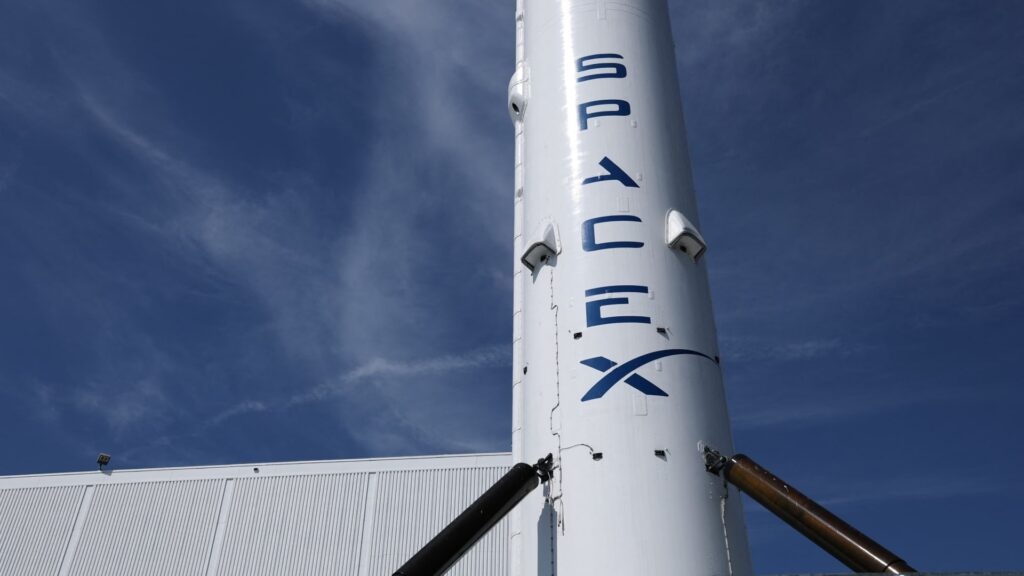
Table of Contents
The Liquidity Paradox of the Modern Unicorn
For the last decade, the venture capital playbook followed a predictable arc: build a high-growth product, burn cash to capture a market, and exit via a public offering. But we have entered the era of the ‘perpetual private company.’ Giants like SpaceX and OpenAI have reached valuations that would make most S&P 500 companies envious, yet they remain stubbornly shielded from the public markets. For retail investors, the frustration is growing; for the companies, the shield is strategic.
The tension isn’t just about timing—it’s about the fundamental shift in how these companies are structured. When we look at the triumvirate of SpaceX, OpenAI, and Anthropic, we aren’t looking at typical software startups. We are looking at entities that operate more like sovereign states or research institutes with massive budgets.
SpaceX: The Starlink Escape Hatch
Elon Musk has historically expressed a distaste for the quarterly scrutiny of Wall Street, citing the ‘short-termism’ that plagues public companies. However, SpaceX has a unique lever that OpenAI and Anthropic lack: Starlink. While the core Falcon 9 and Starship operations are capital-intensive and R&D-heavy, Starlink is a recurring revenue machine with a global footprint.
Industry insiders suggest that the most likely path to a public market isn’t a full SpaceX IPO, but a spin-off of Starlink. By carving out the satellite internet arm, Musk could provide liquidity to early employees and investors without exposing the highly sensitive, government-contract-dependent launch business to the volatility of public trading. This move would effectively create a ‘dividend’ for SpaceX shareholders while keeping the Mars-bound ambitions under private control.
The OpenAI Equity Puzzle
OpenAI presents a far more complex scenario. The company’s transition from a non-profit to a ‘capped-profit’ entity has created an equity structure that is, frankly, a nightmare for traditional IPO underwriters. The internal mechanisms for how profits are distributed—and where the non-profit board fits into the governance—remain opaque.
Furthermore, Sam Altman’s recent explorations into a massive chip-fabrication venture suggest that OpenAI is thinking bigger than a simple software-as-a-service (SaaS) exit. If OpenAI intends to vertically integrate into hardware and energy, a premature IPO could be a strategic blunder. They aren’t just building a chatbot; they are attempting to build AGI (Artificial General Intelligence), a goal that requires a level of long-term capital commitment that quarterly earnings calls typically stifle.
Anthropic: The Disciplined Alternative
Then there is Anthropic. While it often sits in the shadow of OpenAI, Anthropic has positioned itself as the ‘safe’ and ‘steerable’ alternative. Backed by massive investments from Amazon and Google, Anthropic is less likely to feel the urgent pressure to go public. Why enter the public market when you can secure billions in strategic cloud credits and cash from the world’s two largest cloud providers?
Anthropic’s path to an IPO is likely to be the most traditional of the three, but it will depend entirely on whether they can prove their ‘Constitutional AI’ approach leads to a superior product that enterprises trust more than GPT-4. For investors, Anthropic represents the most balanced risk-reward profile, provided they can break the dependency on their primary backers.
The Rise of the Secondary Market
While the official IPO bells remain silent, a shadow market is thriving. Platforms like Forge Global and EquityZen have allowed accredited investors to trade shares of these companies behind closed doors. This has created a synthetic public market, where valuations are updated in real-time without the regulatory burden of an SEC filing.
The reality is that for the average retail investor, the ‘buy’ button for these companies may never appear on a standard brokerage app in the way we expect. We may see a future where these companies remain private indefinitely, funded by a rotating door of sovereign wealth funds and tech titans, forever altering the definition of what a ‘successful’ exit looks like in the digital age.