The Tragedy of Timing: Reassessing ‘SpaceCamp’ 40 Years After the Shuttle Era’s Loss of Innocence
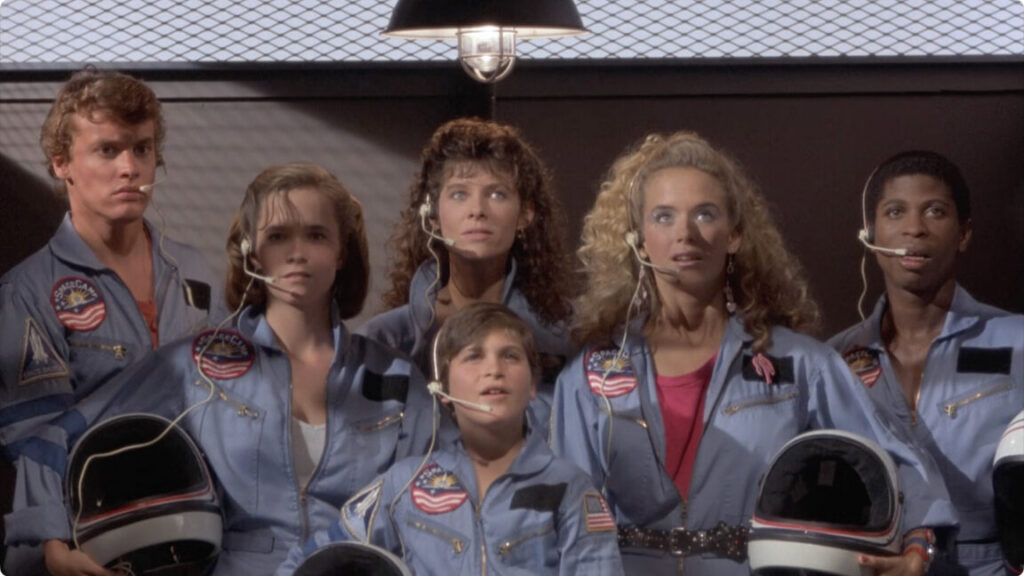
Table of Contents
The Optimism of the Early Shuttle Era
Forty years ago, the trajectory of human spaceflight looked radically different. In the early 1980s, NASA’s Space Shuttle wasn’t just a vehicle; it was a promise. The program was billed as a reusable transportation system that would make access to Low Earth Orbit (LEO) mundane, transforming extraordinary missions into routine ferry flights. The optimism was so pervasive that commercial brands like Coca-Cola and Pepsi were eyeing orbital expansions, and there were even absurdist plans to send Sesame Street’s Big Bird into space.
This era of ‘democratized’ space flight aimed to shift the paradigm from the one-and-done capsules of the Apollo years to a sustainable, frequent shuttle service. However, the reality of the hardware never quite matched the marketing. Even at its operational peak in 1985, the shuttle fleet managed only nine flights in a single calendar year. The vision of a bustling orbital highway was a projection of hope rather than a technical reality.
A Production Caught in a National Tragedy
Into this atmosphere of aspiration and subsequent disillusionment arrived SpaceCamp. Released in June 1986, the film featured a high-pedigree production: a score by John Williams, a strong supporting cast including Tom Skerritt and Kate Capshaw, and extensive filming at authentic NASA locations. It was designed to be a sweeping, inspiring adventure for a generation of children dreaming of the stars.
But the film’s production timeline collided with one of the darkest days in aerospace history. Completed before the January 1986 Challenger disaster, 20th Century Fox found itself in an editorial nightmare. The loss of the Challenger—and the public death of educator Christa McAuliffe—shattered the illusion of the shuttle as a safe, routine taxi. Releasing a movie about children in peril aboard a Space Shuttle just four months after a real-life catastrophe was a gamble that barely paid off, with the film earning roughly $9.6 million against a $25 million budget.
Technical Accuracy vs. Hollywood Cheese
Viewing SpaceCamp through a modern lens, especially for those grounded in actual orbital mechanics, reveals a fascinating tension between meticulous set design and narrative convenience. The production value is undeniable; the shuttle flight deck and mid-deck sets were built to exacting specifications. For the eagle-eyed enthusiast, the placement of cockpit switches and the authenticity of uniform patches suggest a level of care far beyond a typical 80s B-movie.
Yet, the film occasionally collapses under its own technical inaccuracies. While the interior details are spot-on, the physics are often neglected. A notable example is the mention of a ‘180×33’ orbit. In real-world terms, a perigee of 33 miles is effectively a death sentence; the shuttle would encounter severe atmospheric braking, lose energy rapidly, and incinerate long before it could return to its apogee. Furthermore, the cinematic choice to have the shuttle shake violently after Main Engine Cut-Off (MECO) serves the drama but ignores the actual physics of ascent.
The Legacy of an Era
Despite the ‘cheese’ factor and the heartbreaking timing of its release, SpaceCamp remains a vital cultural artifact. It captures a specific moment in American history when the gap between scientific ambition and technical capability was at its widest. It represents the transition from the ‘Golden Age’ of shuttle optimism to the sobering realization of the risks inherent in space exploration.
For modern viewers, the film is less a guide to spaceflight and more a study in the intersection of corporate cinema and national tragedy. It serves as a reminder that the ‘future’ we imagined in 1986 was not just about the technology we built, but about the psychological safety we assumed we had achieved—a safety that the Challenger disaster proved was an illusion.


