The ‘Timezone Canary’ Problem: Why Dependency Cooldowns Are Failing Developers
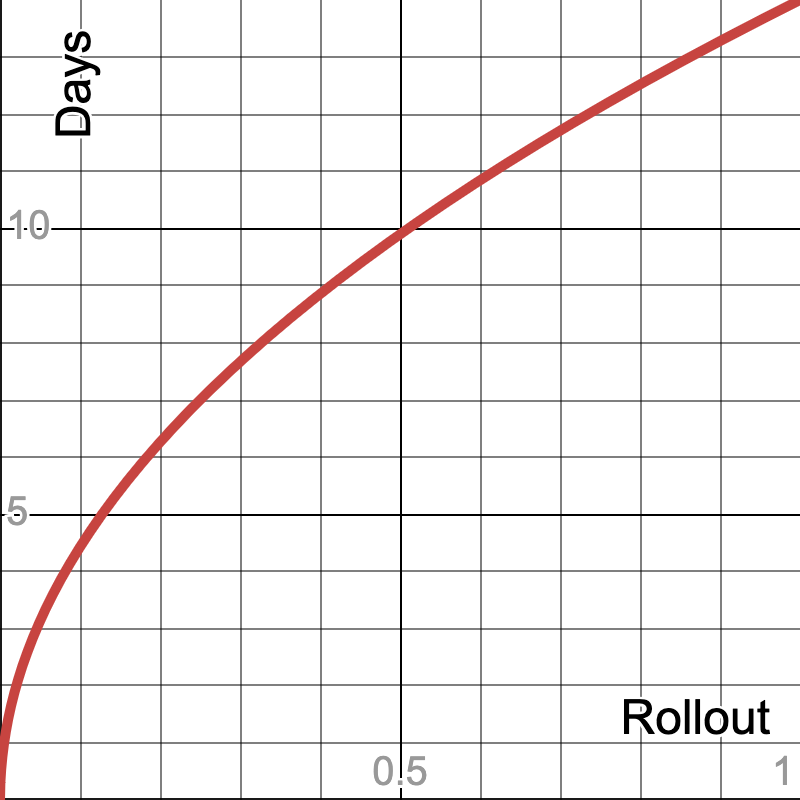
Table of Contents
The Invisible Cost of ‘Waiting’
For many developers, the standard ritual of running npm install is a mindless precursor to coding. But on March 31st, that ritual became a liability. During the Axios supply chain compromise, a malicious release was live from 00:21 to 03:15 UTC. Because of the timing, the attack disproportionately hammered developers in the eastern hemisphere—specifically those in Asia-Pacific and Australia—who were starting their workdays while the West was still asleep.
In the wake of such attacks, the industry coalesced around a concept known as “dependency cooldowns.” The idea is simple: don’t update to the latest version of a package immediately; wait a few days to see if the community flags it as malicious. On paper, it is a sensible hedge. In practice, it creates a systemic unfairness that essentially turns an entire geographic region into an unpaid security canary.
The Geography of Risk
The fundamental flaw of the cooldown approach is that it implicitly relies on someone else installing the package first. If every organization implements a 48-hour cooldown, the risk doesn’t disappear; it simply shifts to whoever is the first to wake up and hit “update.”
This “follow the sun” pattern means that developers in Melbourne, Tokyo, and Singapore often bear the brunt of supply chain compromises. By the time a package is flagged and the cooldown period ends for a developer in San Francisco, the threat has already been neutralized by the casualties of the Asia-Pacific morning shift.
Borrowing from the Infrastructure Playbook
The irony is that the software industry already knows how to solve this problem—it just isn’t applying the logic to package registries. When critical infrastructure software fails, the damage can be catastrophic. In April 2010, a McAfee update bricked a massive number of Windows XP installations. The industry response wasn’t to tell everyone to wait 24 hours before updating their antivirus; it was to move toward phased rollouts.
More recently, the July 2024 CrowdStrike outage, which paralyzed 8.5 million computers globally, underscored the danger of monolithic updates. The fallout from that event highlighted the necessity of “deployment rings,” where updates are released gradually to small cohorts before being scaled to the wider population. Even Microsoft shifted toward ML-targeted phased rollouts for Windows updates after widespread data loss incidents in 2018.
A Proposal for Deterministic Rollouts
Instead of a blunt time-based cooldown, a more equitable approach involves mapping projects into a rollout window based on stable inputs. Rather than relying on the clock, package managers could use a project-specific identifier, the package name, the version, and the artifact digest to create a unique hash.
By mapping this hash onto a distribution curve—for instance, a 14-day window—the adoption of a new version would be globally distributed and effectively random. In this scenario, if two different applications depend on a new version of a library, one might receive it after four hours and another after five days, regardless of their physical location.
This doesn’t change which version of a package a project eventually resolves—lockfiles and reproducibility guarantees would remain intact—but it changes when that version is adopted. It effectively decouples the deployment of a package from its release, mirroring the Continuous Delivery practices used by modern SaaS companies.
The Trade-off
The obvious drawback to phased rollouts is slower convergence. Low-download packages might take longer to reach the wider community. However, this is the exact same trade-off inherent in current cooldown practices. The difference is that phased rollouts distribute the risk mathematically rather than geographically.
While the industry continues to pursue more robust mitigations, such as public attestation logs and improved canary reporting, shifting away from the “timezone canary” model would be a significant step toward a more professional and fair security posture for the global developer community.


