The Smart Thermostat Paradox: Why Your High-Tech Upgrade Might Not Actually Lower Your Bill
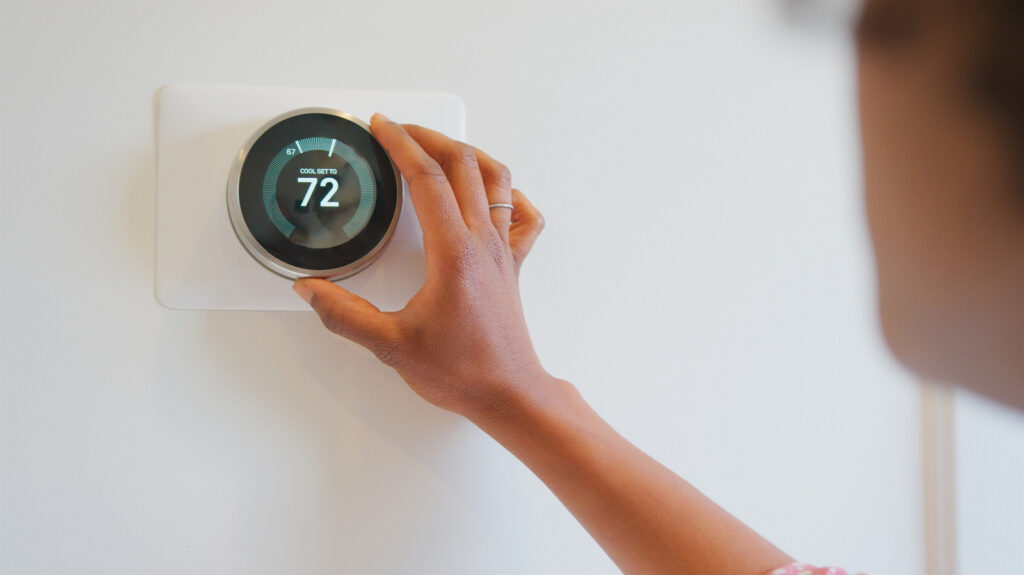
Table of Contents
The Gap Between Specification and Savings
For many homeowners, the transition from a manual dial to a polished glass interface like the Google Nest or Ecobee is framed as a financial decision. The marketing is consistent: install a smart thermostat, let the algorithms optimize your heating and cooling, and watch your utility bills drop. However, the reality of home energy management is rarely as linear as a product landing page suggests.
The core tension lies in the difference between theoretical efficiency and actual human behavior. While a smart thermostat possesses the technical capability to reduce waste, it does not automatically eliminate it. In many cases, the “smart” element simply shifts the burden of energy management from a physical dial to a smartphone app, without necessarily changing the underlying habits of the user.
Programmable Logic: Old School vs. New Tech
To understand why some users see no difference in their bills, it is necessary to distinguish between “programmable” and “smart.” Traditional programmable thermostats have existed for decades, allowing users to set a specific temperature for 8:00 AM and another for 5:00 PM. If a user is disciplined, a $50 programmable unit can achieve nearly the same energy reduction as a $250 smart device.
Where smart thermostats attempt to provide an edge is through friction reduction. The primary reason people fail to save money with manual programmable units is the interface; tinkering with tiny buttons on a wall-mounted screen is tedious, leading most users to leave their systems on a static, inefficient temperature. By moving these controls to a mobile device, smart thermostats make it psychologically easier to maintain an energy-saving schedule.
The Role of Geofencing and Occupancy Sensing
The real divergence from manual systems occurs with passive data collection. High-end models utilize geofencing—leveraging your phone’s GPS to detect when you’ve left a five-mile radius of your home—and occupancy sensors to determine which rooms are actually in use. This removes the need for the user to remember to “turn down the heat” before leaving for work.
However, this automation is not foolproof. A sensor might detect a pet as a human, or a geofence might fail to trigger due to poor cellular signal, leaving the HVAC system running at full blast in an empty house. When these systems fail, the cost of the “smart” convenience is essentially negated.
Analyzing the ROI of the Upgrade
When calculating the return on investment (ROI), the hardware cost is the first hurdle. A premium smart thermostat can cost upwards of $200. If the device saves a user $10 a month on electricity, it takes nearly two years just to break even on the hardware. For renters or those in smaller apartments with consistent temperatures, the financial incentive is often negligible compared to the convenience factor.
Furthermore, the effectiveness of these devices is heavily dependent on the efficiency of the HVAC system they are controlling. A smart thermostat cannot fix a poorly insulated home or a 20-year-old furnace with failing heat exchangers. In these environments, the device is merely a sophisticated remote for an inefficient machine.
Beyond the Dial: Energy Reports and Behavioral Shifts
Perhaps the most underrated feature of the smart ecosystem is the data feedback loop. Many platforms now provide monthly energy reports that highlight exactly how many hours the system ran and how that compares to neighbors in similar climates. This transparency often triggers a behavioral shift that a manual thermostat never could; once a user sees a visual representation of their energy waste, they are more likely to manually override the system to save money.
Ultimately, the decision between manual and smart comes down to the user’s relationship with their own habits. If you are the type of person who meticulously programs a calendar, a manual system is sufficient. But for those who struggle with consistency, the automation and remote access of a smart system provide the only realistic path toward actual bill reduction.


