The ‘Selfie’ Effect: Big Cat Diary Legends Warn Against Aggressive Social Media Tourism
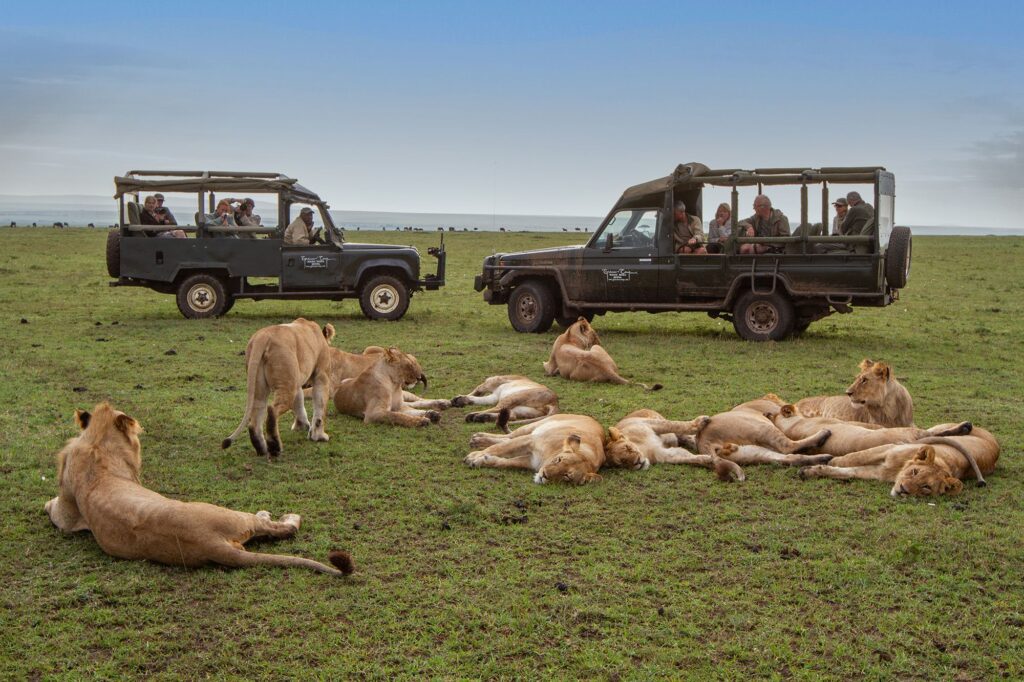
Table of Contents
The Cost of the Perfect Shot
For decades, Jonathan and Angela Scott have been the gold standard of wildlife documentation, transitioning from the grassroots grit of the BBC’s Big Cat Diary to high-definition narratives on Animal Planet. But as they move from traditional broadcasting into the era of the viral clip, the Scotts are noticing a disturbing shift in how humans interact with the wild. The driver isn’t just curiosity—it’s the digital currency of social media.
The couple, based in East Africa, has launched a new e-book titled Safari Etiquette, designed specifically to combat what they describe as the ‘look at me’ effect. In an age where a high-engagement Instagram Reel or a TikTok selfie can garner millions of views, the pursuit of the ‘perfect shot’ has begun to override the biological needs and safety of the animals being photographed.
This shift in behavior is creating a tangible tension in wildlife hotspots. While the Scotts aim to educate through their Sacred Nature Initiative, some regions have already moved toward drastic technological interventions. In India’s Rajasthan state, the Ranthambore National Park and Sariska Tiger Reserve have implemented a strict policy: tourists must surrender their smartphones to guides and drivers, who lock them away for the duration of the safari. It is a blunt-force solution to a digital problem, aimed at stopping the aggressive pursuit of tigers that often leads to habitat degradation and animal stress.
Beyond the Lens: The Sacred Nature Initiative
The Safari Etiquette guide is part of a larger ideological framework the Scotts call the Sacred Nature Initiative. This project is structured around three pillars—Inspire, Educate, and Conserve—and is being delivered through a trilogy of books. The first, Sacred Nature: Life’s Eternal Dance, serves as a focused study of the Mara-Serengeti ecosystem. The second, Reconnecting People to our Planet, broadens the scope to a global landscape, emphasizing that the survival of a species is inextricably linked to the health of its environment.
Jonathan Scott points to a staggering statistic to illustrate the urgency of their work: only 4% of all mammal mass on Earth is comprised of wild mammals. The remaining 96% is a combination of livestock (62%) and humans (34%). When the vast majority of the planet’s biomass is dedicated to human consumption and habitation, the margin for error in wildlife conservation becomes razor-thin.
“Eight billion people are driving wildlife off the planet,” Scott says, framing the issue not as a failure of individual intent, but as a systemic pressure. This pressure is amplified by the ‘herd mentality’ of modern photography, where groups of vehicles may crowd a single animal to ensure every passenger gets a usable image for their social feed.
The Interconnectivity of Ecosystems
For Angela Scott, who grew up in Tanzania, the focus on individual ‘charismatic megafauna’—like lions or elephants—is a reductive way of looking at conservation. The digital trend of isolating a single animal in a frame mirrors a dangerous conceptual error: the belief that a species can be saved in a vacuum.
“Saying things like ‘I like lions but hate crocodiles’ is irrelevant,” Angela explains. “It’s about the land. If we don’t focus on the environment and how we can protect it, then the species will vanish.” This perspective shifts the conversation from wildlife photography as a hobby of capture to a practice of stewardship. The goal of the Scotts’ upcoming third volume, Life’s Incredible Journey, will be to share the personal lessons learned over 50 years in the field to keep the public engaged with nature in a way that is sustainable rather than extractive.
As digital platforms continue to shape how we perceive the natural world, the Scotts are arguing for a return to a more disciplined, respectful form of observation—one where the well-being of the subject outweighs the vanity of the photographer.


