The ‘Roth Backdoor’: How Trump Accounts Are Changing the Game for Minor’s Savings
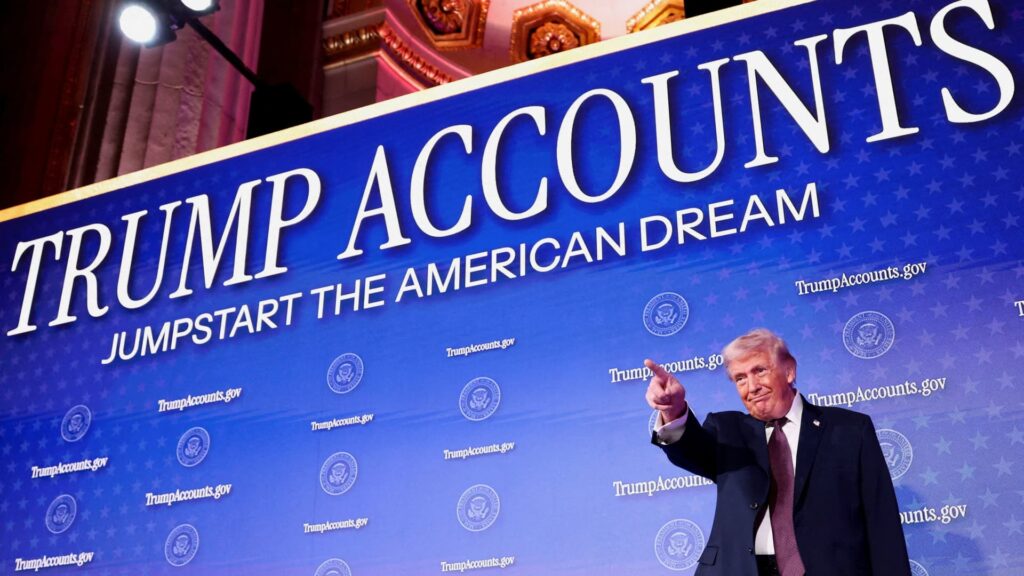
Table of Contents
A New Entry Point for Young Investors
The upcoming launch of Trump Accounts—officially designated as 530A accounts—is creating a sudden stir among tax strategists and high-net-worth families. While the headline appeal for many of the nearly 6 million children already signed up is the initial $1,000 grant from the Department of the Treasury, the real story lies in the structural plumbing of the account. For the first time, the federal government has provided a legal mechanism for minors to enter the tax-advantaged investment ecosystem without the prerequisite of a paycheck.
Historically, the wall protecting Roth IRAs has been the “earned income” requirement. To contribute to a Roth, an individual must have documented wages. This effectively locked out the vast majority of children, leaving them dependent on custodial accounts or 529 plans. The 530A account changes that dynamic, serving as a bridge to a lifetime of tax-free growth.
The Mechanics of the ‘Backdoor’ Conversion
According to Adam Bergman, a Miami-based tax attorney and founder of IRA Financial, the 530A account creates a “legal backdoor” into the Roth system. Because these accounts allow contributions from parents, grandparents, or employers, they accumulate capital that is tax-deferred. The strategic value emerges when that capital is converted into a Roth IRA later in the child’s life.
The play is a timing game. By moving funds from a Trump Account to a Roth IRA when the child is in their late teens or early twenties—specifically during years when their income is low—the tax hit on the conversion is minimized. In many cases, if the conversion amount stays below the standard deduction (which is projected at $16,100 for single taxpayers in 2026), the child may owe zero federal income tax on the move. Once the funds land in the Roth, they grow entirely tax-free for the next four decades.
The ‘Kiddie Tax’ Trap
Despite the potential for massive long-term gains, financial planners are warning that the strategy is not without significant risk. The primary obstacle is the “kiddie tax,” a set of IRS rules designed to prevent parents from shifting investment income to children in lower tax brackets.
Cary Sinnett, senior manager of personal financial planning at the Association of International Certified Professional Accountants, identifies the kiddie tax as the “largest technical risk” for this strategy. Currently, if a child’s unearned income—which includes the taxable portion of a Roth conversion—exceeds $2,700, the excess may be taxed at the parents’ marginal rate. For high-earning households, this could mean a surprise tax bill at a rate as high as 37%, effectively neutralizing the benefit of the conversion.
Competing With 529 Plans
While the 530A accounts offer a unique path to retirement wealth, they aren’t a universal replacement for existing educational savings vehicles. Jeffrey Levine, a CFP and CPA based in St. Louis, suggests that for those primarily focused on college, the traditional 529 plan remains superior. 529s offer tax-free withdrawals for qualified education expenses, whereas Trump Accounts are structured more as retirement vehicles, with penalties for early withdrawals before age 59½ unless specific exceptions, such as a first-time home purchase, are met.
As these accounts officially roll out on July 4, the focus is shifting from the initial $1,000 seed money to the long-term math of compounding. For families who can navigate the complexities of the kiddie tax, the 530A represents a fundamental shift in how generational wealth is seeded in the digital age.