The Rise of the ‘Agentic Loop’: Why AI is Moving Toward Continuous, Recursive Coding
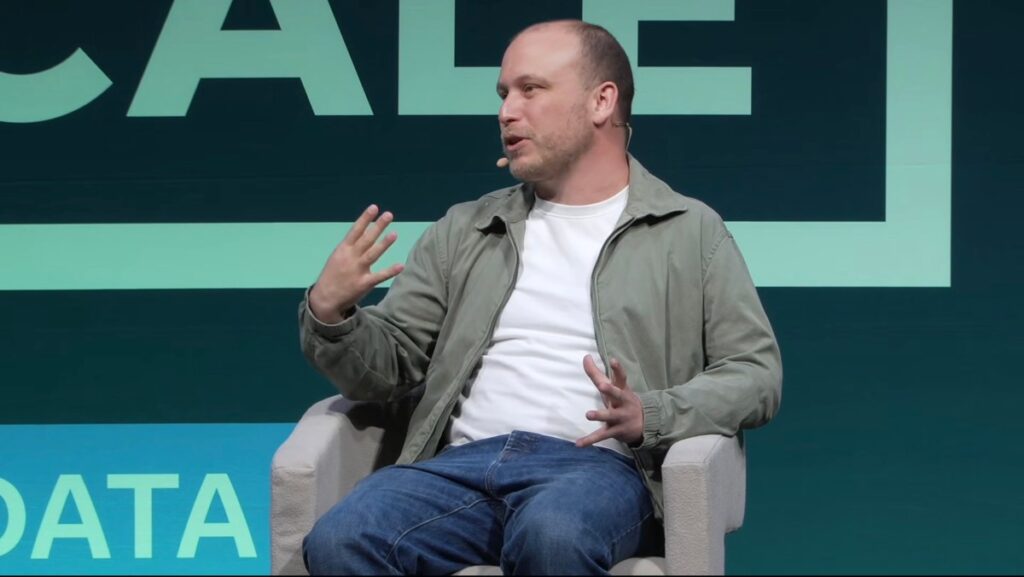
Table of Contents
Beyond the Prompt: The Shift to Autonomous AI Cycles
For the last year, the conversation around AI productivity has been dominated by ‘agents’—LLM-powered entities capable of executing a sequence of steps to achieve a specific goal. But at Meta’s @Scale conference, Boris Cherny, the creator of Claude Code, suggested that we are already moving past the era of discrete agentic tasks and into the era of the ‘loop.’
When asked by an audience member if loops were merely the next hype cycle or a legitimate technological shift, Cherny was unequivocal: “Yes, they’re for real.”
The distinction is subtle but profound. Traditionally, a developer prompts an AI agent to write a function or fix a bug; the agent executes the task and returns the result. In a loop, however, the AI is authorized to work continuously in the background, acting not as a tool for a specific request, but as a permanent layer of the development process. According to Cherny, the jump from manual source code to AI agents was significant, but the transition to agents prompting other agents in a recursive loop is a shift of equal magnitude.
How the Loop Actually Works in Production
To illustrate the practical application, Cherny detailed his own workflow. Rather than triggering a specific action, he employs a swarm of agents that run persistently. One agent is tasked exclusively with auditing the codebase for architectural improvements, while another relentlessly hunts for duplicated abstractions that could be unified to streamline the software.
These agents don’t just suggest changes; they submit pull requests. Because the codebase is a living organism—constantly evolving as humans and other AI agents commit code—the loop never ends. The AI is effectively ‘gardening’ the code in real-time, ensuring that technical debt is managed as it is created.
This is a departure from the current ‘human-in-the-loop’ philosophy where the user establishes goals and monitors discrete units of progress. The agentic loop requires a higher degree of trust and a shift in oversight, moving the developer from a manager of tasks to a curator of autonomous systems.
The Computational Cost of ‘Brute-Forcing’ Logic
Technically, these loops represent a move toward what researchers call ‘test-time compute.’ The core idea, championed by OpenAI researcher Noam Brown, is that many complex problems can be solved not necessarily by a larger model, but by giving a model more time and compute to ‘think’ through a problem before arriving at an answer.
In the context of coding, this creates a ‘hill-climbing’ effect. The AI makes a small improvement, tests it, evaluates the result, and then iterates. If the model isn’t satisfied, it loops back and tries again. This iterative cycle can be as simple as the ‘Ralph Loop’—a common technique where the model summarizes its own progress and asks itself if the goal has been met, effectively preventing the LLM from ‘hallucinating’ its way into a dead end.
However, this efficiency comes with a steep financial price tag. Unlike a standard chatbot interaction, which has a clear start and end, a continuous loop burns through tokens indefinitely. For companies like Anthropic, which sells tokens, this is a sustainable business model. For the end-user or the startup, it introduces a volatile cost variable where the price of maintaining a codebase is no longer a fixed salary, but a fluctuating API bill based on how many ‘loops’ the system decides it needs to run to reach perfection.
The Risk of Drift and Token Burn
The move toward recursive AI is not without its dangers. Beyond the cost, there is the risk of ‘model drift’—where an agent, in its quest for optimization, begins to steer the architecture in a direction that is technically efficient but logically incompatible with the original human intent.
Despite these risks, the promise of a self-healing, self-optimizing codebase is too significant for the industry to ignore. As models become more reliable at reasoning, the loop may become the standard way software is maintained, turning the act of coding from a manual craft into a systemic orchestration of autonomous agents.