The Optical Illusion: Why Teleconverters Are a Risky Bet for Modern Photographers
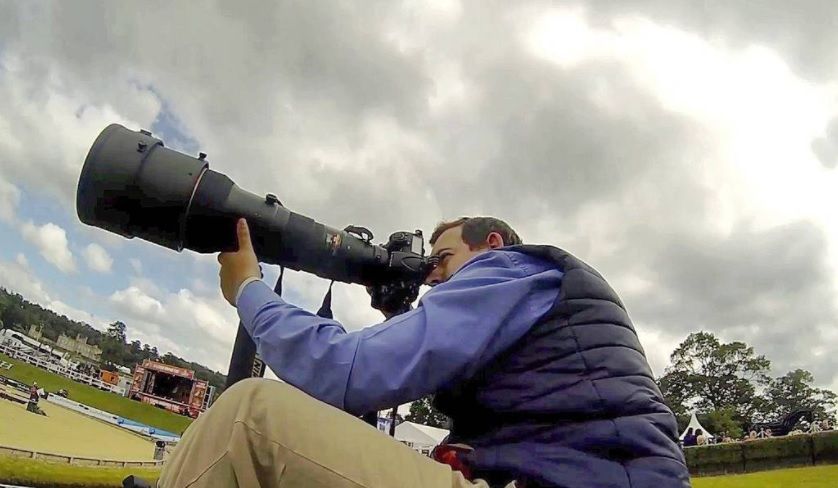
Table of Contents
The Allure of the ‘Cheap’ Shortcut
For wildlife, aviation, and sports photographers, distance is the primary adversary. The promise of a teleconverter—a compact optical adapter placed between the camera body and the lens—is seductive: instant additional reach without the prohibitive cost of a new prime lens. On paper, turning a 400mm lens into a 600mm or 800mm powerhouse seems like a strategic win. However, in professional practice, these devices often represent one of photography’s most persistent false economies.
The appeal is rooted in accessibility. Professional-grade long glass, such as the Nikon 600mm f/4 or the 200mm f/2, carries a price tag that is out of reach for the average enthusiast. A 1.4x or 2x extender offers a perceived bridge to that professional tier, but the technical compromises are woven into the very physics of the device.
The Physics of the Light Penalty
The most immediate cost of a teleconverter is not financial, but optical. Every extender imposes a light penalty, typically measured in f-stops. A 1.4x converter usually costs the user one full stop of light; a 2x converter costs two. While this may seem negligible under the midday sun, the reality of field reporting is rarely that forgiving.
When a fast lens is effectively slowed down by an extender, the ripple effect touches every part of the imaging chain. With less light hitting the sensor, autofocus systems—even modern mirrorless AF—can struggle to maintain lock on fast-moving subjects. To compensate for the loss of light and maintain a shutter speed high enough to freeze action, photographers are forced to push ISO levels higher, introducing grain and degrading the overall dynamic range. The result is often a soft, noisy image that fails to justify the extra reach.
Mechanical Vulnerabilities and Mount Stress
Beyond the glass, there is a structural risk that rarely makes it into manufacturer brochures. A standard lens-to-camera connection relies on a single, robust mount. Introducing a teleconverter creates a second point of failure. You now have a camera-to-converter mount and a converter-to-lens mount.
When pairing a teleconverter with heavy, professional-grade glass, the leverage exerted on these mounts increases significantly. The added length shifts the center of gravity forward, putting immense strain on the locking mechanisms. In high-pressure environments, this second point of contact becomes a liability. A mount failure isn’t just a lost shot; it is a potential catastrophe that can result in thousands of dollars in damage to both the camera sensor and the lens internals.
The Shift Toward Purpose-Built Glass
The argument for teleconverters has weakened significantly with the evolution of the lens market. Two decades ago, the gap between consumer zooms and professional primes was a chasm. Today, the industry has filled that void with sophisticated super-telephoto zooms. The proliferation of high-quality 100-400mm and 28-400mm lenses provides a level of flexibility that makes the ‘just in case’ teleconverter redundant for many.
A purpose-built lens is an integrated system designed for a specific focal range, ensuring optimal balance and optical correction. An external teleconverter, by contrast, is an add-on attempting to force a lens to do something it wasn’t designed for. While built-in teleconverters found in some ultra-high-end lenses are engineered into the optical path and perform admirably, the external variety remains a compromise.
Ultimately, the pursuit of ‘more reach’ should not come at the expense of image integrity or gear safety. For those consistently finding their subjects too far away, the solution is rarely a piece of adapter glass, but rather a strategic investment in a lens designed for the distance.