The New Orbit: Space Unicorns Surge as Private Capital Bets on the ‘Next Phase’ Economy

Table of Contents
A New Class of Orbital Assets
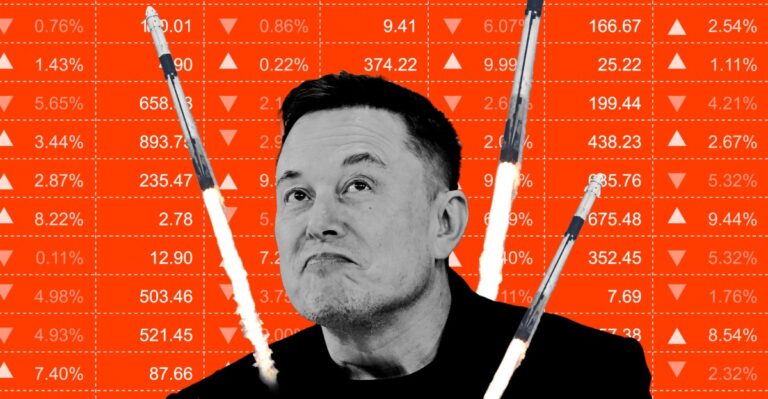
The financial architecture of the space industry is shifting. While the era of the ‘mega-constellation’ was defined by the sheer scale of SpaceX, a new wave of privately held companies is now capturing the attention of venture capital, pushing the number of ‘space unicorns’—startups valued at $1 billion or more—to 30.
According to recent analysis by SpaceNews, the growth is not merely incremental; it is accelerating. Roughly two-thirds of these billion-dollar valuations were achieved since the start of 2025. Perhaps more telling is the age of these companies: more than half of the newcomers to the unicorn club were founded within the last five years. This suggests a compressed development cycle where the transition from seed funding to billion-dollar valuation is happening faster than in previous aerospace cycles.
Beyond the Launch Pad
For years, the primary investment draw in the commercial space sector was launch capability—the ‘trucking’ of the orbital economy. However, the current surge in valuations indicates that investors are now betting on the ‘infrastructure’ and ‘services’ layers of the space economy. This includes satellite telecommunications, in-orbit servicing, and advanced Earth observation data analytics.
The rapid rise of these companies reflects a broader industrial trend. The cost of getting to orbit has plummeted, largely thanks to the reusable rocket architectures pioneered by SpaceX. This ‘cost-to-orbit’ collapse has lowered the barrier to entry for specialized startups that don’t build rockets but instead build the things that go on them. We are seeing a migration of capital toward companies that can turn raw satellite data into actionable intelligence for agriculture, climate monitoring, and national security.
The Risk of the Valuation Bubble
Despite the optimism, the speed at which these companies are reaching unicorn status raises questions about sustainability. In the broader tech world, the 2021-2022 period saw a similar spike in ‘paper billionaires’ and inflated valuations that didn’t always align with revenue-generating products. The space sector is uniquely susceptible to this, as the lead times for hardware development are long and the regulatory environment—governed by the FCC and FAA—can be unpredictable.
Many of these startups are operating on ‘future-state’ valuations, where the $1 billion price tag is based on the projected demand for orbital logistics or lunar infrastructure that may not be fully operational for another decade. The challenge for these 30 unicorns will be transitioning from speculative VC-backed growth to sustainable commercial revenue.
A Crowded Low Earth Orbit
The proliferation of these well-funded entities is also contributing to the physical crowding of Low Earth Orbit (LEO). With more companies having the capital to deploy larger constellations, the conversation is shifting from ‘how do we get there’ to ‘how do we manage the traffic.’ The rise of the space unicorn is not just a financial story; it is a logistical one. The demand for space situational awareness (SSA) and debris removal services is growing in lockstep with the valuations of the companies creating the debris.
As these companies move toward IPOs or strategic acquisitions, the next two years will determine if this is a sustainable economic expansion or a speculative bubble fueled by the hype of the ‘New Space’ era.